 EN


What Factors Affect Operating Lamp Prices?
An operating lamp quote can look simple until a hospital compares two configurations side by side. One price may cover a single lighthead and a basic ceiling arm; another may include a dual-head arrangement, controls, installation hardware, commissioning support, and documentation. For a procurement team, the useful question is not “Which operating lamp has the lowest initial quoted price?” but “What is included, what must be prepared on site, and what will the system require over its working life?”
From a hospital procurement perspective, price should be matched to the operating-room task, installation conditions, and maintenance plan before individual specifications are compared. That approach helps buyers distinguish a lower entry price from a lower project cost.
1. Lighthead performance and configuration
The lighthead is the most visible part of an operating lamp, and its performance package is a major price driver. Illumination pattern, shadow management, depth of illumination, heat management, dimming range, and color rendering all affect the engineering and testing behind a surgical luminaire. A lamp intended for routine minor procedures may be configured differently from one selected for a demanding operating theatre.
Surgical light color temperature is another configuration variable, not a universal quality ranking. Teams may want an adjustable range or a particular appearance of tissue under light, while another department may prefer a simpler fixed setting. The cost difference can arise from LED design, controls, optical components, and validation documentation. Buyers should ask how the proposed setting is controlled, what related color-rendering information is provided, and whether the supplied documents fit their market and project requirements.
IEC 60601-2-41:2021 addresses the basic safety and essential performance of surgical and diagnostic luminaires. That does not mean every quoted unit has the same documentation or market status. It does mean an operating lamp supplier should be able to clarify which documents apply to the offered configuration and which items remain for the buyer to verify.
2. Single, dual, mobile, and ceiling-mounted layouts
Configuration changes price quickly because they change more than the number of lightheads. A ceiling mounted operating lamp may require one or two suspension arms, a central axis, compatible controls, and a mounting solution matched to the room. A dual-head system can support different coverage needs, but it also adds mechanical components, cabling, balancing work, and installation coordination.
Do not compare quotations until the configuration scope is defined. Ask whether the price covers the lighthead count, arm reach, wall control, camera or monitor options if requested, power supply, ceiling plate, and commissioning. Comparing a basic single-head operating lamp against a fully specified dual-head system as though they were equivalent can create a misleading price gap.
For some sites, a mobile unit may reduce building work, while for others a fixed ceiling solution better suits workflow and floor clearance. Neither layout is automatically the better value. The right choice depends on procedure volume, room use, infection-control practice, equipment traffic, and the clinical team’s lighting task.
3. Medical lighting installation costs and site readiness
Medical lighting installation is often the largest source of variation between an equipment quotation and a completed-room budget. Ceiling height, structural capacity, operating-table position, existing monitors, pendants, air-flow equipment, and cable routes should be checked before a final price comparison. A ceiling system can require reinforcement or a dedicated mounting structure; the local installer and facility engineer should confirm the site method rather than relying on a generic product drawing.
Electrical preparation also has a cost and schedule effect. Buyers should confirm the required supply arrangement, isolation or local electrical rules where applicable, connection location, and responsibility for site wiring. A proposal that excludes these works may still be suitable, but the exclusions need to be visible in the project budget. Installation costs are not a reason to avoid a ceiling-mounted solution; they are a reason to separate equipment price from site-preparation price.
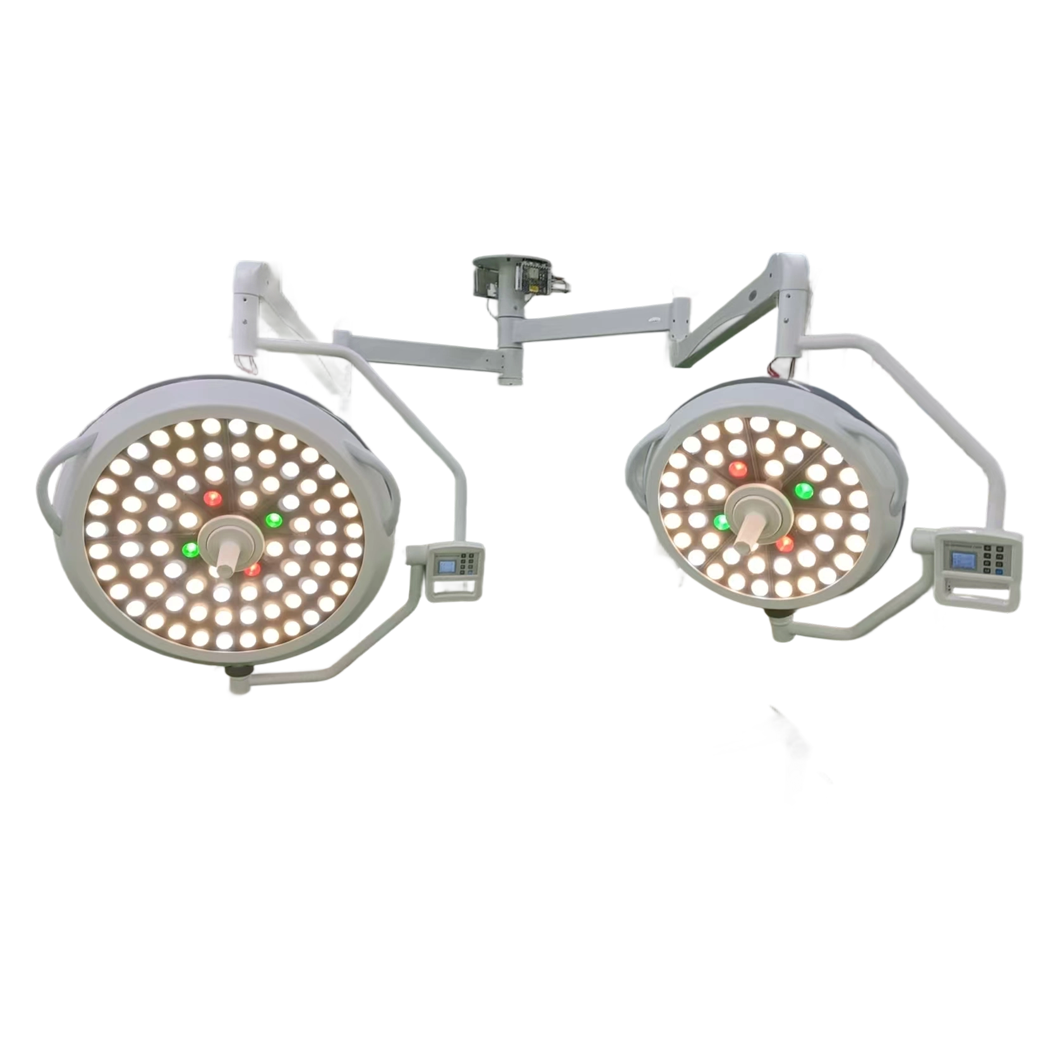 Room layout and ceiling support should be reviewed before finalizing an operating lamp installation scope.
4. Controls, ergonomics, and workflow options
Control features can add value when they solve a real workflow need. Touchless controls, wall panels, handle systems, position memory, and integrated accessories can affect the price of an operating lamp. Before paying for them, define who adjusts the light, when adjustments occur, and how the controls will be cleaned and maintained. A longer feature list does not automatically make the system more suitable for every theatre.
Room layout deserves the same attention. A lighthead that reaches the table in a showroom may still interfere with monitors, pendants, or staff movement in a particular room. Ask the supplier for the dimensional information needed for a coordinated layout review, then validate the final arrangement with the facility and clinical teams.
5. Documentation, logistics, and after-sales scope
Price also reflects what happens before and after delivery. Freight terms, packaging, spare-parts planning, remote or on-site technical support, training, warranty coverage, and preventive-maintenance expectations may be included, optional, or excluded. An operating lamp supplier should make those boundaries clear so that a low initial figure is not mistaken for a complete support package.
For cross-border projects, documentation and delivery coordination deserve their own line items. Buyers can ask which manuals, technical files, packing information, and installation materials are included, then confirm any local requirements independently. This is more practical than treating a general claim as proof that a configuration is ready for every market.
6. A like-for-like quote checklist
Before selecting an operating lamp, compare each supplier response against the same checklist:
- Lighthead quantity, illumination controls, and requested surgical light color temperature options
- Suspension arms, ceiling plate, and the exact scope of the ceiling mounted operating lamp configuration
- Structural review, electrical preparation, installation labor, and commissioning responsibilities
- Required documents, warranty, training, service pathway, and spare-parts expectations
- Quoted exclusions, delivery terms, lead time, and acceptance process
This checklist turns price discussions into a configuration and responsibility review. It also gives the hospital, installer, and operating lamp supplier a shared basis for resolving missing assumptions before purchase orders are issued.
Conclusion: evaluate the project, not only the unit price
The price of an operating lamp reflects optical performance, mechanical configuration, controls, documentation, logistics, and the realities of medical lighting installation. A sound purchasing decision usually has the clearest scope, rather than relying only on the lowest listed figure. Define the operating-room task, compare equivalent configurations, confirm site conditions, and document who owns each installation and support responsibility. Those steps make an operating lamp quotation easier to evaluate and easier to implement.
 Hot News

