 EN


Lampio chirurgico a cupola singola vs a cupola doppia: qual è la differenza?
Eligendo lampada operandi non è semplicemente una questione di acquistare una o due teste luminose. Per un team di approvvigionamento ospedaliero, il confronto utile inizia con il mix di procedure, il numero di persone che potrebbero operare intorno al tavolo, la disposizione del soffitto e le informazioni di verifica disponibili per la configurazione selezionata. Una cupola singola lampada operandi può essere una soluzione pratica per molte sale. Un sistema a cupola doppia può aggiungere libertà di posizionamento e un’ulteriore fonte di illuminazione. Nessuno dei due formati è automaticamente la scelta corretta senza tali condizioni.
Questa guida confronta le configurazioni come esercizio di selezione di apparecchiature mediche. Non sostituisce la valutazione clinica, ingegneristica o normativa locale. lampada operandi prima di considerare una specifica come decisione definitiva, chiedere al fornitore di definire il modello testato, gli accessori, la distanza di riferimento e le condizioni di accettazione.
Cosa descrivono i termini «cupola singola» e «cupola doppia»
A dome is the light head of an lampada operandi : the assembly that directs light toward the surgical field. A single-dome system has one independently positionable light head. A double-dome system has two light heads, usually on separate arms, that may be aimed from different angles. The second dome is therefore mainly a configuration and workflow feature. It is not, by itself, proof of a specific lux value, shadow-dilution result, or clinical outcome.
Modernus Lampas chirurgica Led may be supplied in either arrangement. The LED technology, control interface, suspension, camera option, color-temperature adjustment, and sterile handle design can vary by model. That is why comparing a “single” quote to a “double” quote requires confirming what each quoted package actually includes.
The practical difference: positioning around the field
With a single-dome lampada operandi , staff position one light head to cover the primary field. This can suit rooms where procedures are relatively straightforward, team positions are predictable, and one well-placed source provides the needed coverage. Its simpler layout may also reduce the number of arms and light heads the room must accommodate.
With a double-dome lampada operandi , each dome can be directed independently. One head may support the principal field while the other is repositioned as the team changes sides, an assistant needs light from another angle, or the working area is broader. In some workflows, the two heads can provide overlap rather than forcing a single source to serve every viewing angle. The benefit depends on the room and task—not merely on the visual impression of having two domes overhead.
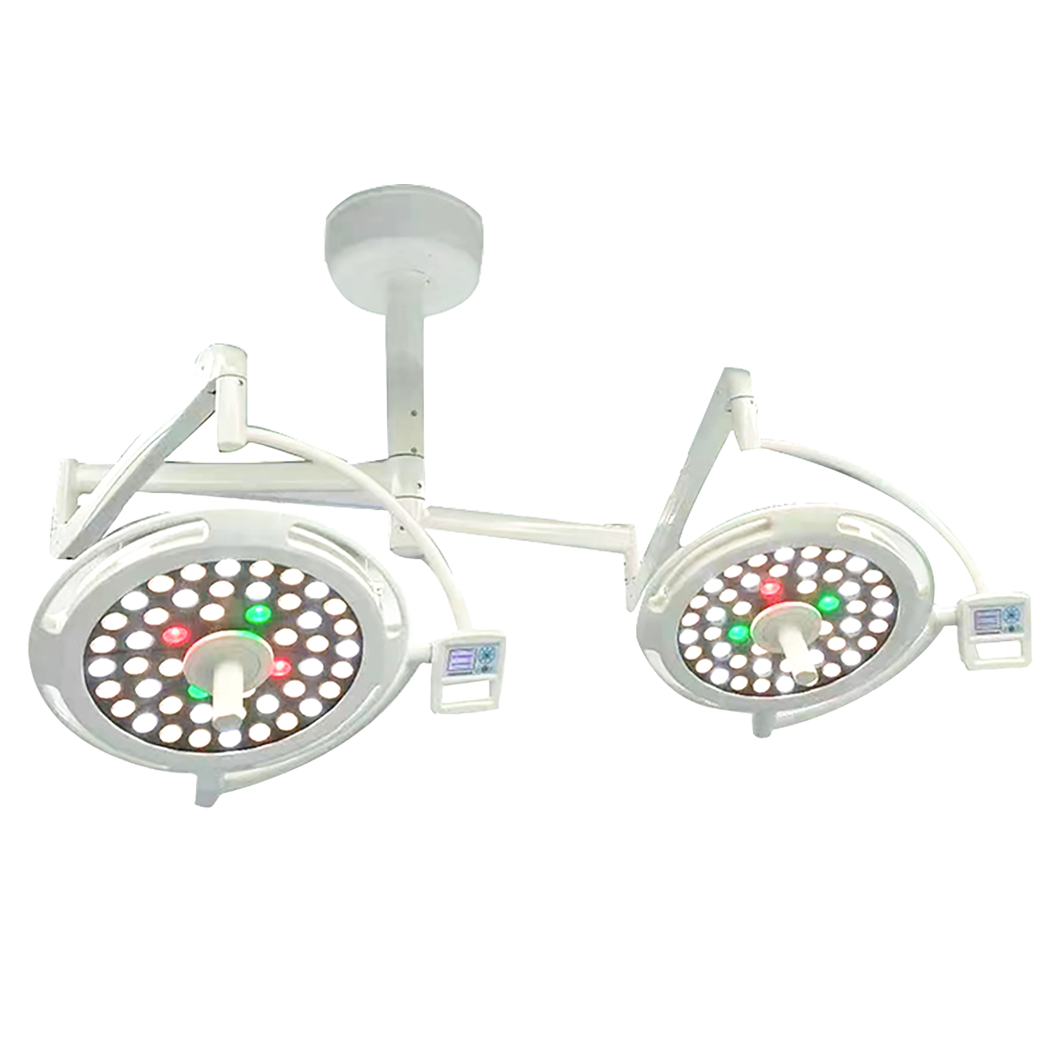 A single head and a dual-head arrangement create different positioning options around the operating table.
How dome count relates to shadows
Every overhead lampada operandi potest obstructions experiri ex manibus, instrumentis, aut aequipe chirurgico. Caput secundum, separatim positionabile, angulum alium luminis creare potest, quod aequipe ad umbras in campo regendam iuvare potest. Tamen non debet describi ut "sine umbra" nisi testis modello-specifici probatio praebita sit. Cavitas profundae aut maxime obstructae geometricas adhuc limites pro quolibet lumine in tecto montato praebere possunt. lampada operandi .
Pro lux chirurgica operativa , pete informationem fabricantis de testibus dilutionis umbrarum, non solum affirmationem generalem de producto. IEC 60601-2-41:2021 est utilis structura ad disserendum, quia de basica securitate et essentiali functione luminarium chirurgicorum agit et conceptus tales ut illuminantia centralis, profunditas illuminationis, proprietates colorum, et dilutio umbrarum complectitur. Norma applicabilis, via mercati, et documenta testuum supplicata pro configuratione emptionis reali verificanda sunt.
Compara probationem functionis, non solum numerum cupularum
Matrix sequens comparationem in eo tenet quod unum lampada operandi must do in the room.
| Punctum decisionis | Single-dome operating lamp | Double-dome operating lamp | Quod Verificandum |
|---|---|---|---|
| Field coverage | One adjustable source for the primary field. | Two sources that can be aimed independently or overlapped. | Procedure positions, table range, and arm reach. |
| Team movement | May fit a stable, predictable setup. | Can offer more options when staff work from different sides. | Spatium super machinas, monitoria, et apparatus anestheticos. |
| Praetensio illuminationis | Dependet ab capite lucis specifico. | Dependet ab unoquoque capite et modo operationis declarato. | Illuminatio centralis, magnitudo campi, et distantia experimenti. |
| Administratio umbrarum | Dependet ab ordinatione optica et positione. | Potest addere alium angulum; non tollit omnes obstructiones. | Data specifica modello de dilutione umbrarum et aestimatio clinica. |
| Installation scope | Ordinario pauciora componentia ad coordinandum. | Exigit spatium, suspensionem, et planificationem oneris pro duobus capitibus. | Structura tecti, planus montationis, potentia, et inauguratio. |
Pro utroque lampada operandi formatu, non tracta illuminationem maximam ut unicum indicatorem qualitatis. Referentiae technicae saepe disserunt de illuminantia centrali lucis chirurgicae in intervallo 40 000–160 000 lux et de temperatura coloris correlata ab 3 000 K usque ad 6 700 K, sed valores exacti, conditiones mensurationis, et configurationes permisae ex documentis modeli electi petendae sunt. Redintegratio colorum, diameter campi lucis, profunditas illuminationis, irradiantia, administratio caloris, et responsio controlli aeque pertinentes esse possunt.
Cum systema monocupulare potest esse idoneum
Systema monocupulare lampada operandi potest esse punctum initiale rationabile, cum camera habet ambitum definitum procedurarum, unum campum principale, congestionem tecti limitatam, et fluxum operis qui non requirit saepius angulos independentes illuminationis. Etiam idoneum est ubi pecunia disponibilis debet congruere cum opere actu, non addendo facultatem quae non utetur.
Id dicendum est, «singulum domum» non debet tractari ut «minima verificatio.» Aequipe emptionis adhuc inspicere debet lampada operandi amplitudinem motus, stabilitatem motus, adaptationem campi lucis, modum purgationis, comportamentum de subsidio vel defectu, ubi applicabile est, et planum servitii localis. Caput singulum technice idoneum saepe magis aptum est quam offerta duorum capitum male definita.
Quando systema duplex domus potest esse aptum
Systema duplex domus lampada operandi saepe meret aestimationem cum aequipes procedurarum saepius operantur ex positionibus variabilibus, campi lati exspectantur, aut capita separata possunt minuere repositiones repetitas durante casu. Utile potest esse pro cameris quae necessitant flexibilitatem trans specialitates, dummodo planum tecti sustineat duo brachia et aequipe possit ea secure movere circa alia instrumenta.
The key question is not “Do we need two domes?” but “Which task needs two independently controllable lighting angles?” If that question does not have a clear answer, the added configuration may not solve a real workflow problem. A Lampas chirurgica Led should be assessed with a room drawing and representative team positions, not only a catalog photograph.
Questions to put on the quotation and acceptance checklist
- What light head, suspension arms, controls, and accessories are included in this exact lampada operandi configuratio admittere potest?
- What are the documented central illuminance, field-size, color-rendering, color-temperature, depth-of-illumination, and shadow-dilution values, and at what reference distance?
- Quomodo hoc adiuvat operating room lighting layout allow both heads to move without interfering with booms, monitors, or staff routes?
- What ceiling loading, installation, commissioning, cleaning, and preventive-maintenance responsibilities are assigned?
- Which applicable regulatory, electrical-safety, and performance documents can be reviewed for the destination market?
- What will the acceptance test verify after installation, and who signs off on it?
Make the choice around the task
The clearest distinction is simple: a single-dome lampada operandi centers the room on one adjustable light source, while a double-dome system adds a second independently positionable source. The stronger procurement decision comes from connecting that difference to real procedures, room geometry, performance evidence, and maintenance responsibility.
Pro emptoribus comparantibus apparatus luminis medicus , first document the intended procedures and staff positions; then compare equal configuration scopes and verify the supplied data. That approach makes it easier to decide whether a single-dome or double-dome lampada operandi is the more appropriate fit for the operating room.
 Nuntii Calidi

