 EN


What Service and Calibration Factors Matter for Patient Monitors?
A Patient Monitor is a clinical decision-support device, not simply a display. Whether a facility uses a compact vital signs monitor in a treatment room or a multiparameter patient monitor at the bedside, dependable readings, visible alarms, and documented service history matter. A more useful question is: can the team show that this specific device, its accessories, and its alarm pathway are ready for the intended use?
For biomedical teams and procurement staff, a workable program separates routine user checks, planned maintenance, post-repair verification, and calibration or calibration verification. The manufacturer’s current instructions for use and service documentation should set the required interval, test method, acceptable limits, and authorized parts. A local checklist should support those documents and should not substitute for them.
Start with serviceability, not just feature lists
When selecting hospital monitoring equipment, ask how the device will be supported across its useful life. A monitor can have the right parameter set on paper yet create avoidable downtime if batteries, cables, cuffs, sensors, modules, mounting hardware, or service access are difficult to manage. Confirm who performs first-line inspection, who performs technical service, where repairs are logged, and how a loaner or backup unit is handled.
- Documentation: Confirm that current operator instructions, service information, software records, and a preventive-maintenance procedure are available to the responsible team.
- Accessory control: Identify the approved SpO₂ sensors, NIBP cuffs, ECG leads, temperature probes, and power accessories for the exact configuration. A substituted accessory may affect usability or measurement performance.
- Parts and lifecycle support: Ask about battery replacement, module repair, cable wear, software-update governance, and escalation paths before standardizing a fleet.
- Traceable records: Keep the asset ID, location, configuration, test results, corrective action, and next due date together so a service decision can be reviewed later.
That distinction matters in bedside patient monitoring, where devices can move between departments and staff shifts. Service status should travel with the asset record rather than live in someone’s memory.
Separate user checks from preventive maintenance
Routine checks should be brief and purposeful. Before use, the operator can inspect the enclosure, display, power connection, battery indication, connectors, accessories, and visible labels; confirm that the selected patient type and alarm settings are appropriate; and follow the manufacturer’s prescribed functional check. Any concern should trigger removal from service or escalation under the facility’s policy.
Planned preventive maintenance is broader. A qualified service process typically reviews physical condition, connectors and cables, battery condition, power and charging behavior, displays and controls, parameter modules, alarms, and required electrical-safety tests. It also confirms that the unit’s identification, configuration, and maintenance records match the asset being tested. A multiparameter patient monitor adds complexity because each installed measurement pathway and each compatible accessory needs the correct procedure.
Do not turn a convenient calendar into a universal maintenance interval. The appropriate schedule depends on the model, environment, utilization, accessory wear, local regulation, and manufacturer guidance. A high-turnover acute-care environment may create different inspection priorities from a low-use clinic, but neither situation justifies skipping the documented procedure.
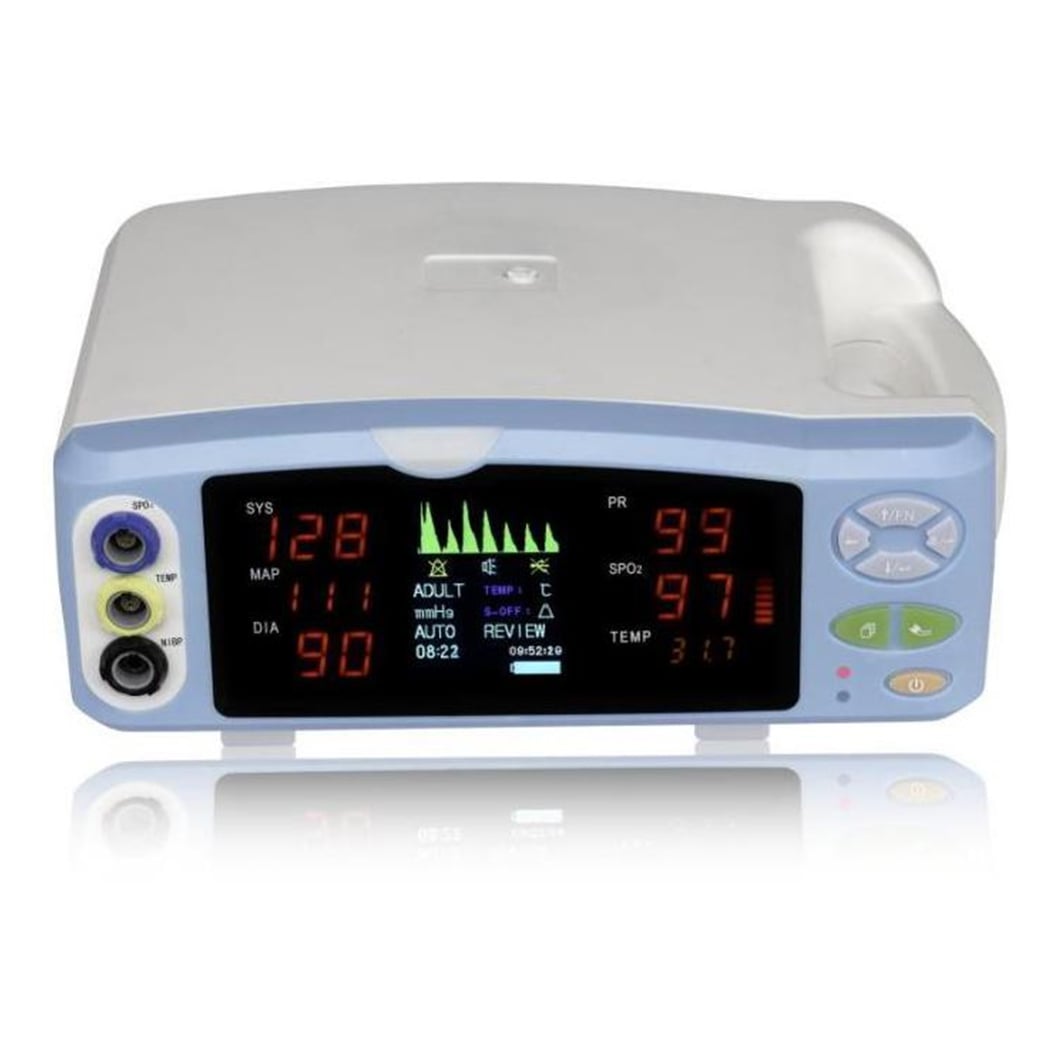 A documented functional verification should follow the approved procedure for the exact monitor configuration.
What does “calibration” actually mean for a Patient Monitor?
In everyday conversation, calibration can mean several different activities. For a Patient Monitor, clarify the term before scheduling work:
- Calibration verification: Comparing a measurement channel or function against an approved simulator, analyzer, or reference procedure to determine whether it performs within the manufacturer’s stated acceptance criteria.
- Adjustment or calibration: A controlled service action, when the manufacturer permits it, to bring a channel back into specification. It should not be improvised from generic values or a non-approved menu.
- Functional verification: Confirming expected behavior such as display response, alarm annunciation, controls, charging, communication functions, and parameter operation after service or repair.
These are not interchangeable. For example, a vital signs monitor can power on and display a simulated value yet still require the prescribed alarm, accessory, and measurement-channel checks. Conversely, passing a single measurement comparison does not prove that every alarm configuration or connector is ready for clinical use.
Build a calibration-control chain
Reliable results depend on more than the monitor. The simulator, analyzer, leads, adapters, and test setup also need control. Use equipment that is appropriate for the parameter and follow the test setup specified for the model. Maintain the tester in its own documented calibration program, record its identity and status, and prevent expired or damaged test equipment from being used for acceptance decisions.
For each completed job, the record should identify the asset, model and serial number, installed configuration, procedure revision, test equipment, results, pass/fail decision, corrective work, technician or provider, and release decision. When a unit fails, the record should make clear whether it was removed from clinical service, repaired, retested, or referred to an authorized service channel. This gives the organization a traceable basis for return-to-service decisions.
Alarm performance deserves its own review
Alarm behavior is central to safe hospital monitoring equipment. During service, follow the approved procedure to assess the audible and visual alarm pathway, limits or alarm configuration behavior where applicable, silence or pause functions, and any connected notification workflow that the facility uses. The right test method depends on the model and configuration; avoid assuming that one setting or a single simulated event represents every clinical condition.
Also review how alarm policies meet workflow. A technically sound Patient Monitor can still create risk when default profiles, patient category selection, handoff practices, or escalation responsibilities are unclear. Include nursing, clinical engineering, and purchasing stakeholders when defining acceptance criteria for a fleet rather than treating alarm setup as a purely technical afterthought.
Plan for post-repair and software-related checks
Service after a repair, module change, battery replacement, or software action should not rely on the fact that the device starts. Use the manufacturer-required post-service verification procedure. The scope may include the affected parameter, related accessories, alarms, charging, network or central-station behavior where configured, and a full functional check before release.
Configuration control matters too. Record software or firmware version, installed options, and changes approved by the facility. A mixed fleet of bedside patient monitoring devices may look similar while having different configurations, approved accessories, or required procedures. Clear configuration records reduce the chance that staff apply the wrong test or replacement part.
A procurement checklist for ongoing support
| Question | Why it matters |
|---|---|
| What manufacturer procedure governs preventive maintenance and calibration verification? | It defines the correct interval, tools, limits, and release criteria. |
| Which accessories and test adapters are approved for this configuration? | Compatibility affects the reliability of measurement and service checks. |
| How are alarms, batteries, cables, and parameter modules verified after service? | A complete release decision requires more than a power-on test. |
| What records will be retained for each asset? | Traceability supports audits, troubleshooting, and lifecycle planning. |
| Who provides escalation, parts, and training support? | Support arrangements shape downtime and consistent maintenance practice. |
The practical takeaway
A dependable service program for a Patient Monitor is disciplined rather than generic. Define ownership, use the correct manufacturer procedure, control the test equipment, verify relevant functions after service, and document the decision to return the unit to use. For a vital signs monitor or a larger multiparameter patient monitor, that structure helps clinical teams distinguish a routine inspection from a meaningful readiness check.
Before committing to new hospital monitoring equipment, ask suppliers to explain the service documentation, accessory compatibility, preventive-maintenance pathway, calibration-verification method, and support model for the exact configuration under consideration. Those answers can reveal more about long-term uptime than an isolated feature comparison.



 Hot News

