EN


How to Calculate the Capacity Needed for a Hospital Autoclave
A hospital autoclave should be sized for the work that must move through sterile supply during its busiest realistic period, not simply for the largest chamber that fits the room. The practical question is how many validated loads an autoclave can complete, release, unload, and reset while the department is under pressure. That distinction matters because an apparently generous chamber can still become a bottleneck if trays, packaging, cycle selection, cooling, documentation, or staffing slow the flow.
From a biomedical-engineering communication perspective, capacity planning starts with the processing workflow: what arrives, when it arrives, how it is assembled into loads, and when it is needed again. The calculation below gives a procurement team a defendable starting point. It does not replace local infection-prevention policy, manufacturer instructions for use, site utilities review, or sterilization cycle validation.
Start with peak demand, not annual instrument volume
Begin by mapping medical instrument processing during the busiest shift or peak block. A daily count is useful for budgeting, but an autoclave must handle peaks. Collect at least several representative days of tray sets, loose instruments, container systems, and specialty loads. Separate items that cannot share the same validated cycle or loading pattern.
Turn the observation into a short demand table. For each load family, record the number of sets needed during the peak window, the number of sets that must be available at the start of the next clinical block, and the validated arrangement per load. If a department needs 24 comparable tray sets over four hours and the validated load pattern holds six sets, the starting demand is four loads in that window. Do not simply divide total instruments by chamber litres. A 500 L autoclave and a 500 L volume of packed instruments are not equivalent.
Ask a direct question: which items cause an urgent reprocessing request when one set is missing? Those items, not average demand, should shape the baseline. If loaner trays, implants, or specialty instruments have different instructions, list them separately instead of assuming that all work belongs in one autoclave load.
Convert chamber size into usable validated load capacity
Autoclave chamber capacity is a physical volume, while usable capacity is the number of instrument sets that fit in a validated load configuration. The usable number can be much lower than a visual estimate. Packaging, racks, containers, spacing, and load orientation all affect what is acceptable. CDC guidance notes that loading procedures must permit free circulation of steam around every item. In other words, a tightly filled autoclave may look efficient yet undermine the reason it was purchased.
For every load family, document the validated maximum number of sets, trays, or containers per cycle. Call this value U, the usable units per load. It should come from site validation work, documented loading instructions, and the selected autoclave configuration—not a sales estimate. If your team has not performed sterilization cycle validation for the proposed load, capacity is still an assumption and should be marked as such in the business case.
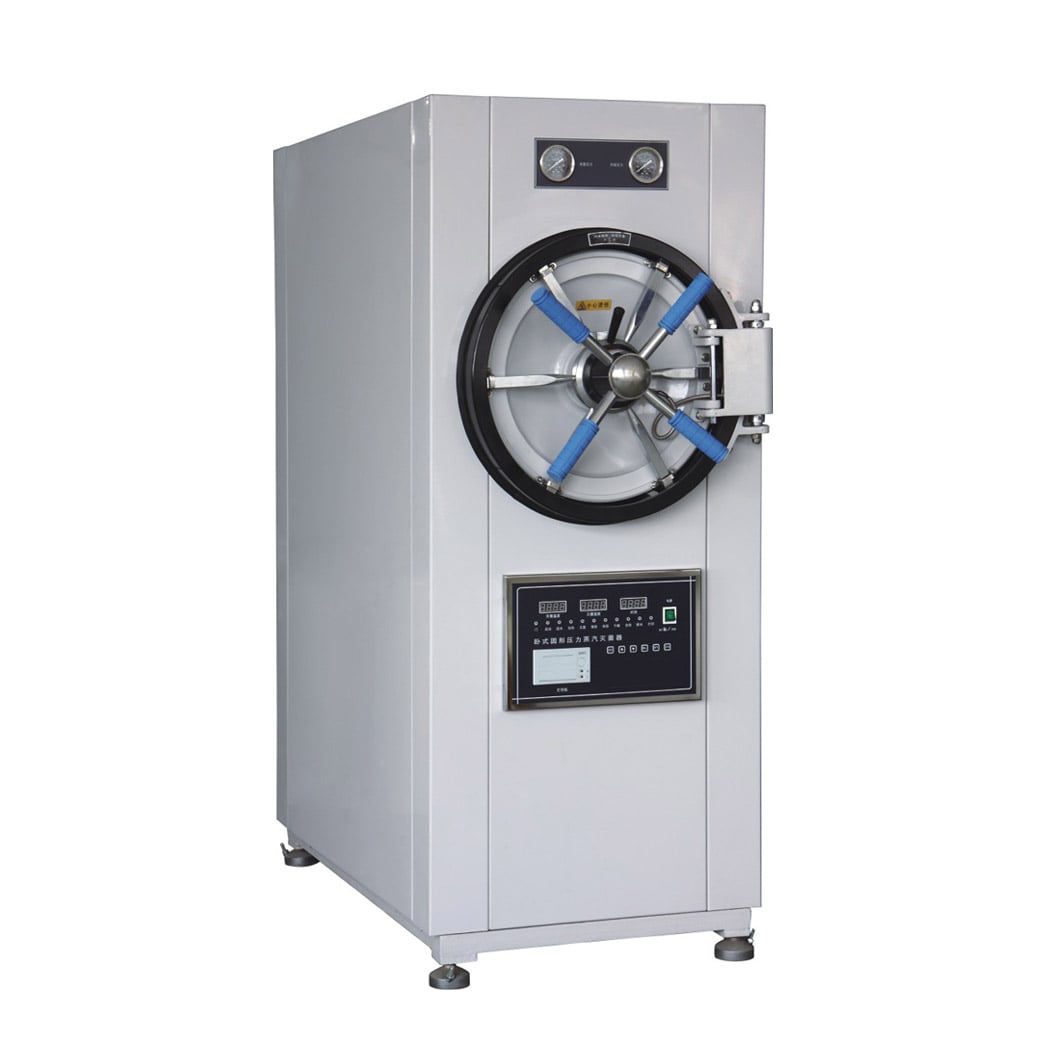 Load configuration must preserve the spacing required by the validated process.
A practical capacity worksheet uses this relationship:
Required loads in a peak window = Peak units required ÷ Validated usable units per load
Round up. If a load holds 6 trays and the peak requirement is 25 trays, plan for 5 loads, not 4.17. This step also reveals whether a larger autoclave would genuinely increase validated throughput or whether the constraint is tray geometry, packaging, staging, or staff availability.
Use total turnaround time, not exposure time alone
Next, calculate how frequently each autoclave can produce a released load. Total turnaround time includes loading, the selected cycle, drying or cooling as applicable, unloading, inspection, documentation, and preparation for the next load. The exposure phase is only one part of the calendar. For context, CDC describes recognized minimum exposure periods for wrapped healthcare supplies of 30 minutes at 121°C in gravity-displacement equipment or 4 minutes at 132°C in prevacuum equipment. Those values do not define your total processing time or authorize a local cycle choice; the relevant cycle must be validated for the load and equipment.
Use:
Loads available per autoclave in the peak window = Available processing minutes ÷ Total validated turnaround minutes per load
For example, if a validated load requires 70 minutes from loading to ready-for-release and the usable peak window is 280 minutes, one continuously available autoclave can schedule four completed turns. If the load holds six sets, the theoretical workflow capacity is 24 sets. That is not yet the purchase decision: one delay, a failed indicator review, a changeover, or an unplanned interruption can remove a whole turn.
Calculate the number of autoclaves and add resilience
Combine the two parts of the worksheet:
- List peak instrument demand by validated load family.
- Divide each demand by validated usable units per load and round up.
- Divide required loads by completed turns available per autoclave in the same window.
- Round up again, then review whether the result leaves room for routine disruption.
For a simplified illustration, a hospital needs 30 comparable sets during a 4-hour peak. The selected autoclave supports 6 validated sets per load, so five loads are required. If one autoclave can complete four released turns in that period, the arithmetic indicates more than one unit or a different workflow arrangement is needed. A second autoclave may provide capacity, but it can also provide resilience during preventive service, qualification work, or an unexpected stoppage. The appropriate margin depends on local criticality and the ability to divert work safely.
Do not hide this margin inside an optimistic chamber-fill assumption. State it explicitly as contingency capacity. This makes the decision easier to review with sterile processing leadership, engineering, and finance.
Check the constraints around the autoclave
An autoclave is part of a process, not an isolated vessel. Before finalizing capacity, test whether the surrounding system can sustain the calculated turns. Confirm staging space for clean and processed goods, rack and cart availability, water and steam or power requirements, drainage, ventilation, operator coverage, and the physical route between decontamination, preparation, sterilization, and sterile storage. Space and layout should be checked against the actual movement path, not a floor-plan rectangle.
Autoclave maintenance also affects available capacity. A nominal calculation that assumes uninterrupted use does not describe a real department. Include planned preventive work, calibration or verification activities, consumable replacement, response arrangements, and the time needed to return an autoclave to service. If the department has only one critical unit, ask how it will protect instrument availability during maintenance or corrective repair.
Build validation and monitoring into the sizing decision
Sizing is not complete when the autoclave is installed. Sterilization cycle validation should confirm that representative and worst-case load configurations can be processed as intended. CDC also describes the use of mechanical, chemical, and biological indicators to monitor whether the physical parameters needed for sterilization are achieved. Your local policy and qualified personnel should define the applicable program, records, and release decisions.
Keep a capacity file that links the demand assumptions to the validated load map, cycle records, maintenance plan, and contingency process. If clinical volume, packaging, instrument mix, or workflow changes, revisit the assumptions. More accurately, capacity is a managed operating condition, not a permanent number printed on the autoclave nameplate.
A final procurement checklist
- Have you measured peak demand by instrument family rather than relying on daily averages?
- Is each autoclave load based on a documented, validated configuration with adequate steam circulation?
- Does the calculation use total turnaround time, including release activities, rather than exposure time alone?
- Does the plan allow for autoclave maintenance, testing, and unplanned downtime?
- Have infection prevention, sterile processing, biomedical engineering, and facilities reviewed the assumptions?
The right autoclave capacity is the capacity that reliably supports your hospital’s validated peak workflow. Start with demand, prove the usable load, calculate real turnaround, and then add a transparent resilience margin. That approach gives a procurement team a stronger basis for comparing autoclave chamber capacity and for discussing medical instrument processing with a supplier.
 Hot News