EN


What Factors Affect Electrosurgical Unit Prices?
When a hospital, clinic, or distributor compares an electrosurgical unit, the first quote rarely tells the entire cost story. An electrosurgical unit is a generator-based surgical energy system, but the configuration around the generator can vary widely. That is why two quotations for an electrosurgical unit may look far apart even when both describe cutting and coagulation capability.
From a procurement evaluator’s perspective, the useful question is not simply, “Which electrosurgical unit costs less?” It is, “What clinical tasks, accessories, documentation, training, and service are included in each scope?” A comparison becomes clearer when the team puts every electrosurgical unit quote into the same framework before judging value.
Start by comparing the intended surgical workflow
The intended procedures are usually the first price driver. A basic electrosurgical unit for routine tasks may have a narrower set of modes than a system configured for multiple specialties, higher workload, or more demanding workflow controls. Rather than treating a longer feature list as automatically more useful, ask which functions the target users actually need during cutting and coagulation.
For example, monopolar electrosurgery and bipolar electrosurgery are not interchangeable labels on a quotation. Each approach can require different instruments, cables, activation methods, and return-electrode arrangements. If a department expects to use both approaches, the selected electrosurgical unit may need compatible outputs and a broader accessory set. The cost difference may therefore reflect workflow coverage, not just generator power.
A practical requirement sheet should identify the planned procedures, the users who will operate the electrosurgical unit, the expected frequency of use, and the instruments already in service. This helps suppliers quote a defined configuration rather than a generic base unit with unclear omissions.
Generator capability and control design influence the quote
An electrosurgical unit quotation can change with its available operating modes, output-control approach, control-panel design, memory settings, and monitoring functions. These elements affect how the generator supports particular cutting and coagulation tasks, but their relevance depends on the surgical workflow. A feature should be compared as a requirement, not as a marketing headline.
Ask each supplier to explain what is included for cutting and coagulation, how controls are selected, and whether the proposed electrosurgical unit supports the instruments and modes named in the requirement sheet. Where output ratings appear in competing quotes, verify the measurement context and intended mode rather than assuming that one number alone describes real-world suitability.
This is also the point to clarify electrical and workflow safeguards. FDA guidance on electrosurgical devices discusses devices and accessories such as patient return electrodes and smoke evacuation, and references high-frequency surgical equipment safety requirements. That context does not establish the status of any particular electrosurgical unit; it does show why engineering, accessory compatibility, and documentation may be part of a more complete quotation.
Accessories can be a large part of the initial and ongoing cost
Electrosurgical accessories often explain why similar-looking generator prices cannot be compared in isolation. A proposal may include handpieces, foot switches, cables, electrodes, patient return electrodes, adapters, carts, smoke-management connections, or starter consumables. Another proposal may list only the electrosurgical unit itself. Both can be valid offers, but they do not represent the same purchasing scope.
Create an accessory matrix with three columns: included at delivery, required before first use, and expected recurrent purchase. For monopolar electrosurgery, verify the return-electrode and cable arrangement along with compatible active electrodes. For bipolar electrosurgery, confirm the compatible forceps or other instruments, connection method, and reprocessing or replacement assumptions. This step prevents a low initial electrosurgical unit figure from becoming an incomplete budget.
Check whether electrosurgical accessories are proprietary, universally compatible, or subject to documented compatibility limits. Do not assume interchangeability from connector appearance. Request the manufacturer’s compatible-accessory list and keep it with the technical comparison file.
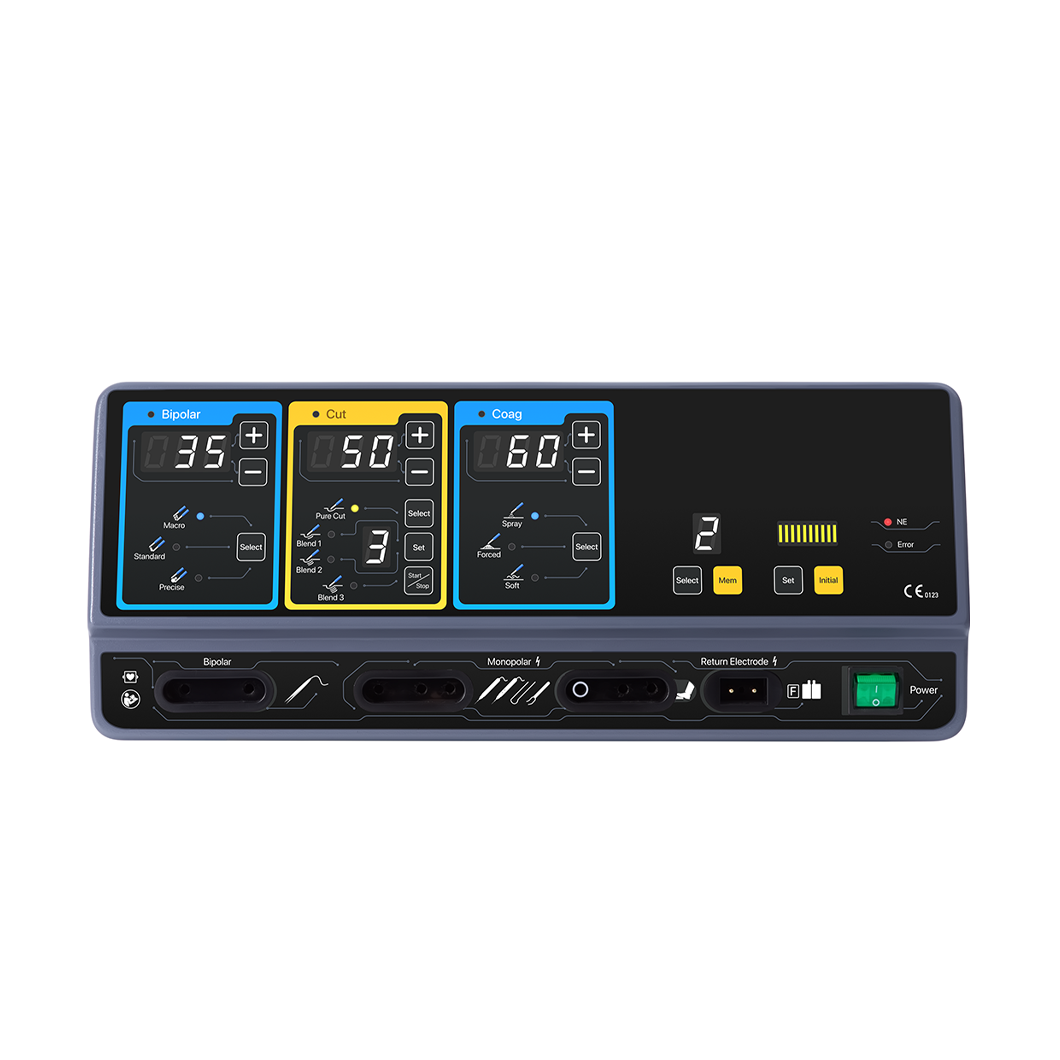 A configuration checklist helps compare an electrosurgical unit scope beyond the generator alone.
Documentation, testing, and market requirements affect supply cost
A supplier may need to provide different documents, labels, manuals, electrical information, or test records depending on the purchasing organization and target market. These requirements can affect the supplied electrosurgical unit configuration, lead time, and commercial scope. The correct documents and applicability should be confirmed by the buyer’s regulatory, clinical, and engineering teams rather than inferred from a brochure.
For cross-border purchasing, ask for a document checklist early. It should state the model, included accessories, serial-number handling where relevant, language requirements, shipping documents, and the evidence needed for the intended market. This is not a reason to over-specify a system; it is a way to avoid comparing a fully documented electrosurgical unit with a quote that leaves verification work unresolved.
Installation, training, and service change total ownership cost
The purchase price is only one part of the cost of an electrosurgical unit. Budget discussions should also include delivery, installation or acceptance support, user training, biomedical-engineering orientation, planned maintenance, repair response, spare parts, and consumable availability. A system that looks economical at purchase may require more internal coordination if these elements are excluded.
Training deserves a specific line item. The goal is not merely to turn on an electrosurgical unit, but to align users with the approved workflow, accessory setup, inspection steps, and escalation process. Ask who delivers training, what it covers, which roles attend, and what records are supplied. The same approach applies to technical service: confirm response channels, service geography, parts availability, and which activities are included or billed separately.
How to compare quotations fairly
Use one normalized worksheet for every electrosurgical unit proposal. Include the exact model; monopolar electrosurgery and bipolar electrosurgery functions; cutting and coagulation modes; included electrosurgical accessories; compatible instruments; documentation; delivery terms; training; service; warranty scope; recurrent consumables; and acceptance criteria. When a line item is unclear, mark it “to be confirmed” rather than assuming it is included.
Then compare the offers in stages: first confirm the clinical and technical scope, then calculate the delivered configuration, and finally review ongoing resource needs. More accurately, the goal is not to choose the lowest generator price. It is to choose an electrosurgical unit scope that fits the intended workflow and can be verified before purchase.
Questions to send with an RFQ
- Which model and exact configuration of the electrosurgical unit are quoted?
- Which cutting and coagulation modes are included, and for which planned tasks?
- What is included for monopolar electrosurgery and bipolar electrosurgery?
- Which electrosurgical accessories, cables, electrodes, and switches are included at delivery?
- Which accessories are recurrent consumables, and what compatibility evidence is available?
- What documentation, training, installation support, maintenance, and service are included?
- What acceptance checks should the purchasing, clinical, and engineering teams complete?
Bottom line
Electrosurgical unit prices are shaped by clinical scope, generator features, accessory content, verification requirements, and lifecycle support. A disciplined comparison of the complete electrosurgical unit package helps buyers turn an unclear price gap into concrete questions. This article provides a procurement framework and does not replace clinical, engineering, regulatory, or local safety assessment.
 Hot News