 EN


What Accessories Are Needed for an Electrosurgical Unit?
An electrosurgical unit is not ready for a procedure simply because the generator powers on. The usable system includes the accessories that deliver energy, manage the return path when required, and support controlled handling at the sterile field. From a biomedical-engineering communication perspective, the right question is not “Which accessories come with an electrosurgical unit?” It is “Which accessories are compatible with this generator, intended mode, procedure workflow, and local protocol?”
This article is a purchasing and setup framework, not clinical or regulatory direction. The care team, facility policy, instructions for use, and applicable local requirements determine the final configuration for any electrosurgical unit.
Start with the energy mode, not the accessory catalog
Before ordering electrosurgical accessories, identify whether the case requires monopolar electrosurgery, bipolar electrosurgery, or both. That distinction changes the circuit and the accessory list. A generator may support several modes, but a particular electrosurgical unit setup should be verified for the selected mode rather than assumed from a broad product description.
With monopolar electrosurgery, energy travels from an active electrode at the surgical site through the patient and returns through a patient return electrode. With bipolar electrosurgery, the active and return functions are incorporated at the operative site, typically through a bipolar instrument. What matters is not the number of accessories, but whether each one completes the intended energy pathway under the manufacturer’s instructions.
Core accessories for a monopolar electrosurgical unit
A monopolar configuration usually needs the following components. Exact connector types, single-use or reusable status, and compatibility vary by electrosurgical unit and accessory family.
- Active electrode handpiece or pencil: This is the hand-held control that accepts an electrode and can use hand-switch or foot-switch activation. Confirm the connector, control method, and intended use with the generator documentation.
- Active electrodes: Tips such as blades, needles, loops, balls, and specialty shapes allow the operator to select an appropriate working geometry. The procedure plan determines the required options; an electrode assortment should not be treated as universally interchangeable.
- Patient return electrode: Often called a dispersive electrode or return pad, this item is part of monopolar electrosurgery. It provides the return path required by the system. Selection and placement must follow the device instructions and clinical protocol.
- Return-electrode cable: Some systems require a separate cable between the patient return electrode and the electrosurgical unit; others use an integrated design. Verify the supplied pad, cable, and generator are approved for use together.
- Footswitch, if selected: A footswitch may be needed when activation is not controlled from the handpiece. Check its connector, pedal configuration, cable length, and compatibility before purchase.
- Insulated safety holster: A clean, dry, insulated holster is a practical field accessory for an inactive active electrode. It should be included in the setup plan rather than treated as an afterthought.
For purchasing, request a configuration table that maps every monopolar component to the specific electrosurgical unit model. That prevents a common gap: comparing a generator price without defining the cable, pad, handpiece, and activation arrangement included in the quote.
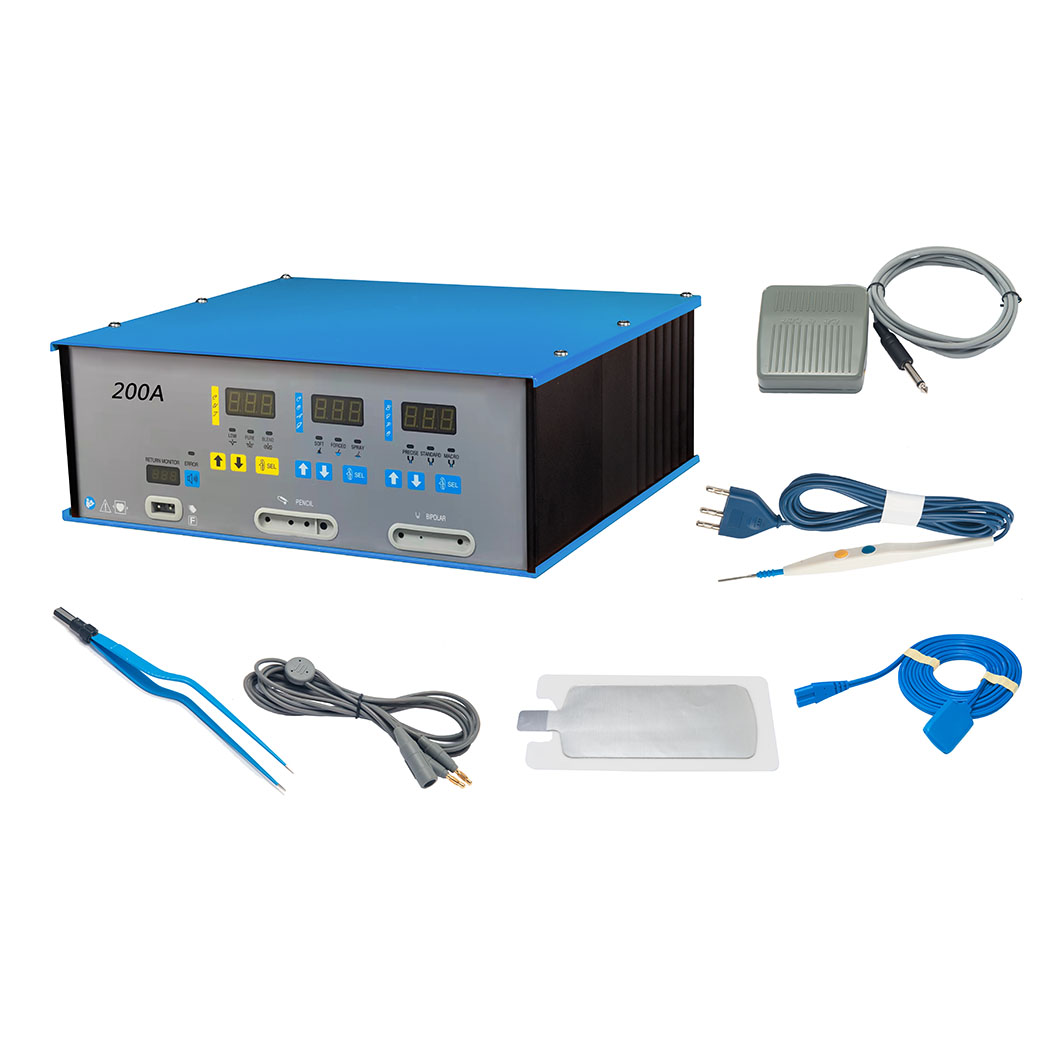 A configuration review should account for the generator, energy mode, compatible accessories, and workflow controls.
What changes for bipolar electrosurgery?
A bipolar setup generally uses bipolar forceps or another bipolar instrument plus the appropriate bipolar cable or adaptor for the electrosurgical unit. Because the circuit functions are at the operative site in bipolar electrosurgery, a patient return electrode is generally not part of that circuit. The instrument and cable still need explicit generator compatibility confirmation.
Facilities using both modes should keep bipolar accessories separate from monopolar electrosurgery accessories in the inventory list. Clear labels, connector checks, and a pre-use review make it easier to avoid selecting a cable or instrument based only on its appearance.
Accessories that support cutting and coagulation workflows
Cutting and coagulation are functions selected at the electrosurgical unit, but the accessories influence whether those functions can be delivered as intended. A practical setup list can include:
- an electrode style and handpiece suitable for the planned procedure;
- a compatible patient return electrode and cable for monopolar electrosurgery;
- a compatible bipolar instrument and cable where bipolar electrosurgery is planned;
- an activation option—hand switch or footswitch—matched to the workflow;
- an insulated holster for safe management of the inactive active electrode; and
- cleaning, reprocessing, or single-use replacement arrangements that match the accessory instructions.
Do not infer that an accessory supports every cutting and coagulation setting simply because it connects physically to an electrosurgical unit. Electrical, mechanical, and intended-use compatibility should all be checked against current documentation.
A pre-purchase compatibility checklist
For an electrosurgical unit purchase or replacement project, turn the accessory decision into a short verification sheet:
- List the procedures and energy modes actually planned.
- Record the generator model, connector family, and available activation ports.
- Specify the required monopolar handpieces, electrodes, return electrodes, cables, and holsters.
- Specify the required bipolar instruments, cables, or adaptors separately.
- Confirm whether each accessory is single use or reusable and who manages reprocessing or replenishment.
- Review compatible accessories in the manufacturer documentation; do not substitute based on connector fit alone.
- Define receiving, inspection, training, and pre-use checks before the electrosurgical unit enters routine service.
Procurement discussions often leave the configuration boundary undefined. Asking which accessories are included, which are optional, and which must be replenished later helps the team compare complete electrosurgical unit configurations rather than incomplete line items.
Why handling and maintenance accessories matter
An accessory list should also cover how the electrosurgical unit will be used and maintained between cases. Cable condition, connector integrity, storage, cleaning instructions, and availability of replacement consumables affect day-to-day readiness. If a facility expects reusable accessories, confirm the validated reprocessing pathway and responsibility before deployment. If it expects disposable items, confirm stock control and approved alternatives.
Compatibility is especially important when a facility already owns instruments or cables. An existing item may look usable, but only the applicable documentation can establish whether it is suitable for the specific electrosurgical unit and intended application. A biomedical engineer, perioperative lead, and supplier can review that configuration line by line.
Final takeaway
The essential accessories for an electrosurgical unit depend on whether the workflow uses monopolar electrosurgery, bipolar electrosurgery, or both. A monopolar set commonly includes an active handpiece, appropriate electrodes, a patient return electrode, associated cables, an activation option, and an insulated holster. A bipolar set commonly includes a compatible bipolar instrument and cable, without using a patient return electrode for that bipolar circuit.
Use the accessory list as a verification tool, not a substitute for instructions, training, or clinical judgment. When evaluating an electrosurgical unit, first confirm the procedure needs, then confirm the complete compatible configuration, and finally agree on inspection, training, and replenishment responsibilities.
 Hot News

