 EN


What Features Should Buyers Compare in Electrosurgical Units?
Buying an electrosurgical unit is not simply a matter of comparing a brochure’s highest wattage figure. A hospital procurement team needs to connect the electrosurgical unit to planned procedures, staff routines, accessories, room infrastructure, and long-term support. From a hospital procurement evaluator’s perspective, that sequence makes the comparison more useful: first define the surgical task, then compare the configuration, and finally verify what can be supplied, installed, and maintained.
An electrosurgical generator creates high-frequency energy for surgical cutting and coagulation, but the value of a particular configuration depends on how it fits the intended workflow. The same is true when a team uses the terms surgical diathermy machine or electrosurgery equipment. Those labels can describe a category, not a complete list of capabilities. The questions below turn broad interest into a practical comparison sheet.
Start with the procedures and energy modalities
Before ranking any electrosurgical unit, list the procedures, specialties, and anticipated case mix. Ask surgeons and theatre staff which tissue effects, instrument types, and modes are actually required. A unit intended mainly for routine open procedures may need a different output mix from one being assessed for minimally invasive work. More accurately, the important issue is not the number of modes on the front panel; it is whether the available modes fit the stated clinical tasks and local protocols.
Compare whether each electrosurgical unit supports the monopolar and bipolar functions required by the planned workflow, then request clear documentation for cut, coagulation, and blended modes. Buyers should also ask how settings are selected, displayed, recalled, and limited by user permissions. These details affect training and setup consistency. Do not assume that a mode with a similar name operates identically across different electrosurgery equipment.
Compare output control, not just maximum power
Maximum output can be a useful specification, but it is only one field in an electrosurgical unit comparison. Put rated output, available modes, adjustment increments, operating frequency information, load conditions, and stated duty-cycle limits into the same table. Then ask the supplier to identify which figures apply to each mode rather than presenting one headline number. A lower or higher published rating is not, by itself, evidence that an electrosurgical unit is suitable for a particular specialty.
For each candidate electrosurgical generator, review the controls that help users confirm settings before activation: display readability, audible indications, preset handling, footswitch behavior, and error messages. If the operating room uses shared carts or rotates staff, the physical placement of controls and cables is worth checking during a demonstration. This is where an abstract feature list becomes an operating-room task.
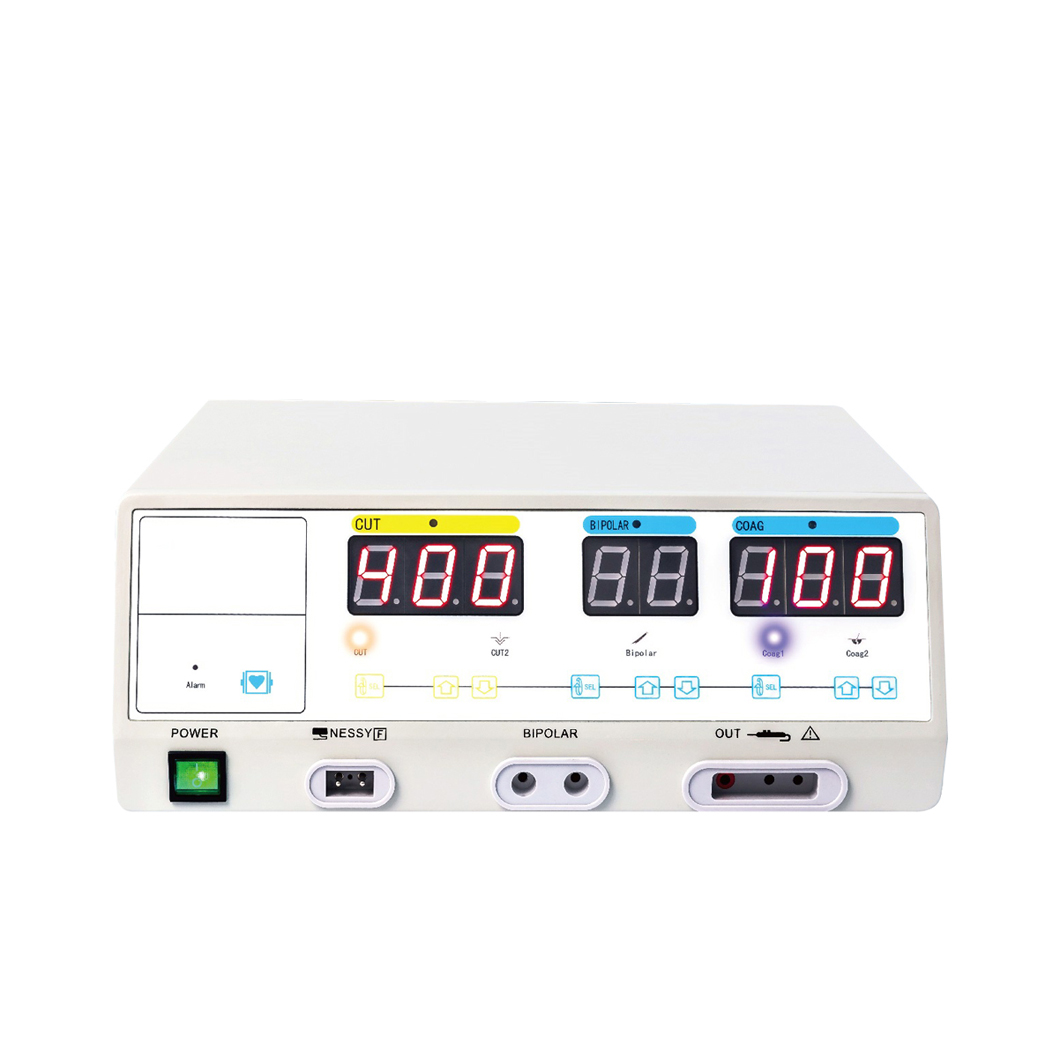 Compare the console alongside its compatible accessories and operating-room workflow.
Evaluate safety functions with their compatible accessories
Safety features should be compared as a system. For monopolar use, ask how the electrosurgical unit works with return electrodes, what monitoring functions are available, and which compatible electrode types are specified. FDA labeling guidance notes that return-electrode contact monitoring depends on use of a compatible monitoring neutral electrode. Therefore, buyers should confirm the exact generator, cable, and electrode combination proposed for their workflow rather than treating a monitoring label as a stand-alone feature.
Also request the alarm descriptions, fault indications, self-test sequence, and user manual sections that define required responses. IEC 60601-2-2:2017 covers basic safety and essential performance for high-frequency surgical equipment and accessories. That reference is a reason to ask what approvals, applicable edition, test documentation, and market-specific regulatory evidence accompany the offered electrosurgical unit; it is not a basis for assuming that any device is cleared for every market or procedure.
Check accessory, instrument, and room compatibility
An electrosurgical unit rarely operates alone. Build an accessory matrix that lists handpieces, pencils, electrodes, bipolar forceps, return electrodes, cables, footswitches, smoke-management interfaces where relevant, and any adapters. For every item, record whether it is included, optional, reusable, single-use, or supplied by another party. A surgical diathermy machine can appear competitively priced until its compatible accessories and recurring consumables are compared alongside it.
Compatibility also includes the room. Confirm power requirements, grounding and electrical-safety expectations, cart or shelf dimensions, cable routing, cleaning limitations, and any interoperability requirements with existing operating room devices. If a proposed electrosurgical unit will be used in a new or renovated theatre, involve biomedical engineering before the purchase decision. Installation conditions may alter which configuration is practical.
Assess usability, training, and workflow fit
Ask for a guided workflow demonstration rather than a feature tour. Have the supplier show startup, accessory connection, preset selection, changes between monopolar and bipolar use, alarm recognition, shutdown, and routine cleaning. Compare the electrosurgical unit from the viewpoint of circulating staff, sterile users, and biomedical personnel. A function that is useful in a specification sheet may require additional training, a different accessory, or a local policy before it can be incorporated into routine work.
Training should be defined in the quotation: audience, format, duration, documentation, refresher options, and responsibility for competency records. For an electrosurgical generator, clarify whether training covers accessories and workflow limits as well as console controls. This matters when several departments will share the platform.
Compare serviceability and total ownership resources
Include warranty scope, response channels, preventive-maintenance recommendations, service access, spare-part availability, software-update policy, loaner arrangements, and expected accessory supply in the comparison. An electrosurgical unit purchase should be reviewed across deployment, training, maintenance, and consumable resources, not only the initial quotation. Ask who performs planned service, which documents are supplied at handover, and how faults are logged or escalated.
It is also useful to compare the electrosurgical unit with a shared-cost template. Separate the console, cart, included accessories, required consumables, training, installation, commissioning, and future service. This approach does not predict a specific cost outcome; it exposes assumptions that otherwise remain outside the bid comparison.
A buyer’s final comparison checklist
- Does the electrosurgical unit support the required monopolar, bipolar, and procedure-specific modes?
- Are output specifications documented by mode and realistic operating condition?
- Which return electrodes, cables, handpieces, and instruments are confirmed as compatible?
- How are alarms, self-tests, settings, and user prompts handled in the actual workflow?
- What installation, power, space, training, maintenance, and service conditions apply?
- Which regulatory and safety documents are applicable to the target market and proposed configuration?
A disciplined comparison makes an electrosurgical unit decision easier to review across clinical, procurement, and engineering stakeholders. The practical next step is to issue the same scenario-based checklist to each supplier, then validate the proposed configuration with the teams who will install, maintain, and use it. That process keeps the discussion focused on fit, evidence, and verification rather than a single headline specification.
 Hot News

