 EN


How to Choose an Electrosurgical Unit for an Operating Room
Choosing an electrosurgical unit is not simply a matter of comparing a power rating or counting modes. In a busy operating room, the unit has to fit the procedures performed, the accessories already in circulation, the team’s safety routine, and the hospital’s capacity to train and maintain it. From a biomedical-engineering perspective, a practical selection process starts with the clinical workflow and works back to the configuration.
An electrosurgical generator delivers high-frequency energy through a complete system that includes the generator, active electrode or handpiece, cables, and—when monopolar energy is used—a patient return electrode. The right combination depends on how those components will be used together, not on the generator alone.
Start with the procedures, not the specification sheet
Build a short procedure map before comparing an electrosurgical unit. Ask which specialties will use it, whether cases are mainly open, laparoscopic, or mixed, and which tissue effects the team needs most often: cutting, coagulation, or both. Also record whether bipolar instruments, monopolar accessories, smoke evacuation interfaces, or vessel-sealing instruments are part of the expected workflow.
This step prevents a common purchasing mistake: selecting a broad feature list that does not match the daily case mix. A general surgery room and a specialty room may place different demands on activation control, instrument compatibility, cable length, and available energy modes. More accurately, the important question is not how many functions appear on the front panel, but whether the required functions can be set up consistently for the target procedures.
Translate clinical needs into configuration requirements
Monopolar and bipolar capability
For monopolar work, confirm the intended active electrodes, return-electrode monitoring approach, and compatibility of reusable or disposable accessories. For bipolar work, verify the connector style and the instruments the team expects to use. If vessel-sealing or other advanced functions are under consideration, ask the supplier to define the compatible instrument family and the exact conditions for use rather than assuming interchangeability.
These checks matter because an electrosurgical unit is part of a system. A capability shown in a brochure may not be relevant if the operating room cannot connect, stock, inspect, or support the accessories needed to use it.
Controls, presets, and workflow consistency
Observe how the team activates energy during a representative case. Footswitches, hand controls, connectors, display readability, alarm behavior, and preset management can all affect setup and handoffs. A useful electrosurgical generator should allow the department to establish clear settings and verification steps without relying on memory alone. Request a demonstration that mirrors local preparation, intraoperative use, and turnover rather than a generic bench demonstration.
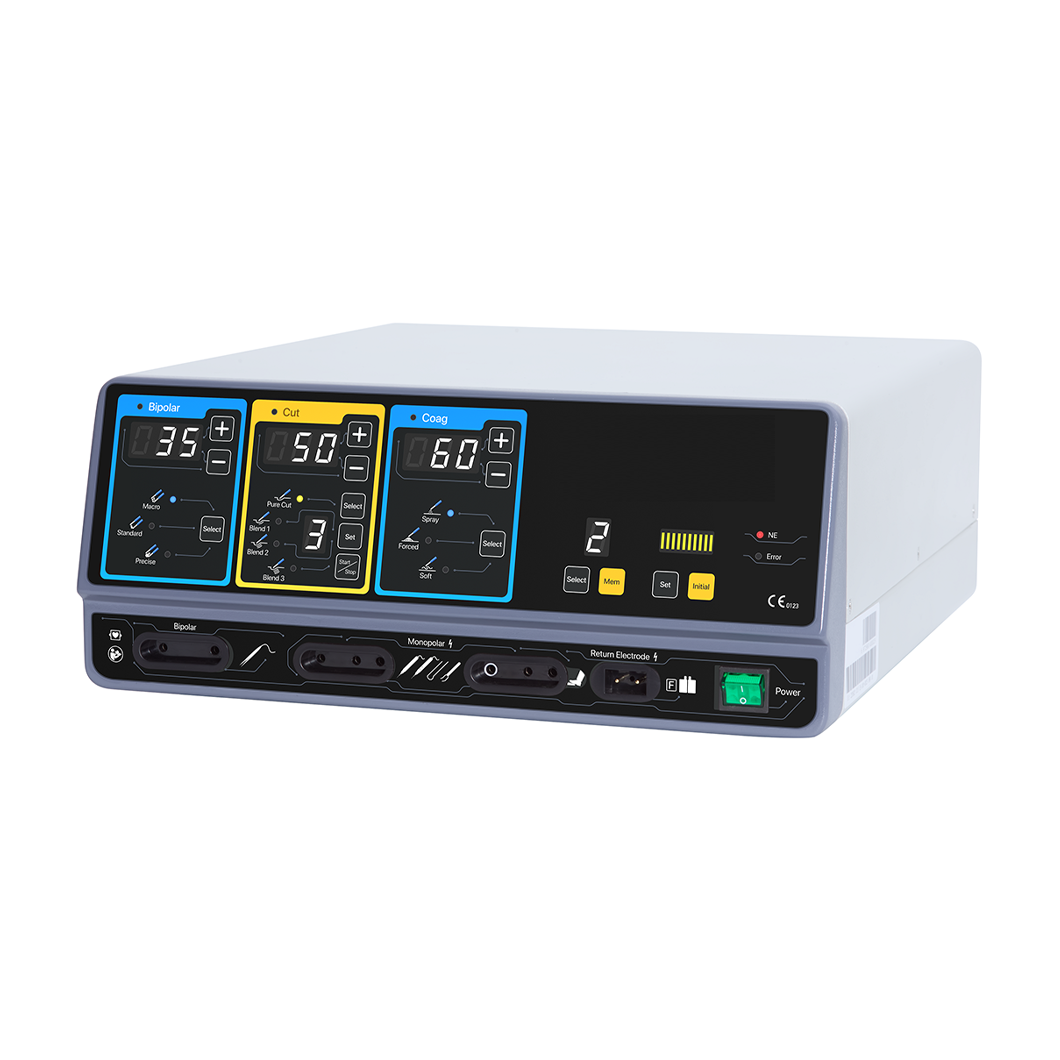 Workflow and safety checks belong in the selection process.
Make electrosurgery safety a purchase criterion
Electrosurgery safety should appear in the evaluation matrix, not only in staff training after installation. Perioperative guidance commonly emphasizes correctly applied return electrodes for monopolar use, safe storage of an inactive active electrode in an insulated holster, and using the lowest setting that is appropriate for the surgical task. Local policy, manufacturer instructions, and the clinical team’s judgement remain the controlling references.
During evaluation, ask how the electrosurgical unit indicates a disconnected or poorly connected return electrode, how alarms are displayed, and what users must do before activation. Review cable inspection routines, accessory traceability, cleaning boundaries, and the arrangement of accessories around fluids and oxygen-enriched environments. The device alone cannot create a safe workflow; it must support one that the team can reliably perform.
- Confirm the training content for surgeons, nurses, anesthesia personnel, and biomedical staff.
- Review the manufacturer’s instructions for accessory compatibility and inspection.
- Include alarm response and emergency isolation in acceptance testing.
- Define who owns preventive maintenance, software updates, and repair escalation.
Assess integration with the operating room
An electrosurgical unit should fit the physical and operational layout of the room. Check cart or mounting needs, cable routing, available electrical outlets, cleaning access, and the location of the display during use. When surgical smoke management is relevant, clarify how the selected unit and evacuation workflow will be coordinated. This is especially important when several surgical energy devices may be present at once.
Integration also includes documentation. Determine what acceptance-test records, operator training records, service reports, and accessory lists should be retained. If the unit will be used across several rooms, ask whether the same setup and labeling conventions can be reproduced in each location. A feature is only useful when it can be used and verified in the real workflow.
Compare lifetime support, not just the initial purchase
Procurement teams should evaluate an electrosurgical unit over its working life. List expected consumables, reusable accessory inspection requirements, warranty boundaries, response arrangements, planned maintenance, and availability of technical documentation. Ask what training is included at commissioning and what refresher support is available when staff change.
This broader view is useful because the apparent purchase price is only one part of implementation. A unit with a clear maintenance path, available accessories, and a workable training plan may be easier to sustain than one whose operating requirements are difficult to support locally. The final comparison should document assumptions so the clinical, procurement, and biomedical teams can review them together.
Use a structured evaluation and acceptance checklist
Before making a decision, turn the findings into a shared checklist. Score each candidate against the actual procedure mix, required energy modes, accessory compatibility, alarms and safety workflow, physical integration, training, service, and total support requirements. Invite representative users to validate the workflow during a demonstration.
- List the procedures and instruments that the electrosurgical unit must support.
- Verify compatible handpieces, cables, return electrodes, and bipolar instruments.
- Review alarm behavior, user controls, and local electrosurgery safety practices.
- Confirm installation, electrical, cleaning, and documentation requirements.
- Perform acceptance testing with the responsible clinical and biomedical teams before routine use.
Choosing operating room equipment in this way makes the decision easier to defend and easier to implement. The aim is not to identify a universally suitable unit. It is to select an electrosurgical unit whose configuration, accessories, service plan, and safety workflow can be verified for the rooms and procedures it will support.


 Hot News

