 EN


What Is an AED and When Is an Automated External Defibrillator Used?
An AED, short for automated external defibrillator, is portable emergency medical equipment designed to analyze a person’s heart rhythm and guide a responder when a shockable rhythm may be present. In a suspected sudden cardiac arrest, an AED is part of a fast, coordinated response: call emergency services, start CPR when appropriate, bring the AED, and follow its voice or visual prompts. The device does not replace emergency dispatch instructions, trained care, or local emergency protocols.
In practice, having an AED on site is only the starting point. People also need to locate it, recognize the emergency, activate the response plan, and use the AED without delaying CPR or emergency services. That distinction matters in workplaces, schools, clinics, public venues, and other locations that keep emergency medical equipment available.
What does an AED do?
An AED is a computerized defibrillator. After pads are placed on a person’s bare chest as shown by the AED, the device analyzes the heart rhythm. If the AED identifies a rhythm for which a shock is indicated, it gives clear prompts for the responder to stand clear and, depending on the AED design, either delivers the shock automatically or instructs the responder to press a button. The AED then continues to guide the response, including when to resume CPR.
That makes an automated external defibrillator different from a general first-aid item. An AED is built to assess rhythm and direct the user through a defined sequence. A responder should not try to interpret the rhythm independently or improvise the AED workflow. Follow the device prompts, emergency dispatcher directions, and the training applicable in your location.
When is an AED used?
An AED is used when a person is suspected of having sudden cardiac arrest and is unresponsive with absent or abnormal breathing. Cardiac emergency response should begin immediately: contact local emergency services, send someone for the AED if available, begin CPR if you are trained or directed to do so, and use the AED as soon as it arrives. The AED analyzes the rhythm; it does not require a bystander to decide whether a shock is needed.
It is important not to confuse sudden cardiac arrest with every report of chest discomfort or a heart attack. A heart attack can occur while a person remains awake and breathing, whereas sudden cardiac arrest is a loss of effective heart function that can cause collapse and unresponsiveness. Symptoms and causes can overlap, so in any suspected emergency, emergency dispatch guidance takes priority. An AED may be appropriate in an arrest response, but it is not a diagnostic tool for someone who is alert and speaking.
A practical AED response sequence
Local procedures and AED device instructions control the details, but a typical cardiac emergency response follows this order:
- Check the scene and the person. Look for safety hazards, assess responsiveness, and follow your organization’s emergency plan.
- Activate emergency help. Call the local emergency number or assign a specific person to call. Ask another person to retrieve the AED and bring the emergency medical equipment kit if one is available.
- Start CPR without unnecessary delay. Follow dispatcher guidance and your current training while the AED is being retrieved.
- Turn on the AED and expose the chest. Apply the AED pads exactly as illustrated. If the device gives a warning or a special instruction, follow it.
- Clear for analysis and follow prompts. No one should touch the person while the AED analyzes. If the AED advises a shock, make sure everyone is clear and follow the prompted action.
- Resume CPR when directed. Continue until emergency professionals take over, the person shows signs of recovery, or you are instructed otherwise.
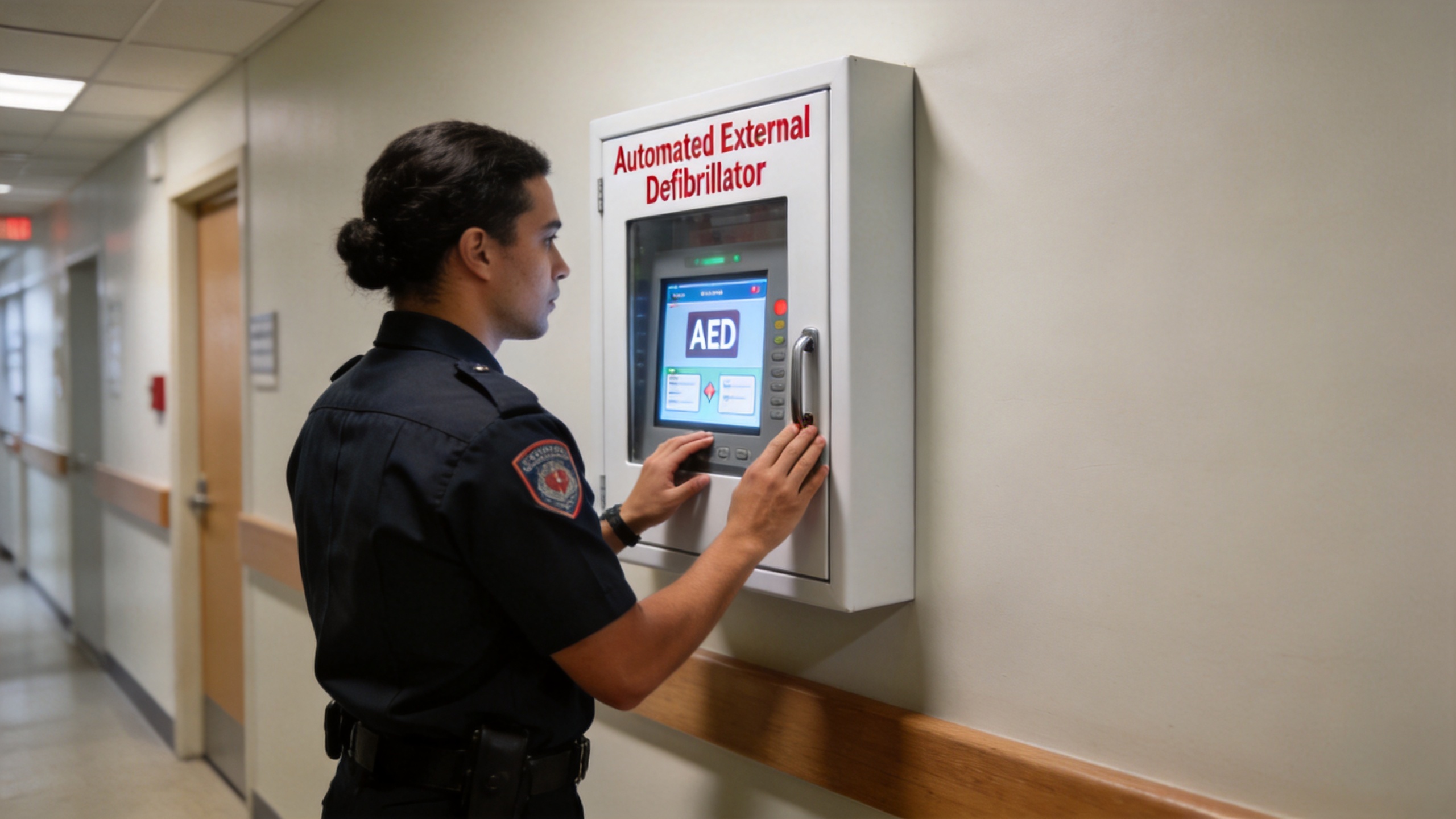
An AED device is intended to make the sequence easier to follow under pressure, not to make the situation routine. If your team has an AED, regular drills should clarify who calls, who retrieves the AED, who meets emergency responders, and how the site documents a post-incident equipment check.
Where might an AED be found?
Public-access AED programs often place an AED in visible locations such as offices, schools, airports, retail areas, community facilities, and sports venues. A wall cabinet, clear signage, and a location on the site emergency map can reduce the time spent searching. Still, a visible AED is only one part of preparedness. Access may be limited by locked rooms, building hours, poor signage, or staff uncertainty about the response plan.
For facility teams, the AED location should be considered alongside the likely response path. Can a visitor find the AED? Is it reachable during all operating hours? Does the emergency plan identify a backup responder? These are operational questions, not claims about any one AED model.
What should an AED readiness check include?
Organizations evaluating an AED device should use a simple, documented checklist. First, confirm the intended setting and the people expected to respond. Next, verify the AED’s pad and battery status according to the manufacturer’s instructions, and set a schedule for inspections and replacement dates. Check that signage, cabinet access, and emergency contacts are current. Finally, confirm whether the AED configuration and available pads match the populations served; pediatric use requirements can vary by device and local protocol.
Training also needs boundaries. An AED program should align with local laws, clinical oversight where required, emergency medical services coordination, and current CPR/AED training. A written checklist helps a site move from “we have an AED” to “we have a workable cardiac emergency response.”
Key takeaway
An AED is an automated external defibrillator used as part of an urgent response to suspected sudden cardiac arrest. The AED analyzes heart rhythm and gives prompts that help a responder act within a structured process. The most useful preparation is practical: know where the AED is, call emergency services, begin CPR as directed, follow the AED prompts, and maintain the device and response plan. This article explains a general framework and does not replace emergency instructions, certified training, medical advice, or local requirements.

 Hot News

