 EN


What Are the Main Components of an AED Device?
An AED, or automated external defibrillator, is designed to guide a rescuer through a cardiac emergency response. It is not just a box that delivers an electrical shock. An AED device combines a rhythm-analysis system, clear user instructions, adhesive electrode pads, a power source, and readiness features so the right sequence can happen under pressure. Understanding the main AED components helps facility teams plan training, inspections, and replacement supplies before an emergency occurs.
From a clinical-workflow perspective, the value of an AED depends on whether people can find it, turn it on, understand its prompts, and use its pads as directed. This overview explains the common parts of an AED device. It is educational information, not a substitute for local emergency protocols, formal CPR/AED training, medical direction, or the instructions supplied with a specific unit.
How an AED works as a connected system
During a suspected cardiac arrest, the AED is brought to the person, powered on, and connected using the electrode pads. The AED analyzes the heart rhythm through the pads and provides prompts about the next action. If the AED determines that a shock is indicated, it instructs rescuers to keep clear before shock delivery. If a shock is not indicated, the AED continues to guide the response. Each component supports a specific step, which is why an AED should be checked as a complete system rather than as a single device.
The U.S. Food and Drug Administration describes an automated external defibrillator system as including necessary accessories such as a battery and pad electrodes. Those accessories allow the AED to detect and interpret a person’s heart rhythm and, when indicated, deliver a shock. More accurately, a visible AED cabinet is only one part of emergency medical equipment readiness; the unit, consumables, training plan, and inspection process must work together.
1. The AED main unit
The main AED unit contains the electronics that receive the rhythm signal, analyze it, manage the charging process, and deliver instructions. The outer case typically protects the device and provides access to the controls, screen, speaker, and pad connection. Some AED designs use a lid that activates the unit when opened, while others use a clearly marked power button. The exact arrangement varies, so teams should learn the operation of the AED model they actually maintain.
The main unit is designed to limit unnecessary decisions during a cardiac emergency response. A rescuer does not need to interpret an ECG rhythm independently; the AED analyzes the signal and gives direction. That does not mean the AED operates without human action. Someone still needs to call emergency services, begin CPR when appropriate, expose the chest, attach the pads, follow prompts, and keep people clear when instructed.
2. The prompt system: speaker, screen, lights, and controls
An AED device must communicate clearly when the environment is stressful. The control and prompt system may include a speaker, display, status lights, a power button, and, in some models, a shock button. These parts tell the rescuer what to do next: apply the pads, stand clear during analysis, resume CPR, or prepare for a directed shock.
Voice prompts are especially important because the AED can guide a responder who has limited experience. Visual prompts and pad-placement diagrams reinforce the same sequence. The American Heart Association notes that AEDs may use voice prompts, lights, and text messages to direct rescuers. If your team is evaluating an AED, do not only ask whether it has prompts. Ask whether likely responders can understand the wording, screen, and controls.
3. Electrode pads and the pad connector
Adhesive electrode pads are among the most visible AED components. The pads attach to the bare chest in the locations shown by the diagrams on the pad packaging or AED device. Once attached, the pads allow the AED to collect the signal used for rhythm analysis. When the AED directs a shock, the pads are also the pathway through which energy is delivered.
Pad packaging, cable condition, connector fit, expiration information, and adult or pediatric compatibility all matter. A common readiness error is to see an AED in its cabinet and assume it is ready without checking its pads. The main unit cannot complete its intended sequence if the pads are missing, damaged, expired, or incompatible with the AED. Follow the manufacturer’s instructions and your organization’s policy for storage, replacement, and post-use checks. Do not reuse single-use pads after an event.
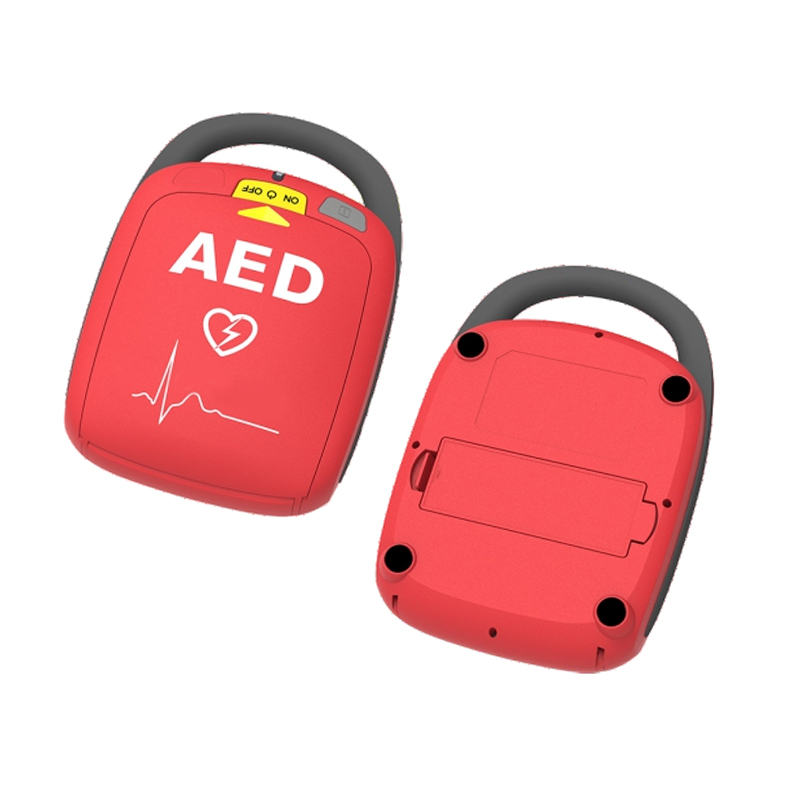 A model-neutral illustration of common AED components and response accessories.
4. Battery or power supply
The AED battery powers the device, including its self-check functions, prompts, rhythm analysis, charging sequence, and any indicated shock. Battery designs differ among AED models, so a replacement battery must match the approved configuration for that unit. The battery status indicator may show a readiness symbol, warning light, or alert message, but that indicator should be reviewed as part of a documented inspection routine.
Battery readiness cannot be separated from the rest of the AED device. An AED with a present but depleted battery may not be available when needed. Keep the model-specific battery replacement schedule, spare-battery plan, and inspection records where the AED coordinator can verify them. If an AED signals a service alert, follow the unit’s instructions and local policy rather than waiting for a routine check.
5. Rhythm-analysis and shock-delivery circuitry
Inside the AED, software and electronics analyze the rhythm signal received through the pads. The AED then determines whether a shock is advised according to its programmed algorithm. If a shock is advised, the device charges and instructs people not to touch the patient. Depending on the AED model, the rescuer may press a shock button after a prompt, or the AED may use an automated delivery process. The unit’s instructions are the authority in that moment.
This component is why keeping clear during analysis and shock delivery matters. Movement or contact can interfere with the process and may create a safety concern. A practical training point is simple: when the AED says to stand clear, responders should visually confirm that no one is touching the person before proceeding.
6. Pediatric capability, response accessories, and cabinet items
Some AED programs include pediatric pads or a pediatric setting for use when appropriate. These items are not interchangeable across all AED systems, so organizations should verify compatible accessories and train staff on the intended protocol. An AED cabinet or carrying case may also hold gloves, a barrier device, trauma shears, a chest-hair trimmer, absorbent material, or a spare pad set. These response accessories can help prepare the chest and maintain a safer, more organized response.
Accessory kits support the AED; they do not replace the AED’s core components. First confirm that the main AED unit, battery, and pads are present and within the manufacturer’s stated readiness requirements. Then review whether the response kit is complete and accessible. If more functions increase complexity, confirm that the target users have training and that the items fit the actual emergency workflow.
7. Readiness indicators, self-tests, and maintenance records
Many AED units perform automated self-tests and display a status indicator. These features help an AED coordinator identify problems between scheduled inspections, but they are not a reason to skip routine checks. A useful AED inspection looks at the readiness indicator, cabinet access, pad and battery dates, seals, accessory kit, visible damage, incident documentation, and local contact information.
Think of maintenance as part of the AED component list. An AED can be technically well designed and still be unavailable if its location is unclear, its cabinet is obstructed, its pads have not been replaced, or no one owns the inspection task. Put responsibility, frequency, and escalation steps into the cardiac emergency response plan.
A practical AED component checklist
- Main AED unit: present, protected, and reachable.
- Controls and prompts: power control, prompts, screen or indicators understood by likely responders.
- Electrode pads: sealed, compatible, in date, and connected as the AED manufacturer specifies.
- Battery: approved for the AED model and checked through the designated readiness process.
- Analysis and shock function: supported through device self-tests and model-specific servicing instructions.
- Response accessories: appropriate to the site’s plan and stored with the AED when applicable.
- Maintenance record: inspection ownership, dates, alerts, replacement actions, and post-use follow-up documented.
Final perspective
The main components of an AED device are the main unit, a clear prompt system, electrode pads, a battery, rhythm-analysis and shock-delivery circuitry, and readiness resources such as compatible accessories and maintenance records. Together, these AED components help turn emergency medical equipment into a usable cardiac emergency response resource. Before relying on any AED, confirm the model-specific instructions, compatible supplies, training requirements, local emergency procedures, and inspection responsibilities. In an emergency, activate local emergency services, follow the AED prompts, and continue the response steps you have been trained to perform.

 Hot News

