Daily Visual and Functional Checks
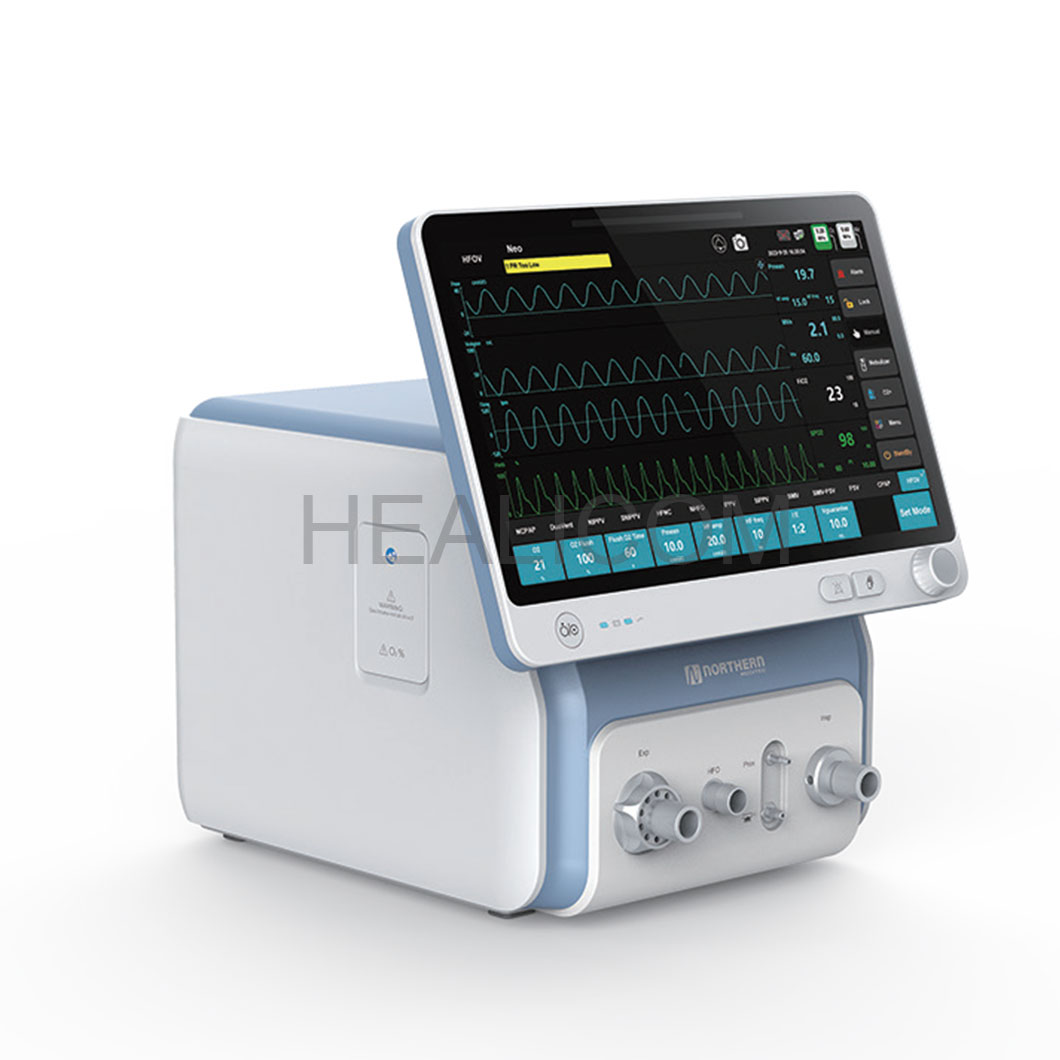
Hospital ventilators are life saving equipment in medical settings and their reliable operation directly affects patient safety. Having supplied medical equipment to over 30 clinics in Chile and Kenya and cooperating with numerous hospitals worldwide for 16 years, Healicom Medical knows well that daily checks are the first line of defense for ventilator reliability. Every morning before use, medical staff should conduct a comprehensive visual inspection. Check if the ventilator’s external casing is intact with no cracks or damage, and ensure all connecting wires and hoses are properly attached without looseness or wear.
Next, test the basic functional performance. Turn on the device to verify if the power supply is stable and if the display screen shows all parameters clearly without errors. Check the airflow output by connecting a test lung to ensure the pressure and volume meet the set standards. Healicom’s hospital ventilators are designed with user friendly operation panels, making these daily checks quick and convenient. Our products have passed ISO and CE certifications, so their core components are of high quality, but daily inspections still help detect minor issues early.
Regular Cleaning and Disinfection Protocols
Contamination is a major threat to hospital ventilator reliability and patient health. Healicom Medical emphasizes that regular cleaning and disinfection must be carried out strictly in accordance with medical standards. After each use, disassemble the reusable parts such as breathing circuits, masks and humidifier chambers. Wash them with neutral detergent and rinse thoroughly with sterile water to remove mucus, dust and other debris.
For disinfection, choose high level disinfectants that are compatible with the ventilator materials to avoid damaging the equipment. Healicom’s hospital ventilators are designed with detachable components, which simplifies the cleaning and disinfection process. According to the recommendations of the World Health Organization, medical devices like ventilators should be disinfected after each patient use and undergo deep cleaning at least once a week. Our technical support team often reminds cooperative hospitals of these key points to ensure that the equipment remains hygienic and reliable.
Calibration of Key Parameters
Accurate parameter calibration is crucial for the reliable operation of hospital ventilators. Healicom Medical has a professional technical team with rich experience in medical equipment maintenance. We suggest that hospitals calibrate the key parameters of ventilators every three months. This includes checking and adjusting tidal volume, respiratory rate, inspiratory and expiratory pressure, oxygen concentration and other indicators.
Using professional calibration tools, our technicians can ensure that each parameter of the ventilator is within the accurate range. For example, if the oxygen concentration deviates, it may lead to insufficient oxygen supply for patients, endangering their lives. Healicom’s hospital ventilators are equipped with advanced sensor technology, which has strong stability, but regular calibration is still necessary due to factors such as long-term use and environmental changes. Our after-sales service team also provides on-site calibration support for cooperative hospitals, ensuring that the equipment always performs at its best.
Inspection and Replacement of Wearable Parts
Wearable parts are prone to aging and damage during the long-term use of hospital ventilators, which directly affects the equipment’s reliability. Healicom Medical reminds hospitals to regularly inspect wearable parts such as filters, seals, hoses and batteries. Filters should be replaced every one to three months depending on usage frequency to prevent clogging from dust and impurities, which would affect airflow quality and equipment performance.
Seals and hoses are prone to cracking and aging, so check them monthly for signs of damage and replace them immediately if any issues are found. Batteries are the backup power source of ventilators, and their performance degradation may cause the equipment to fail in case of power outages. It is recommended to test the battery capacity every six months and replace the battery every two to three years. Healicom provides high-quality replacement parts for our hospital ventilators, which are perfectly compatible with the equipment and ensure the same performance as the original parts. Our global supply network allows hospitals in regions such as Southeast Asia and Latin America to obtain replacement parts quickly.
Professional Annual Maintenance and Technical Support
In addition to daily maintenance, hospital ventilators require professional annual maintenance to ensure long-term reliability. Healicom Medical offers comprehensive annual maintenance services for our cooperative customers. Our professional technicians will conduct a thorough inspection of the ventilator, including internal components such as the motor, compressor and control system.
They will clean the internal dust, check for loose connections and worn components, and conduct comprehensive performance tests. During a cooperation project with a hospital in Cameroon, our technicians found a potential fault in the compressor during annual maintenance and resolved it in a timely manner, avoiding equipment failure during use. Healicom has 16 years of experience in the medical equipment industry and has established a global technical support network. We provide 24-hour technical consultation services, and our team will respond to customer inquiries within 12 hours. Whether it is through online communication or on-site maintenance, we are committed to ensuring that every hospital ventilator we provide operates reliably, providing strong support for the work of medical staff and the safety of patients.
 Hot News
 EN
EN