EN


Anesthesia Machine vs Anesthesia Workstation: Key Differences
People often use anesthesia machine and anesthesia workstation interchangeably. That is understandable: both terms can describe equipment used to deliver inhaled anesthetic agents and support breathing during procedures. For a hospital team comparing quotations, however, the difference matters. The first term may refer to the core delivery apparatus, while the second usually signals a broader, integrated anesthesia delivery system with ventilation, monitoring, safety, and workflow components.
For procurement, the practical question is whether the configuration supports the clinical workflow, patient population, room infrastructure, and verification plan. This framework does not replace local clinical, biomedical-engineering, or regulatory review.
The short answer: scope is the main difference
An anesthesia machine is commonly understood as the equipment that prepares and delivers breathing gases and anesthetic vapor to a patient circuit. Depending on the design, it can include gas supply controls, flow control, vaporizers, a breathing system, scavenging connections, and a ventilator. In everyday use, a modern integrated unit may still be called an anesthesia machine.
An anesthesia workstation usually describes the wider system built around that delivery function. It may bring together the anesthesia machine, electronic ventilation functions, monitoring or data interfaces, alarms and protective functions, and ergonomic work surfaces or modules. The exact boundary is not universal. More accurately, buyers should compare the delivered configuration and documented intended use rather than assume that every workstation includes the same features.
Comparison at a glance
| Decision area | Anesthesia machine focus | Anesthesia workstation focus | What to verify |
|---|---|---|---|
| Primary role | Gas and vapor delivery with a breathing system | Integrated anesthesia delivery and clinical workflow platform | Intended use and included modules |
| Ventilation functions | May be basic or mechanically assisted, depending on configuration | Often provides electronically controlled ventilation functions and settings | Available modes, ranges, alarms, and demonstration conditions |
| Monitoring and protection | May rely on separate or add-on devices | May integrate or interface with monitoring and protective functions | Which measurements, alarms, and interfaces are included versus optional |
| Workflow | Core delivery task | Delivery plus setup, documentation, user interface, and accessory coordination | Daily setup, turnover, cleaning, and training steps |
| Procurement comparison | Base configuration can look simpler on paper | Scope can be broader, so quotation details are especially important | Line-by-line configuration, service, installation, and acceptance criteria |
1. Delivery components: begin with the common core
Both categories begin with the same clinical task: controlled delivery of a gas mixture and, where applicable, inhaled anesthetic agents through an appropriate patient circuit. A buying team should identify the common core before comparing optional modules. Ask how the gas source is connected, how flow is set or displayed, which vaporizer positions or agent-specific components are included, how the breathing system is configured, and how scavenging connects to the room system.
One quotation may include essential accessories while another lists only the main cabinet. Before scoring price, align supplied parts, consumables, connections, and installation responsibilities.
2. Ventilation functions: compare task fit, not just mode names
Ventilation functions are often the clearest operational divider between a basic configuration and a more integrated workstation. A modern anesthesia machine may incorporate a ventilator, and a workstation may offer electronically controlled ventilation modes, adjustable parameters, alarms, graphics, and additional controls. Yet feature names alone do not establish suitability.
For each target service line, specify the patient groups and procedures that the team expects to support. Then request a demonstration of the ventilation functions under agreed test conditions. Confirm the available modes, parameter ranges, tidal-volume limits, pressure limits, PEEP options, fresh-gas compensation behavior where applicable, alarm logic, and backup behavior. If a supplier lists a ventilation function, ask how it is configured, how users access it, and how the team will verify it during acceptance.
In other words, do not ask only whether the anesthesia machine has a particular function. Ask whether that function can be safely verified in the target workflow. Requirements for a short ambulatory case mix may differ from requirements in a high-acuity operating room, so a single feature checklist rarely answers the whole question.
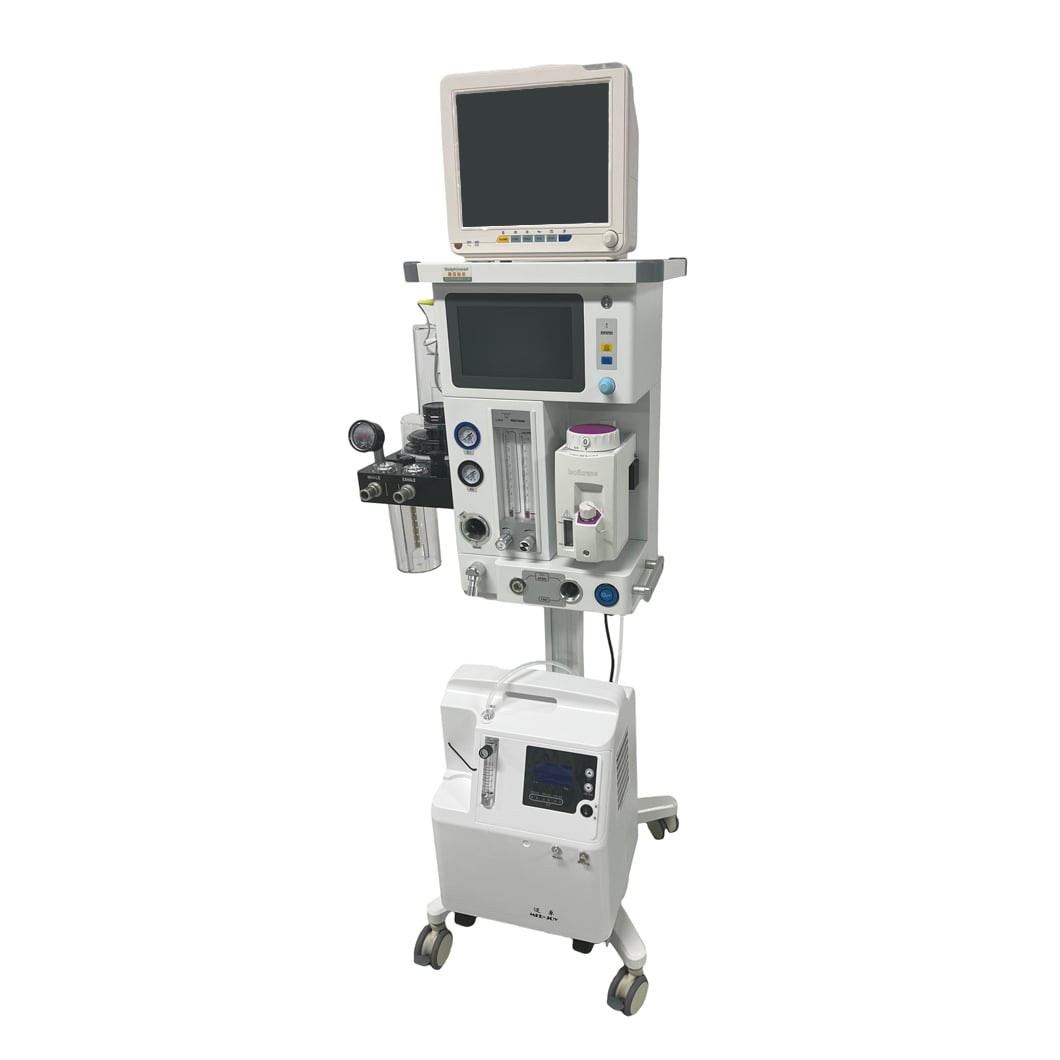 A generic visual reference for comparing anesthesia-delivery equipment configurations.
3. Monitoring, safety, and integration: define what is built in
Workstation language often implies integration, but integration must be described precisely. Some systems include display, alarm, gas-measurement, spirometry, or data-connectivity capabilities; others use separate devices or optional modules. Separate equipment is not automatically a disadvantage. It can be a sensible arrangement when the room already has compatible monitoring infrastructure and the interface responsibilities are clear.
For an operating room equipment project, create a responsibility map. List which device supplies each measurement, which device issues the alarm, where data is displayed, how accessories connect, and who validates the setup. If the proposed system is described as an anesthesia workstation, request an included-versus-optional matrix rather than treating a brochure image as a configuration commitment.
Where standards are relevant, ISO 80601-2-13:2022 addresses particular requirements for basic safety and essential performance of an anaesthetic workstation for administering inhalational anesthesia. That reference is useful as a scope question, not as a blanket approval claim: the procurement team should confirm the applicable edition, market requirements, documentation, and the supplied configuration with qualified personnel.
4. Workflow and ergonomics: where the workstation can add value
A workstation can change more than the technical specification. It may affect how staff complete the pre-use check, set up a case, view information, exchange accessories, manage cables, clean surfaces, and hand equipment over between cases. These details are easy to miss when a comparison stops at ventilation functions.
Start with the procedure, not the screen size. Observe or map the local workflow: who prepares the equipment, where circuits and absorbers are stored, how the anesthesia provider sees patient information, how biomedical engineering performs preventive maintenance, and how the room is reset. A tidy interface is useful only if it reduces a real step or makes a critical status easier to confirm. The same principle applies to cart layout, drawers, rails, and mounting options.
Training belongs in this comparison. Ask the anesthesia equipment supplier to distinguish operator training, installation support, service training, and documentation. A feature that cannot be consistently configured or verified does not add dependable workflow value.
5. How to compare quotations fairly
To compare an anesthesia machine and an anesthesia workstation fairly, turn the decision into a shared worksheet. Use the same headings for every supplier and avoid scoring unconfirmed claims. A practical evaluation sequence is:
- Define clinical tasks. Identify target procedures, patient groups, room type, backup expectations, and the personnel who will use the equipment.
- Freeze the configuration scope. Record the machine, ventilator, vaporizers, breathing system, monitoring or interface modules, accessories, gas hoses, scavenging items, carts, and any exclusions.
- Check infrastructure. Confirm gas supply, power, space, mounting, network or data needs, and workflow constraints before final selection.
- Request evidence and demonstration. Use a pre-agreed test script for ventilation functions, alarms, displays, and user setup. Keep results tied to the proposed configuration.
- Plan acceptance and lifecycle support. Define delivery, installation, commissioning, training, maintenance responsibility, service response, spare-parts approach, and acceptance criteria.
Usually, the most expensive mistake is not choosing a machine with fewer buttons. It is comparing different scopes as if they were equivalent. A lower initial quotation can omit ventilation options, accessories, installation work, monitoring interfaces, or training that another proposal includes. Put those items in the same comparison table before drawing conclusions.
Questions to ask an anesthesia equipment supplier
- What is included in the quoted anesthesia delivery system, and what is optional?
- Which ventilation functions are available in the proposed configuration, and how will they be demonstrated during acceptance?
- Which monitoring, alarm, or gas-measurement functions are integrated, interfaced, separate, or excluded?
- What room gas, electrical, space, scavenging, and data conditions must be confirmed before installation?
- Which documents describe intended use, cleaning, maintenance, and operator checks for the destination market?
- Who performs installation, commissioning, user training, preventive maintenance, and service escalation?
- What acceptance criteria will show that the delivered equipment matches the agreed configuration?
Which option is right for your operating room?
Choose neither term as a shortcut for quality. A well-scoped anesthesia machine can be appropriate when it matches the procedure mix, workflow, and supporting equipment. A broader anesthesia workstation can be appropriate when integrated ventilation functions, information presentation, alarms, interfaces, and ergonomics solve documented operating-room needs. The right choice depends on the full configuration and the resources required to use and maintain it.
Before making a final decision, have the clinical, procurement, and biomedical-engineering teams review one shared configuration sheet. Confirm the intended use, ventilation functions, included modules, room prerequisites, documentation, training, service, and acceptance tests. That approach makes the distinction between an anesthesia machine and an anesthesia workstation useful: not as a marketing label, but as a structured way to buy operating room equipment that fits the work it must support.
 Hot News