EN


What Quality Checks Support Reliable ECG Machine Performance?
A reliable ECG Machine is not confirmed by a clean-looking trace alone. For a biomedical engineering team, clinic manager, or procurement reviewer, quality means that the device, patient cable, electrodes, settings, records, and service process work together predictably. A useful review separates acceptance checks from daily checks and preventive maintenance, then documents what was observed and what was corrected.
This matters because an electrocardiograph converts small cardiac electrical signals into a clinical record. A poor connection, damaged lead, patient movement, or interference can affect the trace before anyone evaluates the result. The practical question is therefore not simply, “Does the ECG Machine power on?” It is, “Can the entire recording workflow produce a trace that is fit for review under the intended conditions?”
Start with the intended use and a documented acceptance baseline
Before placing an ECG Machine into service, confirm its intended use, configuration, supplied accessories, software version, language, and manufacturer documentation. A 12 lead ECG machine needs a more deliberate lead-set and acquisition review than a limited-lead workflow. Record the model and serial number, cable identifiers, installation location, date, person completing the check, and any test equipment used. This baseline gives the service team something meaningful to compare at the next inspection.
For diagnostic electrocardiographs, IEC 60601-2-25 is commonly relevant to basic safety and essential performance. That does not mean a facility should attempt to recreate a manufacturer’s certification test. Instead, the standard is a prompt to verify that the delivered configuration, local electrical-safety program, and manufacturer-recommended functional checks match the device’s intended clinical use.
1. Inspect the physical system before testing the signal
Begin each planned quality review of the ECG Machine with the parts most likely to cause avoidable faults:
- Check the enclosure, display, keypad, printer door, connectors, and labels for damage or missing parts.
- Inspect patient cables and lead wires for cuts, stiffness, exposed conductors, loose strain relief, or bent connector pins.
- Verify that reusable accessories are clean and that disposable electrodes are within their stated shelf-life and storage conditions.
- Confirm battery condition, charger connection, paper supply where applicable, and secure connection to the designated power source.
These checks are basic, but they reduce confusion later. If a waveform is noisy, replacing or reseating a suspect cable is more defensible than changing filters first. The same inspection applies whether the unit is a standalone electrocardiograph or part of broader cardiac diagnostic equipment.
2. Verify lead integrity, acquisition settings, and waveform behavior
A functional test should exercise the ECG Machine rather than only its menu screens. Use a qualified simulator or the method specified in the manufacturer’s service instructions. Confirm that each channel responds, lead-off indications are understandable, gain and paper speed settings change as expected, and the device stores, displays, prints, or transmits records according to the configured workflow.
For a 12 lead ECG machine, traceability across all expected leads matters. A lead-by-lead check can reveal a cable or connector problem that is invisible in a quick power-on test. Watch for unstable baselines, missing channels, unexpected clipping, delayed display updates, or labels that do not match the configured lead set. If the ECG Machine includes automated measurements or interpretations, verify that those functions are enabled only as authorized locally and that staff understand they support—not replace—clinical judgment.
Do not treat filtering as a cure for every poor trace. A repeatable signal-quality workflow asks first about skin preparation, electrode contact, correct placement, loose lead wires, patient movement, and nearby interference. Published reviews of ECG artifacts also identify electrode-placement mistakes as a meaningful source of misleading recordings. That is why operator observation is part of the quality check, not a separate training topic.
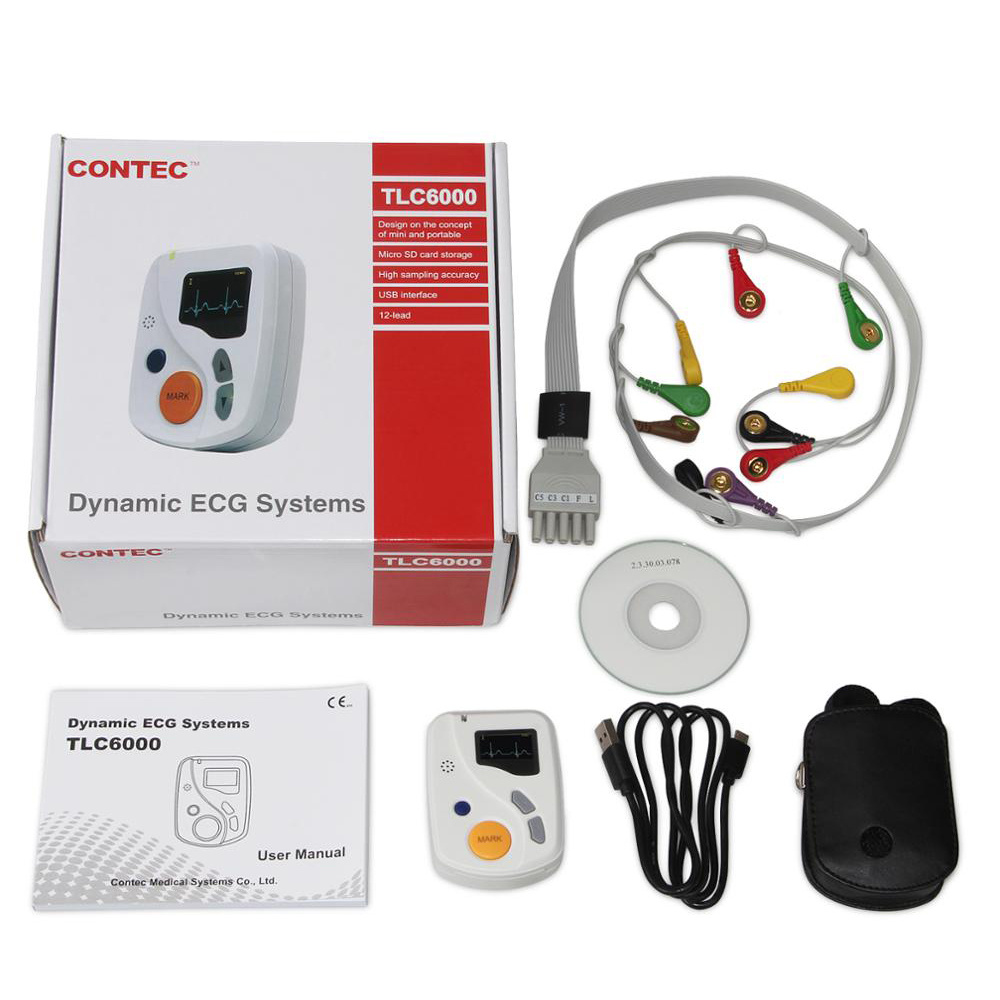 A planned lead and signal-quality check helps isolate accessory or workflow issues before a recording is relied upon.
3. Check electrical safety and the clinical environment
The ECG Machine should enter the facility’s electrical-safety and preventive-maintenance program according to local policy, risk assessment, and manufacturer instructions. A qualified person should use appropriate test equipment and documented limits; a routine user should not improvise electrical measurements. Verify grounding arrangements where applicable, power-cord condition, battery operation, and the status of any scheduled electrical-safety test.
Then look beyond the unit. An ECG Machine can perform differently when cables run beside power leads, a patient is cold or tense, the bed introduces movement, or the room contains sources of electrical noise. If a pattern appears only in one room or on mains power, document the condition and escalate it rather than assuming the device is defective. A battery-versus-mains comparison, when permitted by the manufacturer’s workflow, may help a qualified team isolate the environment from the device.
4. Test the recording and data workflow
Reliable cardiac diagnostic equipment must produce an identifiable record as well as a recognizable waveform. During acceptance and scheduled review, confirm date and time, patient-identification workflow, report headers, storage location, print quality, and secure transfer to the intended system where integration is used. Test a representative retrieval step: can an authorized user find the report, tell which ECG Machine created it, and identify the acquisition settings?
This check is especially useful after a software update, network change, printer replacement, or relocation. A technically sound tracing can still create a workflow risk if the patient label is incomplete, the report is unreadable, or the record arrives in the wrong queue. Keep the scope practical: use approved test data and follow the organization’s privacy procedure.
5. Make preventive maintenance measurable
A preventive-maintenance record for an ECG Machine should say more than “passed.” It should include the inspection date, asset identifier, technician, test method, accessories examined, observed defects, corrective action, pass/fail disposition, and due date for the next review. Trend recurring cable failures, repeated lead-off alerts, print faults, or artifact complaints. Patterns help a service team decide whether the issue is an accessory, an environment, training, or the device itself.
Assign ownership clearly. Clinical users can perform pre-use visual and connection checks; a biomedical or authorized service team can manage scheduled technical tests; procurement can retain delivery and warranty records. In practice, reliability improves when no one assumes another team is checking the heart monitoring device.
A concise quality-check sequence
- Confirm the ECG Machine, accessories, configuration, and documentation match the intended use.
- Inspect cables, connectors, electrodes, power components, display, printer, and labels.
- Run the manufacturer-approved functional or simulator test and verify all expected channels.
- Review signal quality before relying on filters: placement, contact, motion, lead condition, and interference come first.
- Verify electrical-safety status and assess the actual recording environment.
- Check report identity, storage, printing, transfer, and retrieval using approved test workflow.
- Document results, remove failed equipment from use when local procedure requires it, and trend repeat findings.
Conclusion
Reliable ECG Machine performance is supported by a chain of checks, not a single test. A disciplined process combines incoming acceptance, physical inspection, lead and waveform verification, electrical-safety oversight, data-workflow testing, and documented maintenance. For any electrocardiograph, the most useful quality record is one that shows what was checked, under which conditions, what changed, and who will verify the next step.

 Hot News