EN


What Should Hospitals Check Before Purchasing Neonatal Incubators?
Buying an infant incubator is not simply a matter of comparing a temperature range or selecting the longest feature list. The equipment sits within a neonatal care pathway that involves clinicians, biomedical engineering, infection prevention, procurement, and service teams. A sound purchase decision starts by defining the care model, the patients the unit expects to support, and the conditions the hospital can verify before acceptance.
From a hospital procurement perspective, the most useful approach is requirements, configuration, and verification. That sequence helps a team compare like with like and avoids treating a specification sheet as proof that an infant incubator will fit the NICU workflow. This article offers a practical evaluation framework; it does not replace local clinical, regulatory, or engineering review.
1. Start with the clinical use case, not the catalogue
Before asking an infant incubator supplier for quotations, document which patients and care situations the unit is intended to support. Is the purchase for routine NICU care, stabilization after delivery, a step-down area, or a unit that needs movement between locations? The answer changes the required configuration, staffing assumptions, and accessories.
Ask the neonatal team to distinguish the functions that are essential in their actual workflow from those that are merely available. Environmental control, access to the infant, observation, alarm response, and connections to nearby equipment should be discussed together. More accurately, the question is not whether a feature exists, but whether it can be used safely and consistently by the intended team.
- What clinical tasks will the infant incubator support during a normal shift and during escalation?
- Which staff roles will adjust settings, respond to alarms, clean the unit, and document checks?
- What room, power, network, gas, and space conditions apply at the intended location?
- What accessories or interfaces must be confirmed rather than assumed?
2. Translate requirements into a comparable configuration
Once the workflow is clear, issue the same configuration checklist to every infant incubator supplier. This prevents a lower quotation from appearing equivalent when it excludes necessary accessories, training, installation support, or service coverage. The comparison should identify the base unit, options, consumables, delivery scope, installation responsibilities, and acceptance-test support.
Neonatal monitoring is a useful example. Procurement should ask how the incubator’s displayed information, alarms, sensors, and any connections to surrounding monitoring systems are expected to work in the hospital’s environment. Do not infer interoperability from a brochure. Instead, request the exact interface description, compatibility conditions, and a demonstration or acceptance-test method that the biomedical team can evaluate.
The same discipline applies to environmental performance and alarms. Ask for the operating instructions, the defined alarm conditions, the limits of the stated configuration, and the procedures for checking performance after installation. Where an applicable standard is relevant to the purchasing jurisdiction, ask the supplier to identify the edition, documents, and scope of the evidence. IEC 60601-2-19:2020 addresses basic safety and essential performance for infant incubators, but the hospital should still confirm local regulatory and procurement requirements rather than treating a standard number as universal approval.
3. Evaluate transport needs separately
A fixed bedside unit and a transport incubator solve related but different problems. If the hospital anticipates intra-hospital transfers, ambulance use, or referral transfers, evaluate the transport incubator as its own workflow: route, lifting, vehicle or trolley interfaces, battery planning, access during movement, restraint, monitoring arrangements, and handover responsibilities.
A transport incubator discussion should also clarify what remains connected during movement and what must be checked before departure. The team should walk through a representative transfer with the neonatal, transport, and engineering stakeholders. A device that looks suitable in a static demonstration may require additional equipment, staff training, or site-specific procedures to work reliably in transit.
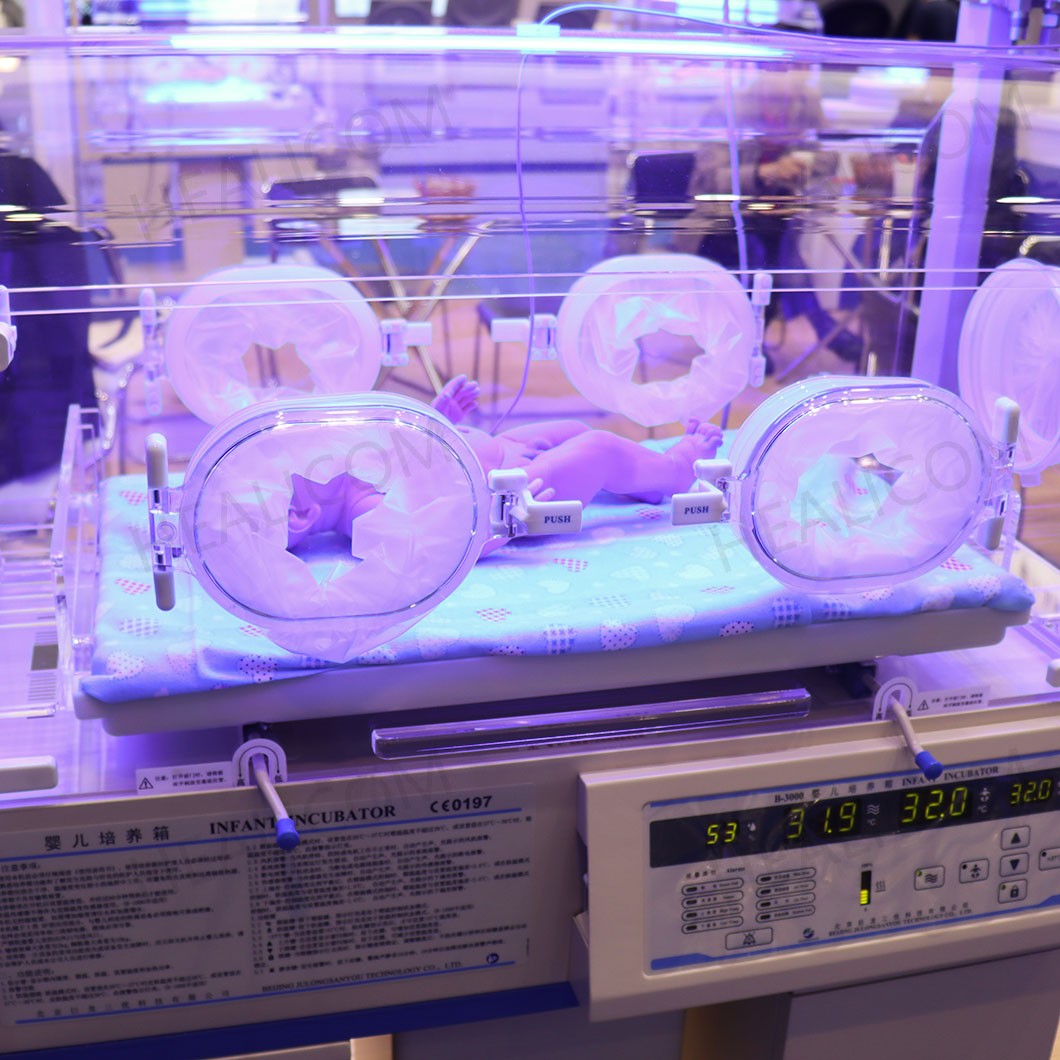 A cross-functional evaluation helps align neonatal equipment with the intended workflow.
4. Make cleaning and infection prevention a purchasing requirement
Incubator cleaning should be reviewed before a contract is signed, not after the first patient discharge. Infection-prevention staff need the manufacturer’s compatible cleaning and disinfection instructions, contact-time requirements, rinse and drying requirements, removable-part procedure, and guidance on materials that must not be used. Those details determine whether the unit can be turned around safely within the department’s routine.
CDC guidance notes that disinfectants should not be used to clean occupied infant bassinets and incubators and that, when disinfectants are used for terminal cleaning, surfaces should be thoroughly rinsed with water and dried before reuse. The hospital’s own policies and the manufacturer’s instructions must govern the final procedure. During evaluation, request a live incubator cleaning demonstration, a list of cleanable components, and evidence that staff can access the areas they must clean without damaging sensors, seals, or moving parts.
Ask practical questions: How long does incubator cleaning take in the proposed configuration? Which parts require tools? Are replacement components available? What documentation proves that the unit is ready for reuse? A supplier’s answer should support a repeatable local protocol, not a generic assurance.
5. Test neonatal monitoring, alarms, and usability in context
Purchasing teams often discuss neonatal monitoring as a list of displayed values. However, the more important check is how information reaches the people who must act. Review alarm audibility and visibility in the intended room, the logic for alarm escalation, sensor placement and replacement, and the training required for safe interpretation. If the device will sit beside other equipment, observe whether access panels, cables, and displays remain workable for the care team.
Include bedside users in a structured demonstration of neonatal monitoring. Ask them to complete routine checks, simulate an alarm response, identify what they would document, and flag any step that is unclear. This is not a clinical validation exercise; it is a way to discover training and workflow needs before delivery. Function count is less meaningful than whether the function supports the hospital’s defined task.
6. Verify service, training, and total ownership conditions
An infant incubator supplier should be evaluated for the support needed after delivery as well as the equipment offered at quotation. Compare commissioning, user and technical training, preventive-maintenance guidance, response channels, spare-parts availability, warranty scope, and the documents supplied with the unit. Ask who is responsible for installation checks, how corrective work is recorded, and what information the hospital retains for audit and maintenance planning.
For an infant incubator, total ownership also includes staff time, cleaning resources, replacement items, planned maintenance, and downtime arrangements. A transparent supplier can help the hospital convert those requirements into an acceptance plan, but the hospital should retain its own decision criteria. If a claim about performance, compatibility, or market authorization matters to the decision, request traceable documentation before it is used as a scoring advantage.
7. Use a pre-award and acceptance checklist
| Review area | Evidence to request | Who should confirm it |
|---|---|---|
| Clinical fit | Defined patient pathway and required use cases | Neonatal leadership |
| Configuration | Itemized quote, accessories, interfaces, and exclusions | Procurement and biomedical engineering |
| Safety and documentation | Applicable technical and regulatory documents for the market | Biomedical engineering and compliance |
| Cleaning workflow | Manufacturer instructions and a practical cleaning demonstration | Infection prevention and NICU users |
| Transport pathway | Route-specific plan where a transport incubator is needed | Transport and neonatal teams |
| Acceptance | Written test criteria, training record, and service handover | Cross-functional acceptance group |
Conclusion: purchase the verified workflow, not the brochure
The strongest procurement decision for an infant incubator is one that the hospital can explain and test. Start with the care pathway, compare a consistent configuration, scrutinize cleaning and neonatal monitoring requirements, and make transport, training, service, and acceptance criteria visible before award. If each stakeholder can confirm the conditions relevant to their role, the selected system is more likely to fit the real environment in which it will be used.
Before final approval, ask the infant incubator supplier to respond to the hospital’s written checklist and agree on a documented acceptance process. That turns a purchasing conversation into a verifiable implementation plan.
 Hot News