 EN


DR vs CR X-Ray Systems: Key Differences for Medical Facilities
Choosing an x ray machine is not only a question of image capture. For a medical facility, the more useful question is how the x ray machine fits the route from examination request to image review, repeat-exam analysis, archive, and equipment support. Direct radiography (DR) and computed radiography (CR) both produce digital images, but they move information through that route differently.
For the procurement team, the comparison starts with the department’s workload, room layout, staffing, and existing image-management environment. A lower purchase figure or a longer feature list does not settle the issue by itself. The appropriate x ray machine is the one whose detector workflow, service plan, and validation requirements fit the facility’s actual operating conditions.
The basic DR and CR difference
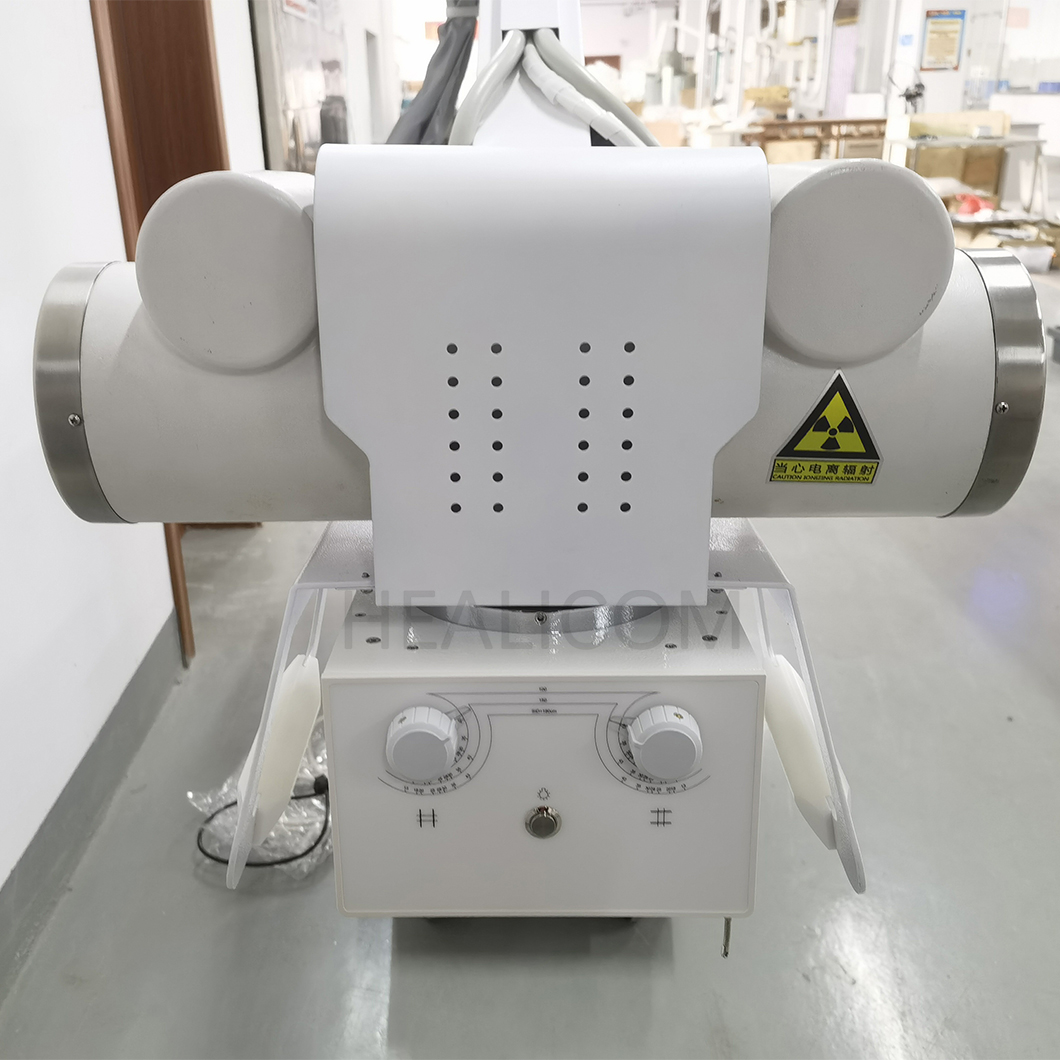
A CR-based x ray machine uses a reusable imaging plate in a cassette. After exposure, staff take the cassette to a reader, where the stored information is scanned and converted into a digital image. The cassette then enters a clearing and reuse cycle. A DR-based x ray machine uses a digital detector, often a flat-panel radiography detector, to create the image electronically at the point of exposure.
Those different capture paths change the handoffs during an examination. With CR, cassette availability, reader placement, reader throughput, and plate handling are part of the process. With a digital X-ray system, image review can begin at the acquisition workstation after the detector receives the exposure and produces a digital image. Immediate display is a general DR workflow characteristic, not a promise that every room, protocol, or network will deliver the same turnaround time.
DR vs CR comparison matrix
| Decision area | CR workflow | DR workflow | What the facility should verify |
|---|---|---|---|
| Image capture | Plate cassette is exposed, then read separately. | Digital detector captures electronically at the examination point. | Map the steps from exposure to review for each clinical area. |
| Staff handoffs | Cassette transport, reader operation, and plate circulation remain tasks. | Fewer cassette-reader handoffs may be needed. | Observe who performs each task during busy periods and after hours. |
| Infrastructure | Requires a reader and a practical cassette-management process. | Requires detector protection, charging or cabling arrangements where applicable, and network workflow planning. | Confirm space, power, network, cleaning, storage, and service access. |
| Expansion planning | Reader capacity can become a shared resource. | Detector availability and room configuration can shape capacity. | Compare the quoted configuration range, not device labels alone. |
 Illustrative DR and CR workflow comparison for medical-facility evaluation.
For a high-volume fixed room, a digital X-ray system may simplify the sequence between exposure and preliminary image review. For a replacement project with usable cassettes, a reader, and a workflow that staff can support, a CR x ray machine may still deserve structured evaluation. The correct conclusion depends on throughput targets, lifecycle resources, and operational constraints.
How the radiography detector changes the workflow
A radiography detector is not just a specification line. In DR, the detector influences where the technologist positions equipment, how images are checked, how the unit is protected between studies, and what recovery plan exists if it is unavailable. Ask whether the detector is fixed or mobile, how it is stored, what handling instructions apply, and how the planned x ray machine connects to the facility’s image-management workflow.
CR also has an image receptor to manage: the imaging plate and its cassette. Teams should ask how plates are identified, cleaned, inspected, and routed, and how a reader outage affects the department. This is why an x ray machine comparison should include a simple process map rather than relying on a technical brochure. A feature is valuable only if it supports a task that the target team actually performs.
Fixed rooms, mobile work, and portable requirements
A portable X-ray machine adds movement, bedside coordination, charging, storage, and infection-control considerations to the comparison. CR can be used in mobile radiography workflows, but it retains the cassette-to-reader transfer. A DR-enabled portable X-ray machine may support bedside review through its detector-based workflow; the facility still needs to test connectivity, detector handling, battery or power routines, and movement paths in its own environment.
A portable label alone does not answer the operational question. For each portable X-ray machine under review, document the intended patient locations, the expected number of studies, the staff roles, lift or transport constraints, and the fallback procedure. These details often reveal whether a proposed x ray machine configuration supports the planned service model.
Radiation protection is a system-and-process responsibility
Radiation protection should be evaluated as part of the entire imaging process, not as a checkbox attached to one detector type. International radiation-protection guidance describes optimization as limiting exposure to the minimum needed to obtain images that answer the medical question. In day-to-day planning, qualified clinical, physics, and regulatory stakeholders should set protocols, training, quality control, and local requirements for each x ray machine.
Digital acquisition can make an image usable over a broad exposure range, so visual acceptability alone is not a sufficient control. A digital X-ray system should be reviewed with its exposure indicators, protocol governance, repeat-image monitoring, and quality-assurance process. The same disciplined approach applies to a CR x ray machine. Radiation protection depends on clinical justification, technique selection, positioning, equipment performance checks, and professional oversight—not on a generic claim that one technology is inherently safer.
A procurement checklist for the next x ray machine
- Define the examination mix. List the room, mobile, emergency, outpatient, and bedside tasks expected from the x ray machine.
- Map the image route. For CR, include cassettes and reader steps; for DR, include the radiography detector, workstation, and network path.
- Compare like-for-like configurations. Record what is included: detector count, reader capacity, workstations, accessories, implementation scope, and training.
- Plan validation before acceptance. Agree on image-quality, connectivity, workflow, and documentation checks with appropriate technical and clinical stakeholders.
- Review lifecycle responsibilities. Clarify maintenance, detector or cassette handling, software support, uptime procedures, and staff education for the selected x ray machine.
Which system fits your facility?
DR is often attractive when a facility wants to reduce cassette-reader handoffs and support near-immediate image display. CR can remain a practical option where its established cassette and reader workflow aligns with the site’s budget, space, workload, and transition plan. Neither answer should be made from the technology name alone.
Before selecting an x ray machine, bring procurement, radiology, biomedical engineering, IT, and radiation-safety stakeholders into the same review. Confirm the intended workflow, the equipment configuration, the acceptance criteria, and the supporting resources. This gives the team a clearer basis for choosing between DR and CR while keeping patient care, staff work, and radiation protection in view.

 Hot News

