 EN


How to Choose a Medical Sterilizer for Hospitals and Dental Clinics
Choosing a medical sterilizer is not a matter of picking the largest chamber or the fastest-looking cycle. A useful decision starts with the instruments, people, rooms, records, and turnaround expectations that make up the real processing route. Hospitals and dental clinics share the need for dependable instrument processing, but their loads, staffing patterns, packaging routines, and approval paths can be quite different.
A biomedical-engineering review usually starts with a plain question: can this sterilizer fit the validated workflow your team needs to run? The points below help purchasing, infection-prevention, clinical, and technical teams document the answer together.
Start with the workflow, not a product list
Map the journey from receiving used instruments through cleaning, inspection, packaging, sterilization, release, storage, and use. For a hospital, that map may involve a central sterile department, operating rooms, multiple specialties, transport steps, and a high volume of tray configurations. A dental clinic often has a smaller footprint, but it still needs clear separation between contaminated and clean activities, safe handling, packaging, monitoring, and storage.
This is where hospital sterilization workflow becomes a selection criterion rather than a slogan. Record who loads the chamber, who reviews cycle information, who responds to a failed indicator, and who can remove an item from service. A device feature is only useful if the team can apply it consistently in the actual sequence of work.
Do not assume that a model suited to bottles, beauty tools, or household items is appropriate for medical instruments. Instead, ask suppliers to explain the intended load types, cycle options, packaging conditions, and operating instructions for the exact configuration being evaluated. Local regulations, clinical policies, and a qualified professional’s assessment still govern the final decision.
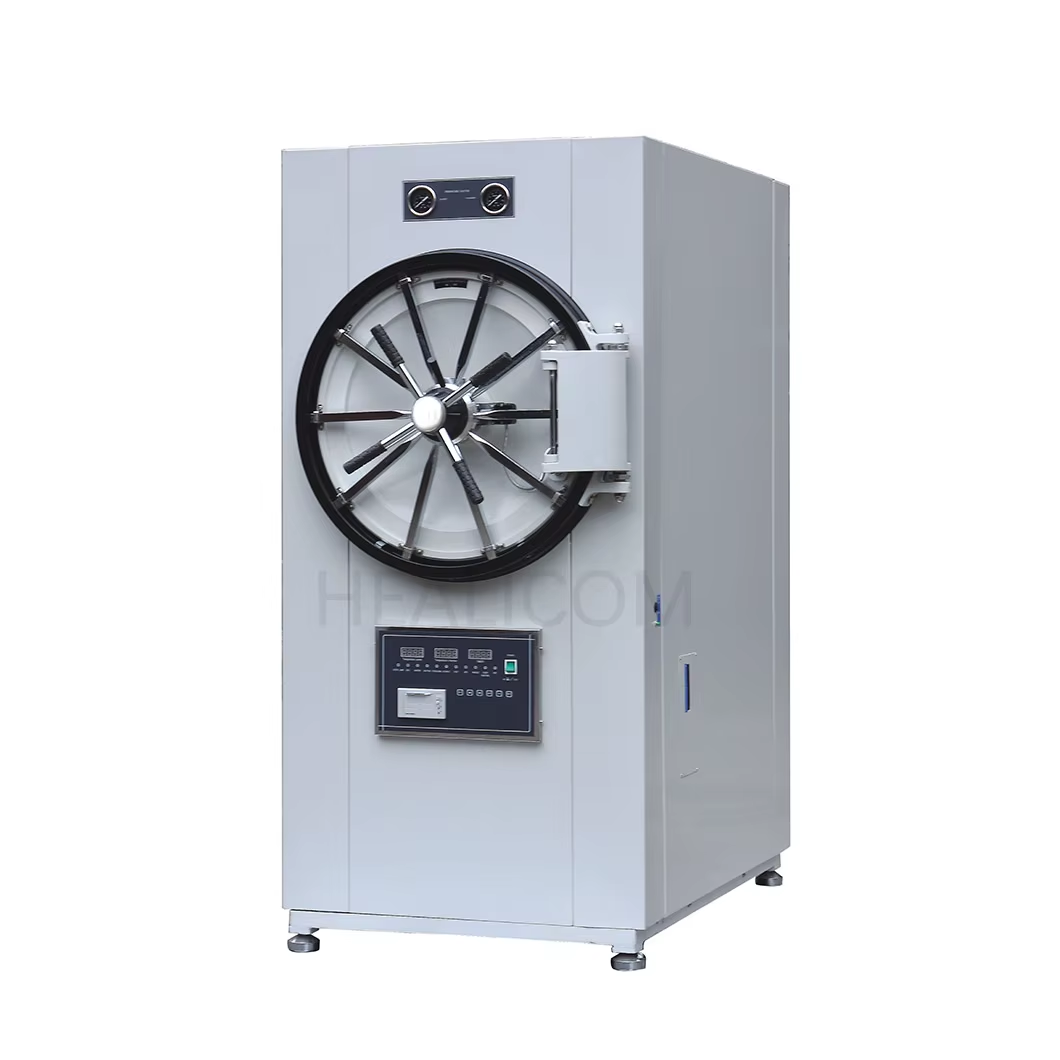
Match the sterilization method to instruments and materials
The first technical screen is compatibility. List the reusable instruments, trays, textiles, pouches, and any heat- or moisture-sensitive devices that the sterilizer may process. Then identify the manufacturer instructions for each item and the facility’s approved processing method. Steam is common for compatible items, while other validated low-temperature approaches may be necessary for materials that cannot tolerate a given exposure condition.
Keep the language precise: a sterilizer’s advertised technology does not by itself establish that every instrument or load is compatible. Ask for the approved cycle documentation, loading directions, utility requirements, and service information. Before standardizing a new method, the responsible team should verify that the instrument instructions, packaging, indicator system, and facility protocol all align.
Calculate sterilizer capacity from demand peaks
Sterilizer capacity is more than chamber volume. It is the usable load pattern, the number and type of instrument sets, time needed for preparation and drying, available staff, and the expected turnaround at busy periods. A large chamber can be inefficient if it encourages underloaded cycles or creates a bottleneck at inspection and packaging. A compact unit can be inadequate if it forces rushed loading or disrupts scheduled procedures.
Build a one-week demand profile before requesting quotations. Include routine loads, peak-hour requirements, specialty trays, urgent contingencies, and planned downtime. For each candidate sterilizer, compare the complete process time, not merely the exposure phase, and document the load assumptions behind the estimate. That gives a hospital a practical basis for capacity planning and lets a dental clinic check whether its instrument inventory supports safe turnover between appointments.
- How many validated loads are required on a normal and peak day?
- Which loads cannot be mixed, and which need dedicated packaging or racks?
- Where will clean packs wait before and after the cycle?
- What is the contingency plan if one sterilizer is unavailable?
Evaluate monitoring, records, and release decisions
A medical sterilizer should be evaluated as part of a monitored process, not as an isolated chamber. CDC guidance describes routine use of mechanical, chemical, and biological indicators to evaluate sterilizing conditions; chemical indicators are used alongside, rather than instead of, biological indicators. Dental guidance likewise emphasizes monitoring according to manufacturer instructions and applicable recordkeeping rules.
During evaluation, ask how cycle parameters are viewed or retained, how load identification is handled, and how a team investigates an unexpected result. Confirm what records can be exported or documented, how alarms are presented, and whether the process fits the facility’s quality system. The exact monitoring frequency and response procedure should follow the applicable instructions, local requirements, and facility policy.
For dental teams, medical device disinfection and sterilization should be treated as connected but distinct stages. Cleaning and disinfection procedures do not remove the need to assess the later packaging, sterilization, monitoring, and storage steps. Dry, inspected instruments and intact packaging matter because a compromised pack must be reprocessed before patient use.
Check site readiness before comparing prices
Many procurement conversations overlook installation conditions until late in the project. Confirm the required footprint, clearance, access route, power supply, water quality or connection needs where applicable, drainage or ventilation conditions, heat output, and floor or bench suitability. The right sterilizer on paper can still create delays if the room layout conflicts with safe clean-to-dirty movement or if utilities do not meet the manufacturer’s stated conditions.
Invite the people who will operate and maintain the unit to review the proposed location. They can identify practical issues such as door swing, loading height, staging space, noise, and the path for service access. This early review is often more valuable than adding unverified optional features to a quotation.
Plan sterilizer maintenance as part of total ownership
Sterilizer maintenance deserves the same attention as purchase price. Request a clear outline of operator checks, preventive-maintenance expectations, consumables, water-treatment needs when applicable, recommended spare parts, calibration or verification requirements, warranty terms, and escalation routes. Also clarify which tasks are performed by in-house staff and which require trained service personnel.
Ask for a maintenance schedule that connects to the facility’s existing asset-management and downtime plan. If the sterilizer will be used frequently, determine how service windows, backup capacity, and staff training will protect the processing route. A lower initial quote may not be the better fit if essential maintenance support or parts availability is unclear.
Use a cross-functional comparison sheet
Compare candidates using the same evidence fields. A yes/no answer is not enough where a condition, document, or demonstration is needed. A simple evaluation sheet can include:
- Intended instrument and load compatibility, with manufacturer documentation.
- Validated cycle and loading requirements for the proposed packaging and accessories.
- Capacity assumptions for normal, peak, and contingency workloads.
- Monitoring, traceability, alarm handling, and recordkeeping fit.
- Site utilities, layout, commissioning, training, and acceptance checks.
- Service scope, response path, consumables, and long-term maintenance responsibilities.
Before placing an order, turn the selected configuration into an acceptance plan. Agree on what will be checked at installation, what documents must be provided, who signs off on training, and what evidence confirms the device is ready for routine use. That keeps the selection focused on a workable process instead of an isolated specification sheet.
Final takeaway
A suitable medical sterilizer is not necessarily the biggest, fastest, or most feature-rich option. It is a configuration whose validated capabilities, sterilizer capacity, monitoring approach, site conditions, and sterilizer maintenance plan fit the instruments and workflow your hospital or dental clinic actually runs. Start with a process map, verify conditions with the responsible clinical and technical teams, and use a documented comparison before committing to a configuration.
 Hot News

