EN


How to Compare Two-Function, Three-Function, and Five-Function Beds
Choosing a hospital bed is not a matter of counting motors and assuming that more functions are automatically more useful. A practical comparison starts with the care task: how often the patient needs repositioning, whether caregivers must adjust height for transfers or personal care, how the room is used, and who will support the equipment after delivery. From a hospital procurement evaluator’s perspective, the useful question is not “Which hospital bed has the most functions?” but “Which configuration supports the intended workflow without adding avoidable complexity?”
This guide compares common two-function, three-function, and five-function hospital bed configurations. Names and control layouts vary by supplier, so a specification sheet and intended-market documentation should be checked before a decision. The framework below is designed for facility teams, distributors, and buyers planning a nursing home bed or other care setting.
Start with the functions that change daily care
A powered hospital bed commonly adjusts the backrest and knee section, with additional functions adding height adjustment, trend positioning, or other movements. The exact function count is less important than the operational consequence of each movement. For example, a bed that helps a patient sit up may meet one care need, while a bed that also changes platform height may affect transfer routines, caregiver posture, cleaning access, and fall-risk planning.
Before comparing quotations, ask the care team to describe a typical shift: When is the patient repositioned? Is assisted transfer frequent? Does staff need to work at different platform heights? Is the bed used for long-stay care, short recovery, or higher-acuity observation? This turns a hospital bed comparison into a requirements discussion rather than a feature checklist.
Two-function hospital bed: a focused positioning option
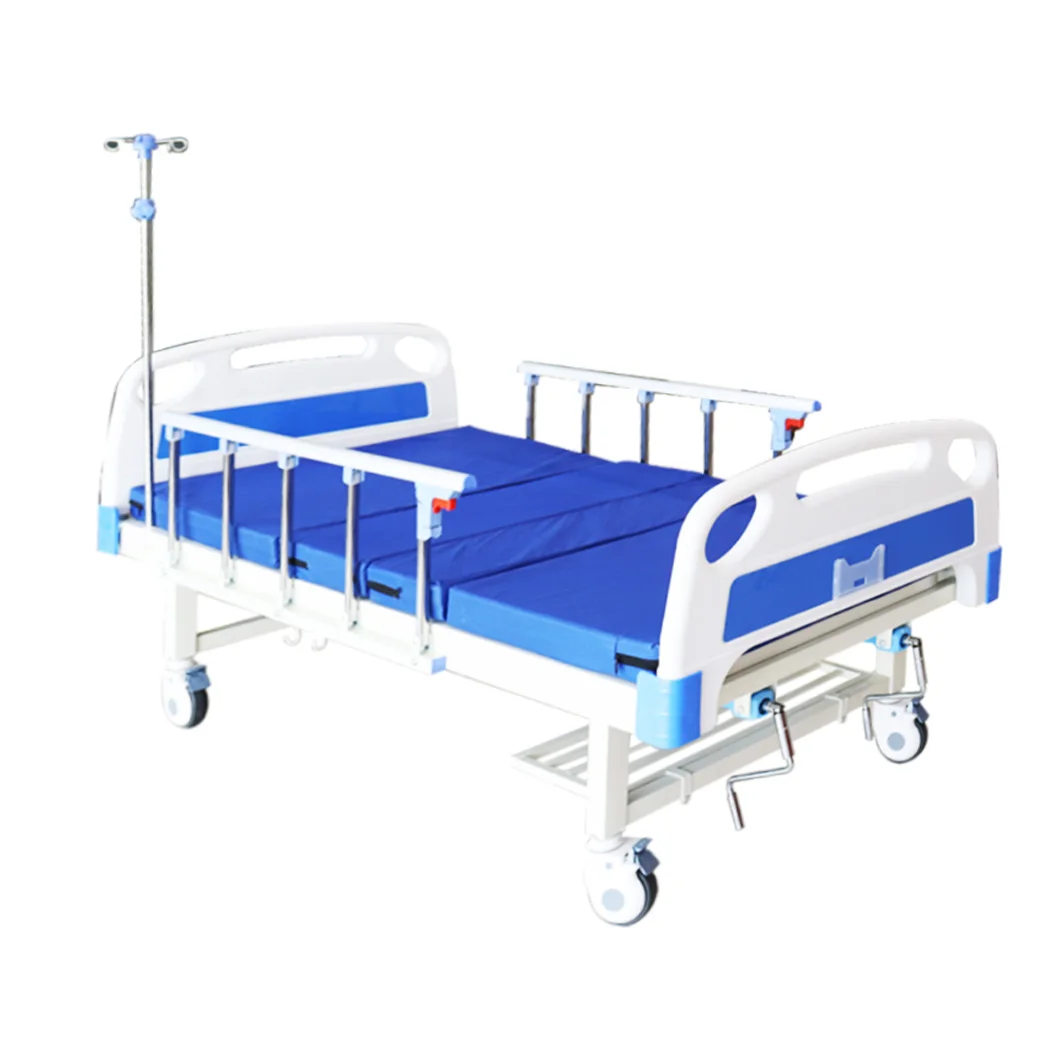
A two-function hospital bed is often configured around backrest and knee-section adjustment. It can suit settings where the central requirement is supported positioning for rest, meals, reading, or certain care tasks, and where a separate workflow addresses transfers and caregiver working height.
- Care fit: Consider it when head and leg positioning are the priority and the patient’s transfer needs are limited or managed with other equipment.
- Procurement questions: Confirm the adjustment ranges, control access, mattress compatibility, load limits, caster and brake arrangements, and whether rails are included or optional.
- Operational trade-off: Without powered height adjustment, staff may have fewer options to set an ergonomic working height or facilitate transfers. That may be acceptable in some care plans, but it should be deliberate.
For a nursing home bed program, this configuration can be appropriate when the resident profile and staffing process do not require frequent height changes. The decision should still reflect transfer assessments, mattress selection, and local safety procedures.
Three-function hospital bed: adding height to the care workflow
A three-function hospital bed commonly adds hi-low height adjustment to backrest and knee-section movement. That extra function can influence more than comfort. It may allow the platform to be set for transfers, care tasks, linen changes, and room preparation, subject to the team’s training and operating procedures.
In medical furniture procurement, this is often the point where teams need to compare workflow value against a higher equipment and service burden. Ask for the usable height range rather than a broad label, and verify how controls behave under normal use, transport, cleaning, and planned maintenance. Also clarify whether a low position is part of the model’s intended safety strategy or simply a stated dimension.
Three functions can be a balanced choice for long-term-care and general-care environments with varied resident mobility. More accurately, it is a fit when height adjustment will be used consistently enough to justify the added electrical and mechanical system. If it will rarely be used, the team should document why that capability is still required.
Five-function hospital bed: broader positioning, more verification
A five-function hospital bed typically combines backrest, knee section, and height adjustment with additional positioning movements. The label is not a universal technical definition, so buyers should request a function-by-function table. Possible additional movements may include trend or reverse-trend positioning, but the supplied configuration—not the name alone—must define the actual scope.
This category can support care environments where staff need more positioning flexibility and where the organization has a clear process for training, clinical review, inspection, and maintenance. It can also introduce more controls, actuators, cables, and verification points. A higher function count does not by itself establish that a hospital bed is appropriate for a particular patient group.
Use a five-function hospital bed when the care plan identifies a routine need for those movements and the facility can define who is authorized to use them. If a function is present but staff do not understand its boundaries, it may create confusion instead of helping the workflow.
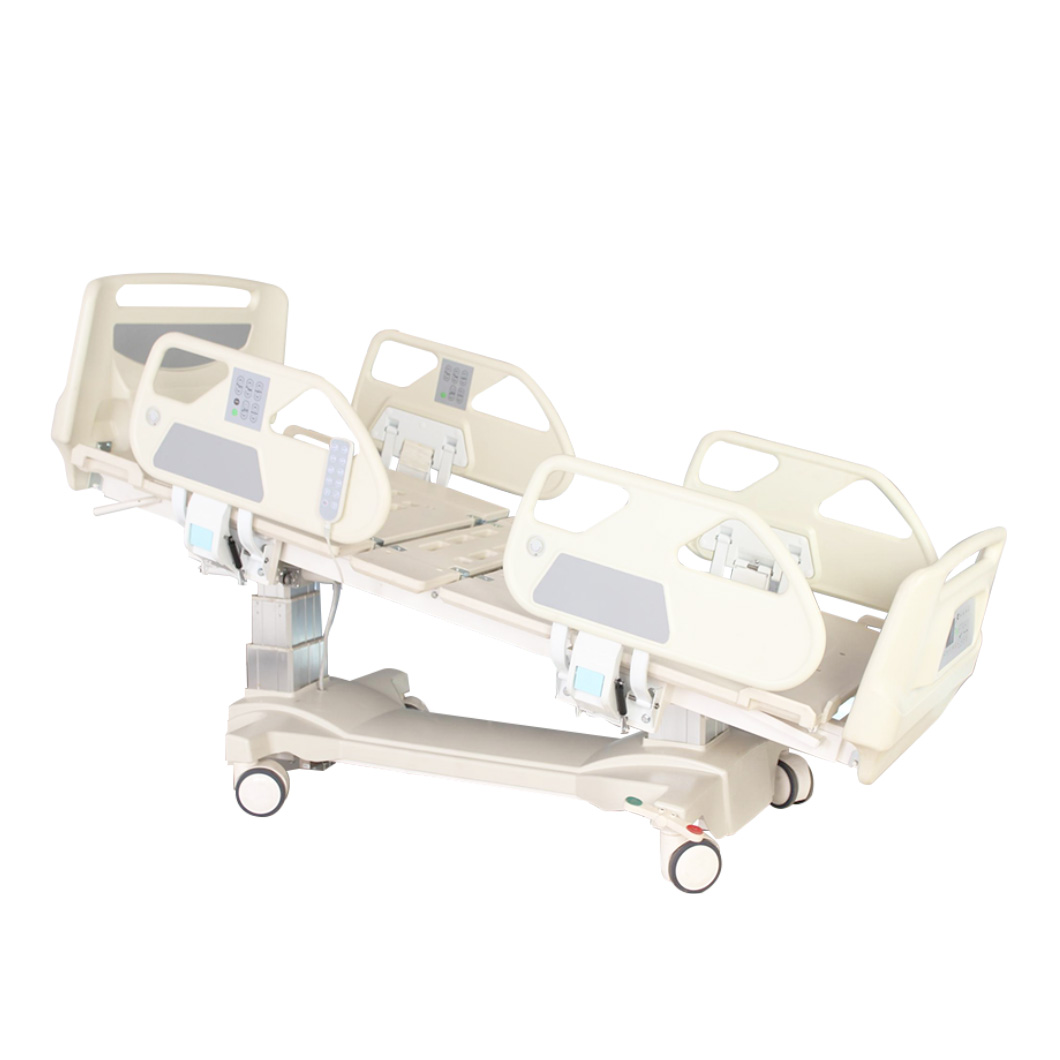 A function-level comparison should be checked against daily care tasks, not feature count alone.
A comparison matrix for care and procurement teams
| Decision factor | Two-function bed | Three-function bed | Five-function bed |
|---|---|---|---|
| Typical focus | Back and knee positioning | Positioning plus height adjustment | Broader positioning options |
| Care workflow question | Are transfers and caregiver height managed elsewhere? | Will height adjustment be used in routine care? | Which added movements are clinically and operationally required? |
| Training scope | Controls, brakes, mattress and rail checks | Same checks plus height-use procedures | Expanded controls, limits, escalation, and inspection steps |
| Maintenance planning | Inspect moving sections, controls, wheels, and brakes | Add height-drive checks and service access review | Plan for the full actuator/control configuration and documentation |
Use this matrix as a discussion tool, not as an approval rule. The final hospital bed specification should align with local clinical assessment, engineering review, procurement policy, and applicable market requirements.
Safety is a system, not an accessory list
Bed safety needs to be assessed as a system involving the hospital bed, mattress, rails, patient profile, room layout, and caregiver practice. Guidance on bed rails highlights that rails are not automatically appropriate for every patient. It also draws attention to entrapment hazards, latching reliability, and the relationship between the mattress and rail. In practical terms, bedside safety rails should be evaluated for fit, condition, intended use, and the individual care plan rather than added by default.
Include a documented check for brake engagement, cable routing, control condition, moving-part clearance, and mattress-to-platform compatibility. When a specification refers to medical-bed safety standards, such as IEC 60601-2-52 or a current successor edition, ask the supplier which document and market scope apply. Do not treat a generic statement as proof for a specific configuration or destination.
Build hospital bed maintenance into the award decision
Hospital bed maintenance should be considered before purchase, not only after a fault occurs. Request the preventive-maintenance schedule, inspection points, expected service response arrangement, spare-parts availability, technical documentation, and the process for reporting damaged rails, controls, castors, or electrical components. A lower initial price can be less meaningful if the organization cannot obtain timely service information or replacement parts.
For medical furniture procurement, put the following items in the same evaluation sheet as the purchase price:
- Function list and actual adjustment ranges for the quoted hospital bed.
- Mattress, rail, and accessory compatibility for the intended configuration.
- Delivery, assembly, acceptance inspection, and user-training responsibilities.
- Routine hospital bed maintenance tasks, escalation contacts, and records to retain.
- Configuration control: which options are included, excluded, or still awaiting confirmation.
Make the final choice by matching tasks to capability
A two-function hospital bed can be a sensible fit when basic positioning is the defined need. A three-function hospital bed may suit teams that routinely benefit from height adjustment. A five-function hospital bed can be appropriate where additional positioning supports an established care workflow and the organization is ready to manage the broader training and maintenance scope.
Begin with the patient population and care tasks, then confirm the configuration, safety system, and lifecycle support. That sequence gives procurement teams a clearer basis for comparing a nursing home bed or facility-wide hospital bed program without treating function count as the only decision criterion.
 Hot News