 EN


What Temperature and Humidity Controls Matter in an Infant Incubator?
For a buyer, an infant incubator belongs in a neonatal care workflow, not in a list of isolated display values. For procurement teams, the useful question is whether temperature and humidity controls can be set, observed, alarmed, verified, and maintained in the way the intended unit will use them. That means speaking with clinical users, biomedical engineering, and service teams before comparing options.
A neonatal incubator creates a controlled microenvironment for infants who need close observation and thermal support. However, the appropriate configuration depends on local protocols, infant acuity, staffing, accessories, room conditions, and applicable market requirements. This article provides a purchasing framework; it does not replace clinical direction, manufacturer instructions, or local regulatory assessment.
Start With the Control Mode, Not the Number on the Screen
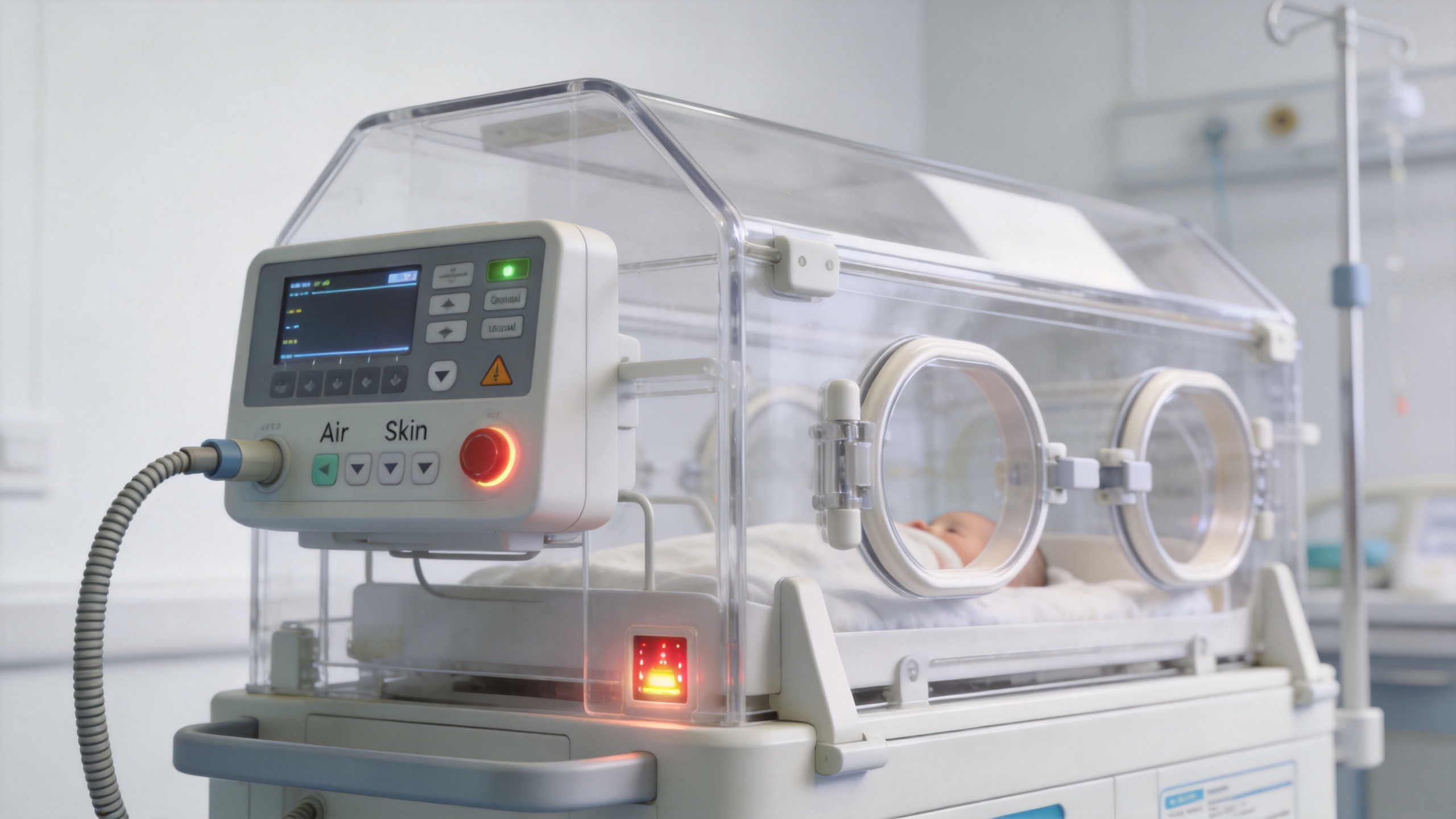
Temperature control is commonly discussed in two ways: air control and skin control. In air-control mode, the system regulates the enclosure air against the selected setpoint using an air-temperature sensor. In skin-control mode, the system responds to the infant temperature measured through a skin probe. The modes serve different workflow needs, so the purchase specification should state which modes are required and how staff will switch, confirm, and document them.
For an infant incubator, ask the supplier to show the control logic during a demonstration. Can the operator readily see the active mode, setpoint, measured value, and alarm state? Does a mode change require a deliberate action that reduces unintended changes? Is the displayed information understandable during handover or a busy shift? A feature list cannot answer those workflow questions.
Humidity control should be assessed in the same way. Confirm whether the model offers active humidity regulation, what operator controls and displayed values are provided, which accessories or consumables affect the function, and how condensate management fits the unit’s cleaning and infection-control workflow. Do not assume that a humidity feature has identical behavior across every configuration.
Translate Environmental Stability Into Acceptance Questions
Stable readings matter only if the measurement and response behavior are appropriate for the intended care process. A procurement request for newborn care equipment can therefore separate three related questions:
- Control: Can the unit regulate air temperature and, where specified, humidity in the chosen mode?
- Indication: Are the current value, target value, mode, and alarm condition visible to the assigned user?
- Verification: Can the facility check performance with an agreed method at commissioning and during scheduled service?
During factory acceptance, site acceptance, or routine service, the team should agree on the measurement device, sensor locations, stabilization interval, ambient conditions, setpoints, tolerances, and documentation format before testing begins. Test-practice material often highlights that environmental sensor placement above the mattress matters; the exact setup should follow the device instructions, the facility procedure, and the applicable test method rather than a generic rule copied from another model.
Where an infant incubator will be used in different room conditions or with different access-door patterns, include those realities in the evaluation discussion. Opening access points, adding equipment, or changing linen and accessories can alter the operating environment. The goal is not to claim one universal result; it is to establish whether the equipment, workflow, and verification plan fit the target unit.
Make Alarm Visibility a Workflow Requirement
An alarm has value only when the relevant person can recognize it and take the appropriate next step. For temperature and humidity functions, request a demonstration of visual and audible alarm indications, alarm messages, acknowledgement behavior, and the display hierarchy while the incubator is in the proposed configuration. If an alarm can be delayed, silenced, or reset, clarify who is expected to act and how the event is recorded.
For neonatal intensive care equipment, the evaluation should also consider the wider alarm environment. A bedside display may be adequate in one layout but difficult to notice in another. Your team should ask: who can see the warning from the normal work position; does the information identify the relevant parameter and mode; and what training is needed to distinguish a technical alert from a care-related response? These are workflow questions, not claims that a device alone determines care outcomes.
Sensor Handling Deserves Its Own Procurement Checklist
Sensor handling is central to reliable infant thermal support. A skin-control function depends on a compatible probe, correct placement, cable condition, secure attachment, and staff understanding of the selected mode. During evaluation, ask to inspect probe connection points, replacement options, cleaning limitations, storage practice, cable routing, and any self-test or fault indication available on the device.
Make this a practical requirement: do not only ask whether the unit has a skin sensor; ask how the team will verify that the sensor, displayed value, selected mode, and alarm response behave as expected in the target workflow. The same principle applies to air and humidity sensing. Confirm the service access route, calibration or verification guidance, and documentation that accompanies the equipment.
Review Humidity as a System, Not a Single Feature
When humidity capability is required, the procurement review should cover the whole operating system. Clarify the water-management process, consumable compatibility, cleaning steps, warnings associated with low water or related conditions, and the local policy for infection prevention. Ask what needs to be checked before use, during use, and after a period of nonuse.
A neonatal incubator comparison is stronger when suppliers answer the same scenario-based questions. For example, ask each supplier to explain the startup sequence, how a user confirms the active humidity setting, how an abnormal condition is shown, and what evidence is produced after preventive maintenance. This makes quotation comparisons more meaningful than comparing a broad “humidity control” label.
Use Service Verification to Protect Long-Term Usability
Delivery is not the end of the purchasing decision. The service plan should explain who performs commissioning, what tools are required, how often functional checks are recommended, which parts are expected to be replaced, and how records will be retained. IEC 60601-2-19 addresses basic safety and essential performance for infant incubators, but the applicable edition, national adoption, and project-specific evidence should be confirmed with the relevant compliance and clinical stakeholders.
Ask for a written service matrix that identifies temperature checks, humidity checks where applicable, alarm tests, sensor-related checks, electrical safety actions, training responsibilities, and escalation contacts. If remote support or distributor service is proposed, confirm the response process and the scope of onsite work rather than assuming coverage from a quotation.
A Procurement Sequence for Infant Incubator Controls
- Define the care scenario: record intended users, patient population, room conditions, accessories, and the facility’s alarm-response process.
- Specify control needs: list required air, skin, and humidity functions, plus display, alarm, and documentation needs.
- Run a workflow demonstration: have users operate mode selection, setpoint entry, sensor connection, alarm acknowledgement, and routine checks.
- Agree verification criteria: document instruments, conditions, stabilization time, measurement positions, acceptance limits, and records before delivery.
- Confirm service readiness: review training, preventive maintenance, spare parts, test equipment, and escalation routes.
RFQ Worksheet: Record Controls in Comparable Terms
A short worksheet helps keep supplier responses comparable. Use the same columns for every infant incubator proposal, and ask the clinical, engineering, and purchasing reviewers to record what was demonstrated rather than relying on a general brochure description.
| Review field | What to record | Why it matters |
|---|---|---|
| Infant incubator control mode | Record the active setting, user confirmation method, and mode-change steps for the infant incubator. | It links the displayed value to the intended care workflow. |
| Neonatal incubator sensor handling | For each neonatal incubator, note probe compatibility, cable routing, fault indication, and training requirements. | It makes sensor checks part of acceptance planning. |
| Newborn care equipment display | Ask how newborn care equipment shows setpoints, measured values, humidity state, and alarms from the normal work position. | It supports a realistic alarm-response review. |
| Infant thermal support verification | For infant thermal support, document instruments, positions, stabilization time, conditions, and records for each test. | It creates a repeatable commissioning and service path. |
| Neonatal intensive care equipment service | For neonatal intensive care equipment, list preventive checks, service ownership, replacement parts, and escalation contacts. | It connects delivery to long-term maintainability. |
In the final comparison, the infant incubator, neonatal incubator, newborn care equipment, infant thermal support, and neonatal intensive care equipment entries should be tied to observed evidence, assigned responsibilities, and the facility’s own acceptance criteria.
Conclusion: Purchase the Verification Path Along With the Device
The most useful infant incubator control specification connects environmental settings to people and process. Temperature and humidity controls should be easy to identify, matched to the planned clinical workflow, supported by clear alarms, and backed by a repeatable service-verification plan. By asking suppliers to demonstrate control modes and sensor handling in the intended scenario, procurement teams can compare newborn care equipment on evidence that remains useful after installation.
 Hot News

