 EN


Which Accessories Should Be Considered When Buying Hospital Beds?
Buying a hospital bed is not only a choice of frame, height range, or electrical functions. The accessories around the bed influence safety, comfort, transfers, cleaning, nursing tasks, and the documents a procurement team must keep. From a hospital procurement perspective, the practical question is not “Which add-ons are available?” but “Which accessories fit this patient population, this bed configuration, and this workflow?”
A useful medical bed selection process starts with the intended care setting: acute care, long-term care, rehabilitation, or home care. Then turn clinical needs into a configuration checklist and ask each hospital bed supplier to identify what is supplied, compatible, optional, and excluded. That approach makes comparisons more meaningful than comparing a long feature list.
Start with the bed system, not separate accessories
For safety assessment, a hospital bed system includes the frame, mattress, rails, and compatible accessories. This matters because an item that appears simple on its own may change the space around the mattress, rail, headboard, or footboard when installed. FDA hospital-bed guidance notes that accessories such as overlays or positioning poles should not alter the system’s recommended dimensional conformance or introduce a new entrapment or injury concern.
In other words, do not approve a mattress, rail pad, transfer aid, or hanging attachment only from a catalog photo. Ask whether it has been evaluated for the exact bed deck, rail arrangement, mattress dimensions, and intended patient group. If the configuration changes later, reassess it rather than assuming the original assessment still applies.
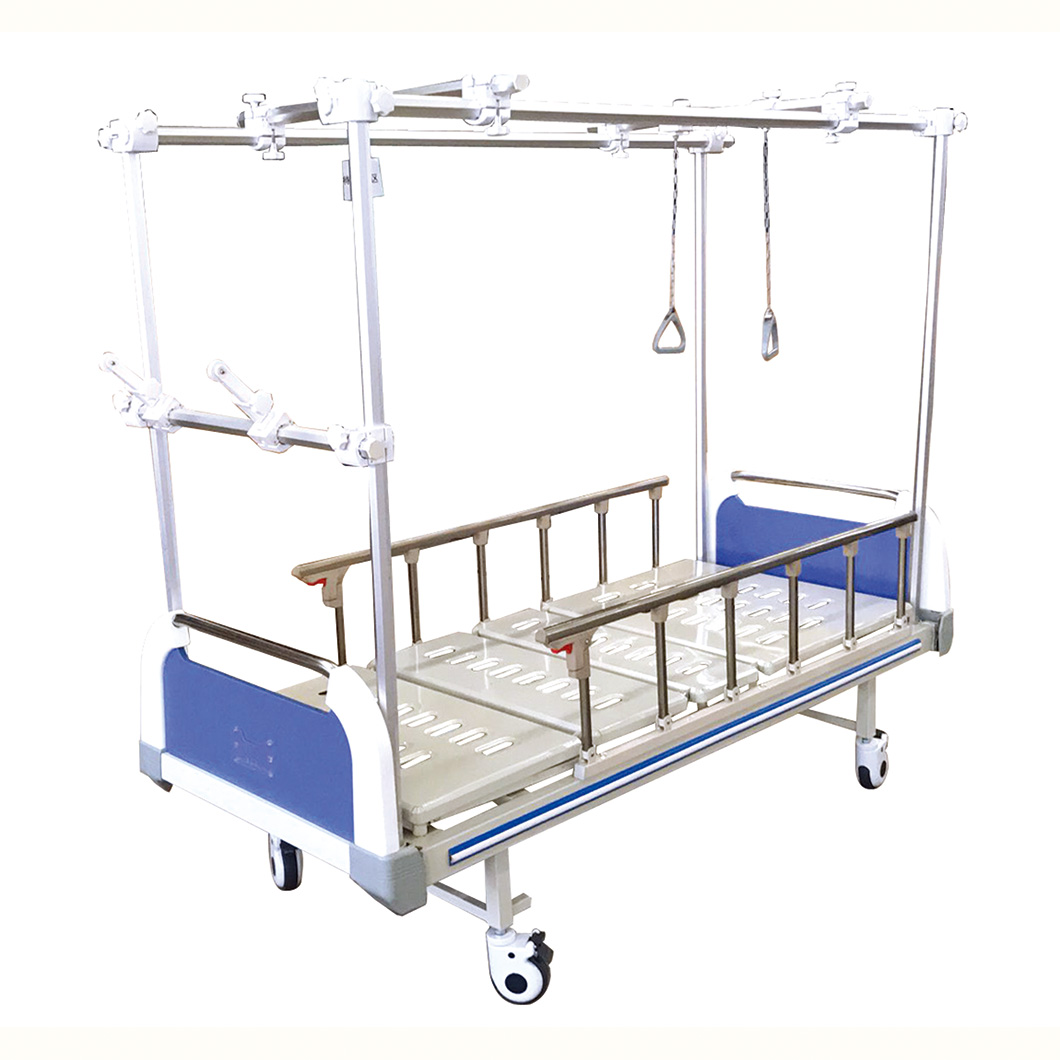 Accessory choices should be checked as part of the complete bed system.
1. Mattress and pressure-management accessories
The mattress is usually the first accessory to specify because it affects comfort, positioning, bed articulation, transfer height, rail clearances, and cleaning routines. A mattress should match the deck dimensions and the movement of the hospital bed. A thicker replacement mattress or overlay can change gaps near rails, so the clinical and engineering teams should review the complete combination before use.
- Confirm length, width, depth, weight capacity, and whether the mattress can articulate with the bed sections.
- Clarify whether pressure-management surfaces, pumps, covers, and replacement parts are part of the scope.
- Check cleaning instructions, fluid-management requirements, and turnaround time between patients.
- Document who assesses the combination after a mattress or overlay is changed.
For a patient care bed, comfort features should be discussed alongside repositioning needs and the facility’s skin-care protocol. The choice needs clinical judgment; this article provides a procurement framework, not a patient-specific care instruction.
2. Side rails, pads, wedges, and transfer supports
Rails are not a default answer for every patient. Their need and configuration should be assessed against mobility, cognition, transfer needs, supervision, and local policy. FDA guidance identifies appropriately sized mattresses, rail pads or wedges, and positioning aids as examples that may affect openings in the bed system. The key point is compatibility: a rail pad or wedge can be useful only when it has been assessed with the particular bed, mattress, and rail positions.
When evaluating rail-related accessories, list the rail type, split or full-length layout, mounting method, cleaning method, and any restrictions on use. Assist bars, grab handles, and transfer supports deserve the same attention. They may support repositioning or transfers, but they also alter the patient environment and should be reviewed as part of the system.
3. Mobility and fall-management accessories
Mobility needs vary by unit. Low-height capability, floor mats, transfer handles, bed-exit systems, and nearby mobility aids can be relevant, but they serve different purposes. A floor mat, for example, needs enough clearance around the hospital bed to avoid interfering with staff movement, lifting equipment, or cleaning. A transfer handle needs to be positioned where the patient can use it safely without blocking access for care.
Before purchasing, walk through a typical transfer: where does the caregiver stand, where does equipment park, and what remains accessible when the bed is raised or articulated? This is more useful than assuming that a mobility accessory fits every room. In a busy ward, the bed’s footprint and surrounding hospital furniture can determine whether an add-on helps or creates a new obstacle.
4. Clinical workflow attachments
Common workflow accessories include IV poles, drainage-bag hooks, oxygen-cylinder holders, monitor brackets, patient controls, chart holders, and overbed tables. Specify these against the tasks they support. For example, an IV-pole fitting should be checked for its approved mounting position, load limit, clearance through doorways, and interaction with bed movements. A drainage hook needs a location that supports routing and observation without creating a snag point.
It is tempting to select every available attachment. A better method is to ask each department which accessories are needed during admission, routine care, transfers, emergency response, cleaning, and maintenance. That converts an accessory list into a workflow map and helps reduce duplicate or unused items in the final quote.
5. Patient comfort and independence items
Overbed tables, reading lights, handset holders, lifting poles, trapeze-style supports, and positioning aids may improve access and independence for some users. Their value depends on reach, strength, clinical restrictions, and staff assistance patterns. More accurately, the priority is not the number of comfort features but whether each one supports a defined task without compromising access or safety.
For a medical bed selection review, capture practical questions: Can the patient reach the control safely? Does the table adjust around the bed’s positions? Can staff clean the surfaces quickly? Is the accessory removable when imaging, transfer, or emergency access requires clear space? Answers should be verified with the supplier’s documentation and facility procedures.
6. Compatibility, service, and procurement documentation
Compatibility evidence is an accessory requirement in its own right. Request a written matrix from the hospital bed supplier that names the bed model, mattress, rails, attachment points, compatible accessories, permitted combinations, and relevant instructions for use. Include part numbers, mounting hardware, load limits where applicable, cleaning guidance, warranty boundaries, spare parts, and service responsibilities.
Compare quotations on the same configuration basis. Many purchasing delays occur because one quote includes a mattress, rail set, IV pole, and accessories while another quote lists the frame alone. Before placing an order, create an acceptance checklist covering delivered components, compatibility documents, installation conditions, user training, cleaning instructions, and a process for reporting configuration changes.
A practical accessory checklist
- Define the care setting, patient needs, room constraints, and clinical workflow.
- List required mattress, rail, mobility, clinical-attachment, and comfort items separately.
- Ask for written compatibility information for every proposed combination.
- Review mattress and rail dimensions together after any substitution or overlay is proposed.
- Confirm cleaning, maintenance, spare-part, and training responsibilities.
- Use the same specification sheet when comparing suppliers and accepting delivery.
Conclusion
The right accessories make a hospital bed more workable for patients, caregivers, and facility teams, but they are most effective when treated as connected parts of the care environment. Start with the care task, verify the whole bed system, and keep the compatibility and acceptance records with the procurement file. That discipline supports a clearer patient care bed configuration and reduces avoidable ambiguity after delivery.

 Hot News

