 EN


What Should Organizations Check When Selecting an AED Supplier?
Choosing an AED supplier is not simply a question of comparing a device price or a feature list. An AED program depends on the device, its consumables, the people expected to use it, and the process that keeps it ready over time. For a clinic, workplace, school, hospitality site, or distributor, a structured supplier review helps turn an AED purchase into a documented emergency-readiness plan.
From the perspective of a team member who may need to locate or check an AED during a busy shift, the important question is whether the equipment and support are understandable, traceable, and workable after delivery. This article is procurement guidance, not clinical or legal advice. Local emergency procedures, professional training requirements, and market-specific obligations should be confirmed with qualified local stakeholders.
Start with the intended AED program, not a catalog page
Before asking a supplier for a quote, define where the AED device will be located, which people will check it, who will replace consumables, and how the organization will document readiness. A supplier can then respond to a real requirement rather than an incomplete request for “an AED.” This initial scope should distinguish public-access placement, clinical use, mobile teams, and distributor inventory because the support and fulfillment needs can differ.
Ask internal stakeholders to agree on the operating scenario: expected user groups, storage conditions, response procedures, inspection ownership, and the required delivery destination. A useful comparison begins when every candidate supplier is asked to address the same written scope. Otherwise, a lower quote may simply omit a battery, pads, cabinet, signage, training materials, or post-sale support that another quote includes.
1. Verify product identity and documentation
For every proposed automated external defibrillator, request the exact model name, configuration, intended-market documentation, user instructions, technical specifications, labeling, and applicable declarations or registrations. Do not treat a generic brochure as confirmation that the quoted AED is the exact device described. The U.S. Food and Drug Administration maintains device information for AED systems; organizations should verify the offered model against the requirements that apply in their own market rather than rely on broad statements.
Documentation should also make the supply chain visible. Ask who is the legal manufacturer, who will issue the commercial documents, where the serial number is recorded, and how revisions to instructions or safety notices will be communicated. For an emergency medical equipment purchase, traceability is a practical procurement condition: it supports receiving checks, future service conversations, and internal records.
- Request a model-specific document pack before purchase approval.
- Confirm which accessories and software, if any, are included in the quoted AED configuration.
- Ask how serial numbers, lot information, and document revisions are handled.
- Record which market-specific documents still need independent review.
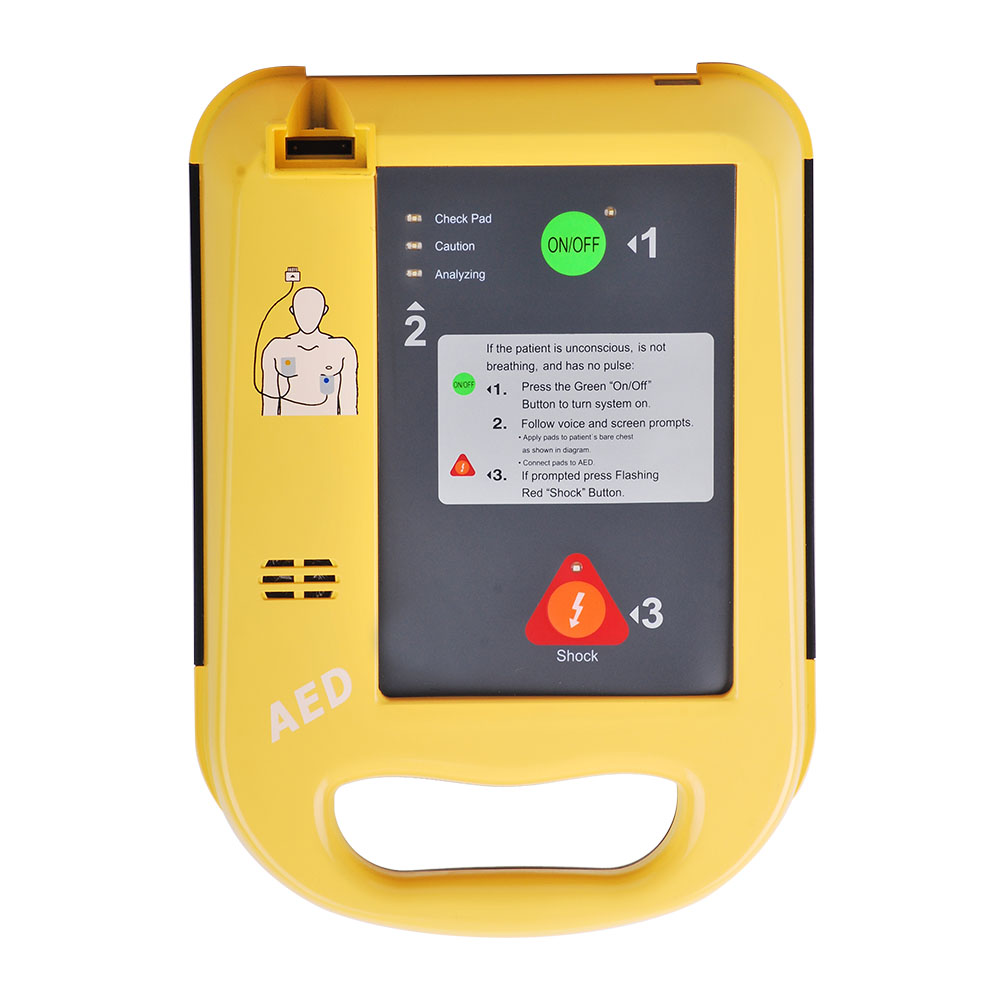 A supplier review should connect documentation with practical readiness responsibilities.
2. Examine consumables and supply continuity
An AED is only one part of the readiness picture. Pads, batteries, pediatric options where relevant, carrying cases, cabinets, and replacement items need a clear lifecycle plan. The American Heart Association’s on-site program guidance notes that electrode pads are single-use and should be replaced shortly before expiration. That makes consumable availability and expiry management central to supplier due diligence, not an afterthought.
Ask the supplier for the part numbers of compatible pads and batteries, expected shelf-life information, storage guidance, minimum order quantities, lead-time ranges, and a procedure for notifying customers about replacements. The supplier does not need to make a sweeping promise about future availability; instead, it should explain how it manages current stock, backorders, substitutions, and discontinuations. Your team should also ask whether the AED status indicator or inspection process is covered in the proposed training materials.
Compare the whole replenishment process. A lower initial AED device price can be less useful if replacements are difficult to source, arrive without a documented process, or cannot be matched confidently to the installed configuration.
3. Evaluate local support and service responsibilities
Support claims should be converted into specific responsibilities. Who answers a technical question after delivery? Which party coordinates warranty assessment? Is there a local service contact, a regional distributor, or only a remote contact channel? What information must the buyer provide before service can begin? These questions help reveal whether the AED supplier has a practical support path for the locations being served.
Request a written explanation of service boundaries, response channels, warranty terms, exclusions, return procedures, and the escalation route for an unresolved issue. If a supplier uses a third party for local service, ask for the service scope and how handoffs are recorded. An AED program may involve procurement, facilities, safety staff, and users, so the service contact should be clear to all of them.
4. Review training and implementation resources
Training resources are not the same as clinical certification, and a supplier should not blur that boundary. Still, an AED supplier can provide useful implementation support: device orientation materials, inspection checklists, documentation templates, installation guidance, and a clear explanation of which training must be arranged through qualified providers. The American Heart Association publishes AED implementation resources, illustrating why a program needs more than a delivered unit.
Ask to see the actual materials before placing an order. Are instructions model-specific? Are they available in the languages needed by the site? Do they explain routine checks, consumable replacement, and how to identify a device condition that needs follow-up? A recurring procurement mistake is to evaluate training only after the AED arrives. Bring the people who will own readiness checks into the supplier review earlier.
5. Test fulfillment, receiving, and acceptance planning
Delivery is the point at which many assumptions become visible. Ask the supplier to state packaging, shipment terms, estimated dispatch window, transit documentation, and the information included with each AED. For multi-site orders, clarify whether units can be labeled by destination, whether accessories will ship together, and how shortages or transit damage are reported.
Set acceptance conditions before issuing the purchase order. The receiving team can check the AED model, quantity, serial numbers, included accessories, document pack, exterior condition, and visible expiry dates. Then assign an owner to register the location, schedule routine inspections, and retain the supplier contact details. Breaking the decision into requirement, configuration, and acceptance stages makes gaps easier to spot before they become a handover problem.
A practical AED supplier scorecard
| Review area | Evidence to request | Question to resolve |
|---|---|---|
| Product documentation | Model-specific instructions, specifications, applicable records | Does the evidence match the exact AED offered? |
| Supply continuity | Part numbers, replacement process, lead-time guidance | How will pads and batteries be sourced and tracked? |
| Support and service | Warranty, escalation path, service roles | Who owns each issue after delivery? |
| Training resources | Orientation and inspection materials | What does the supplier provide, and what needs qualified training? |
| Fulfillment and acceptance | Shipment plan and receiving checklist | How will the organization verify a complete, correct AED delivery? |
Move from claims to a documented decision
When comparing AED suppliers, prioritize evidence that can be reviewed, assigned, and retained. A capable supplier discussion should leave the organization with a clear model record, a consumables plan, named support contacts, usable implementation resources, and acceptance criteria. That approach does not predict every future event, but it gives the AED program a stronger operating foundation.
Before final approval, send each candidate the same scorecard and ask for written responses. Then note any unanswered items as conditions to close, not assumptions to ignore. For emergency medical equipment, a careful purchasing record is often more valuable than an attractive claim because it helps the organization verify what was selected, what was delivered, and what must be maintained.
 Hot News

