EN


How to Maintain an ECG Machine for Accurate Recordings
An ECG Machine is only as dependable as the routine around it. A clean trace depends on the device, leads, electrodes, paper or digital storage, patient preparation, and the people who check each item before recording. This guide is written from a biomedical-engineering communication perspective: it explains a practical maintenance path, but it does not replace the manufacturer’s instructions for use (IFU), local infection-control rules, or qualified clinical and service decisions.
In a busy department, it is not enough to know that the ECG Machine powers on. Ask whether it can produce, label, store, and print an interpretable recording under the conditions in which your team actually works. Separating a quick pre-use check from scheduled preventive maintenance makes that question easier to answer.
Start with a clear maintenance responsibility map
Assign routine tasks to the user team and technical tasks to trained biomedical personnel or an authorized service provider. Users can inspect the ECG Machine exterior, lead set, connectors, battery status, paper supply, and visible contamination. They can also document repeatable artifacts or error messages. Service personnel should handle calibration or performance verification only when the IFU, local policy, and service authorization call for it.
Keep a simple log for every ECG Machine: asset ID, location, lead-set ID where applicable, date, task, finding, action, and next due date. Over time, that log gives recurring problems useful context. For example, a repeated noisy limb lead may point to a damaged cable, poor electrode contact, a storage problem, or an issue that needs technical evaluation; it should not be dismissed as a software problem.
Perform a short check before each recording session
A pre-use check protects recording quality without delaying care. Confirm that the ECG Machine is intact, dry, and free from visible damage. Check that the mains cable or charged battery is appropriate for the planned session, that connectors engage securely, and that the display, printer, and storage workflow operate as expected. Follow the specific model’s IFU for any self-test or status indication.
- Inspect leadwires for cracks, exposed conductors, stiff sections, bent pins, loose strain relief, and damaged clips.
- Check the expiration date and condition of disposable electrodes. Do not use dried-out or poorly adhered electrodes.
- Confirm the correct patient identifiers, date, time, and configured lead format before acquiring a trace.
- Verify that paper, if used, is loaded correctly and that the printout is legible.
- Record any non-standard placement or patient position according to local clinical procedure.
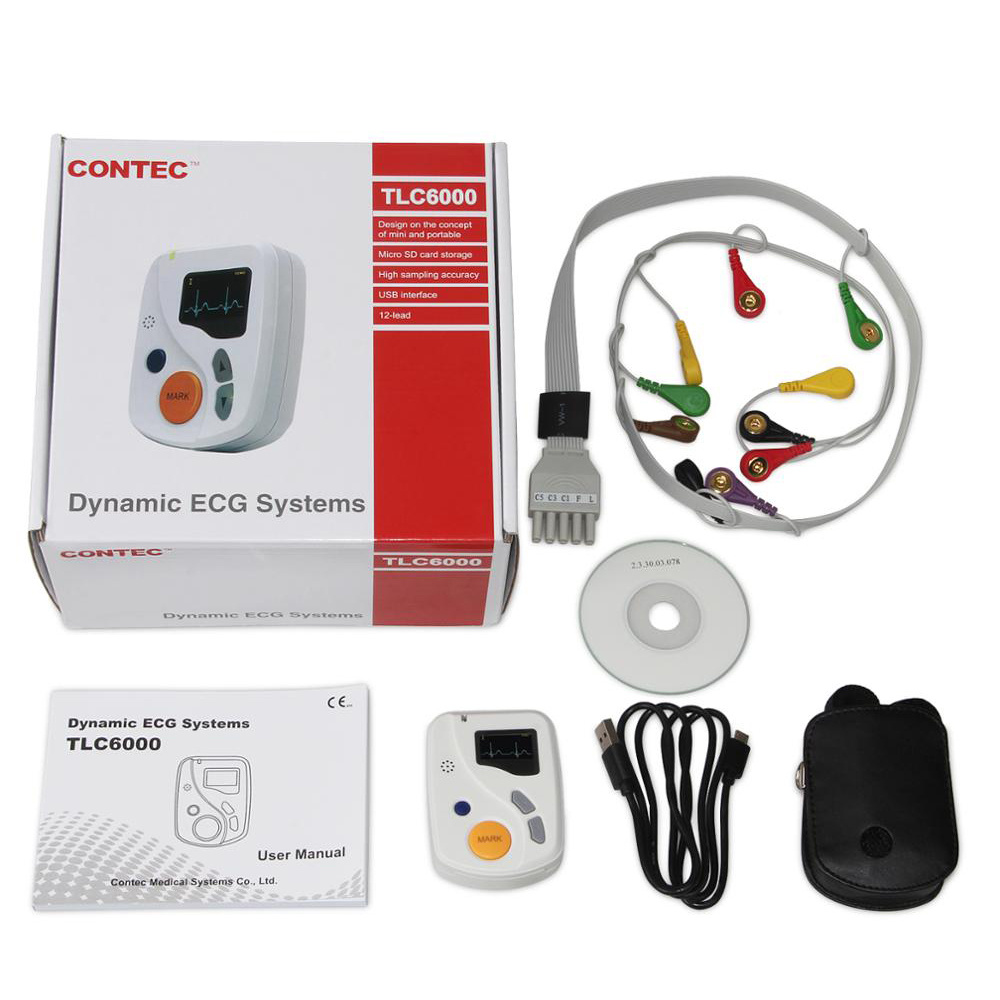 Routine visual inspection can identify accessory issues before a recording session.
For a 12 lead ECG, stable contact and consistent labeling matter as much as the ECG Machine itself. If a trace looks implausible, stop and repeat the acquisition only after checking the patient, placement, cable condition, and system messages. Do not alter a clinical interpretation to compensate for a questionable recording.
Clean the ECG Machine and accessories the approved way
Cleaning deserves the same care as the recording workflow, rather than a generic wipe-down. Disconnect the ECG Machine from power when the IFU requires it, use only compatible cleaning or disinfecting materials, and prevent liquid from entering ports, seams, the printer compartment, or connectors. The manufacturer’s IFU governs contact time, dilution, compatible agents, and whether a lead set may be immersed or only wiped.
Wipe the housing, screen, keyboard, patient cable, clips, and reusable accessories after use when policy requires. Then inspect them again: a cable that becomes brittle, sticky, discolored, or difficult to flex may need to be removed from service. Store the ECG Machine and its leads dry, protected from crushing, and arranged to avoid sharp bends. Avoid improvising with solvents, sprays, or soaking methods that the device documentation does not approve.
Protect signal quality through electrode and lead care
Good ECG electrode placement starts before a lead is attached. Follow the clinical protocol for patient identity, privacy, position, skin condition, and placement. Skin that is wet, oily, heavily haired, or poorly prepared can reduce contact and contribute to artifact. Take special care with fragile, sensitive, or broken skin, and document a non-standard position so the recording can be interpreted in context.
When artifacts appear, use a repeatable sequence: check patient movement and muscle tension, confirm electrode contact and placement, inspect the leadwire and connector, then review the ECG Machine status. Replace a suspect disposable electrode first when appropriate. If the issue follows the same cable or input after basic checks, label the equipment and route it for evaluation. It also prevents a user-level observation from being treated as an unsupported technical diagnosis.
Schedule preventive maintenance, not just corrective repair
Preventive maintenance intervals must follow the ECG Machine IFU, local policy, workload, environment, and service agreement. A scheduled visit can include a visual inspection, accessory assessment, battery review, functional checks, safety checks where applicable, and documented verification performed by qualified personnel. If the device requires calibration or a manufacturer-specific test procedure, use the approved method and record the result rather than assuming a normal-looking trace proves full performance.
Keep separate records for the ECG Machine body, replaceable leads, batteries, printer consumables, and software version. This makes it easier to see whether failures cluster around one accessory or one care area. It also supports handover when the device moves between rooms or teams.
Manage software, files, and interpretation boundaries
Where the ECG Machine uses digital storage or ECG interpretation software, include software checks in the maintenance plan. Confirm the authorized version, date/time accuracy, user access controls, storage capacity, backup or export workflow, and any update process approved by the manufacturer and your organization. Test changes in a controlled manner; do not install unapproved software or assume that a new interface preserves every workflow setting.
Automated statements can help organize a review, but they do not replace qualified clinical interpretation. A clean ECG Machine recording and a correct patient record are prerequisites for meaningful review; they are not a clinical conclusion. Keep technical maintenance decisions separate from diagnosis, and escalate clinical questions through the appropriate local pathway.
Use a simple troubleshooting and escalation checklist
When an ECG Machine produces noise, missing leads, printing issues, or unexpected messages, document what happened before resetting or replacing multiple parts. Note the device ID, lead set, electrode batch if relevant, time, battery or power state, error text, patient-preparation observations, and whether the problem recurs. This information helps the next person distinguish an isolated recording issue from an equipment trend.
- Remove the ECG Machine from clinical use if damage, liquid ingress, electrical concerns, or an unresolved safety issue is suspected.
- Follow the IFU and local escalation route; do not open the enclosure or bypass safeguards.
- Use a backup cardiac diagnostic device only according to local readiness procedures.
- Close the record only after the finding, action, responsible person, and return-to-service decision are documented.
Turn maintenance into a reliable workflow
A useful ECG Machine program is consistent rather than complicated: inspect before use, clean with approved materials, protect electrodes and leads, document faults, and complete planned service on time. Your team should be able to answer three questions at any moment: Is this ECG Machine ready to record? What evidence supports that answer? Who owns the next action if it is not?
That workflow supports accurate recordings while respecting the limits of a general guide. For model-specific cleaning, verification, accessories, and service intervals, use the current manufacturer documentation and your organization’s clinical, engineering, and infection-control procedures.

 Hot News