 EN


What Factors Influence Patient Monitor Prices?
For a hospital buyer, a Patient Monitor price is rarely just the number on a quotation. The monitor may be intended for a general ward, emergency department, operating room, transport team, or a higher-acuity area, and each setting changes the configuration, validation work, accessories, and support that should be compared. A useful review starts by defining the clinical workflow and total ownership requirements before comparing unit prices.
That approach matters because a Patient Monitor is usually part of a broader vital signs monitoring process. The display itself is only one part of the purchase. Sensors, alarm handling, staff training, connectivity, installation planning, and patient monitor maintenance can all affect the real budget.
1. Intended use and monitoring configuration
The first driver of Patient Monitor pricing is what the device needs to monitor. A basic configuration for routine bedside observation may have a different cost profile from a unit designed for a wider set of parameters, more channels, or future expansion. Rather than comparing a headline price, ask for a written configuration list that identifies included parameters, modules, leads, cables, probes, batteries, mounting options, and software functions.
More parameters do not automatically make a Patient Monitor the better purchase. The important question is whether the requested functions support the target workflow. For example, a bedside monitor used during busy nursing shifts should be evaluated for how information is displayed, how alarms are reviewed, and which staff members will act on the information. If a feature will not be used or supported locally, it can add cost without adding practical value.
2. Display, portability, and physical installation
Screen size, touch controls, housing design, battery capacity, trolley or wall-mount hardware, and transport requirements can all change a quotation. A fixed bedside monitor may require a different accessory and mounting package than a unit that must move with patients. Installation also deserves its own line item: confirm power requirements, mounting responsibility, cable routing, and the acceptance checks needed before clinical use.
Comparisons are most reliable when suppliers price the same scope. Before accepting a lower Patient Monitor price, confirm whether the quoted package includes the battery, reusable sensors, cuffs, leads, mounting hardware, manuals, and commissioning support. A lower initial figure may simply exclude items that another offer includes.
3. Connectivity and alarm workflow
A Patient Monitor can become more expensive when the project requires connection to a central station, network, electronic records, or an existing alarm-management workflow. These requirements may involve interfaces, licenses, network assessment, cybersecurity review, configuration, and testing. The cost is not only hardware; it may also include project coordination and validation.
For vital signs monitoring, alarm behavior should be discussed as a workflow question, not merely a specification checkbox. Who receives alarms, how are priorities set, and how is handoff managed? The answers can affect the desired configuration and the training plan. They also help a buyer distinguish an essential system requirement from an optional add-on.
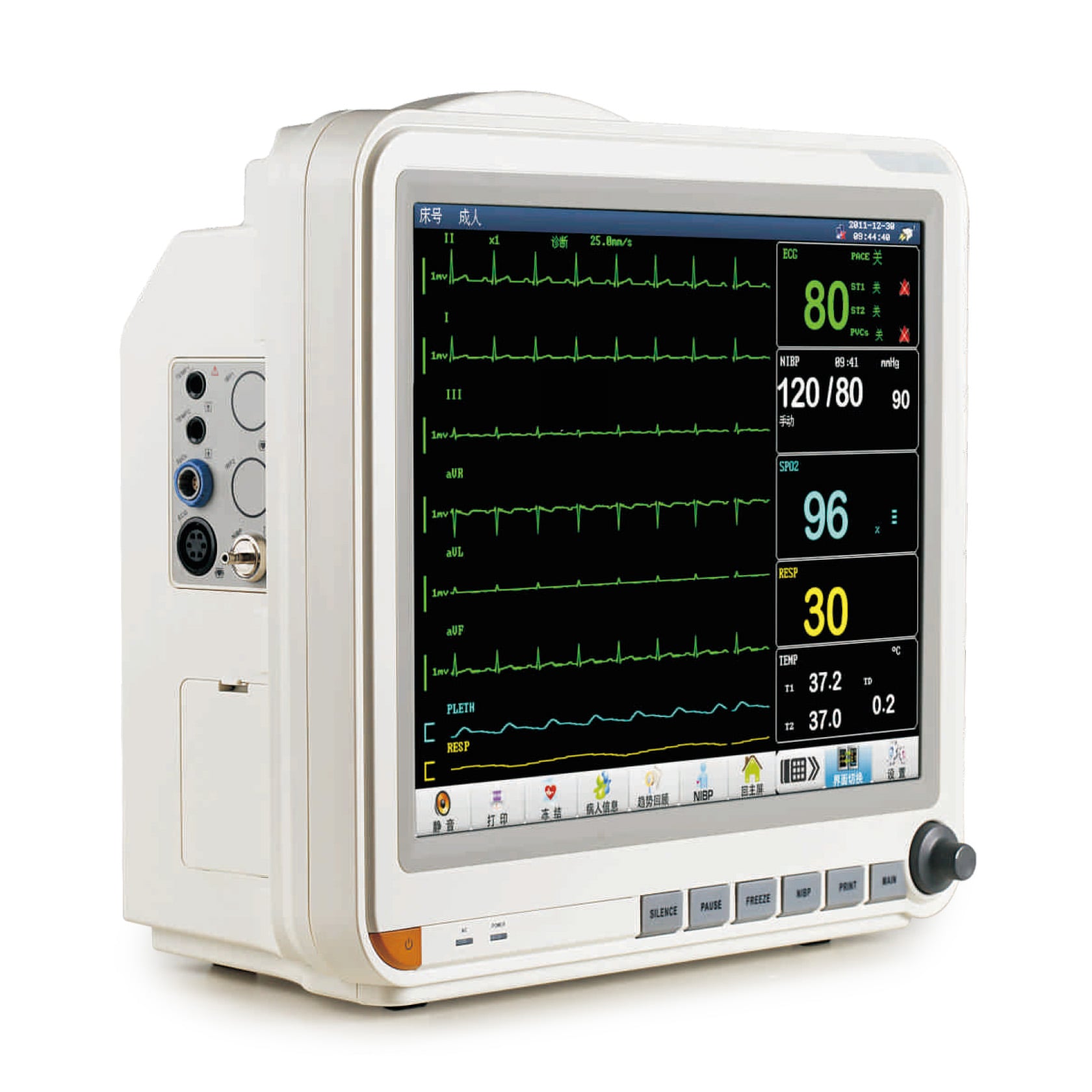 A procurement comparison should include configuration, accessories, support, and lifecycle responsibilities.
4. Regulatory documentation and market requirements
Documentation needs can influence procurement effort and therefore the final cost. In the United States, for example, 21 CFR 870.2300 addresses a cardiac monitor including a cardiotachometer and rate alarm; a particular device’s pathway and intended use must still be checked for the target market. IEC 80601-2-49:2018 addresses basic safety and essential performance requirements for multifunction patient monitors. These references do not prove that any quoted product is compliant, but they illustrate why buyers should request a traceable document package appropriate to their market and project.
Ask a patient monitor supplier which documents are available for the exact model and configuration being quoted. Keep the request specific: intended market, model number, accessories, software version when relevant, and required language or registration support. This avoids treating a general brochure as evidence for a particular procurement decision.
5. Accessories and recurring consumables
Accessories can materially change the lifetime cost of a Patient Monitor. Reusable and single-patient-use items, cables, cuffs, probes, batteries, printer media where applicable, and replacement parts should be listed separately. Buyers should ask which accessories are supplied at delivery, how replacements are ordered, and whether compatible alternatives are permitted under the device documentation and local policy.
A practical comparison table should show the unit price alongside the expected accessory package and replenishment assumptions. This is especially useful when several departments will use the same Patient Monitor, because a small difference in per-unit accessories can scale across the project.
6. Training, commissioning, and acceptance
Training is another price driver that is easy to overlook. A monitor that is technically capable may still need role-specific instruction for nurses, biomedical personnel, and purchasing or IT stakeholders. The scope may include daily operation, alarm settings within approved procedures, cleaning boundaries, battery handling, accessory identification, and escalation routes.
Before purchase, agree on an acceptance plan. It should identify the configuration to be delivered, installation prerequisites, functional checks, documentation to review, and the people responsible for sign-off. This makes it easier to compare offers from each patient monitor supplier on an equivalent basis and reduces the chance of late-stage clarification.
7. Service coverage and patient monitor maintenance
Patient monitor maintenance is part of the ownership decision, not an afterthought. The cost can depend on warranty length, preventive-maintenance expectations, repair turnaround, remote technical support, availability of spare parts, calibration or performance-verification responsibilities, and whether local biomedical teams can perform defined tasks.
Ask suppliers to separate included warranty support from paid service options. It is also worth confirming who manages software updates, safety notices, loan units if available, and records of maintenance activity. A lower purchase price may be less attractive if the support model does not fit the site’s maintenance resources.
8. Order volume, logistics, and commercial terms
Project size, delivery schedule, packaging, shipping route, import procedures, local taxes, currency terms, and payment milestones can all affect the delivered cost. For multi-unit projects, request a line-by-line commercial breakdown rather than relying on a single bundled total. This helps the team compare what is truly included and identify costs that may sit outside the equipment quotation.
A procurement checklist for comparing patient monitor prices
- Define the intended care setting and vital signs monitoring workflow.
- Compare the same parameter, accessory, battery, mounting, and software scope.
- Confirm whether a central station, interface, or network work is required.
- Request traceable documentation for the exact market and quoted configuration.
- List training, commissioning, warranty, and patient monitor maintenance responsibilities.
- Separate equipment, accessories, logistics, and service costs in the comparison sheet.
- Record acceptance criteria before placing the order.
Conclusion
The most useful way to evaluate Patient Monitor prices is to compare the complete operational package, not just the monitor’s initial figure. Start with the intended workflow, define an equivalent configuration, and make deployment and support costs visible. When a patient monitor supplier can answer those questions clearly, the purchasing team is in a stronger position to select a solution that fits its clinical, technical, and budget requirements.

 Hot News

