 EN


What Features Should Buyers Compare in Anesthesia Machines?
Buying an anesthesia machine is not a matter of counting options on a brochure. The useful comparison starts with the procedures, patient groups, staffing model, gas infrastructure, and service resources of the intended operating room. From a hospital procurement perspective, the goal is to define one comparable configuration and then ask how each anesthesia delivery system supports routine setup, intraoperative work, verification, and maintenance.
That distinction matters because an anesthesia workstation is a connected system. Gas sources, vaporizers, ventilation, monitoring interfaces, the anesthesia breathing circuit, suction arrangements, and scavenging provisions all affect the evaluation. A specification sheet can look comprehensive while still leaving important workflow questions unanswered.
Start with a like-for-like comparison scope
Before comparing any anesthesia machine, document the clinical use cases and the configuration that must be included in every quotation. Specify whether the review covers adult, pediatric, or mixed use; which gases are available; which vaporizer positions, monitoring modules, hoses, breathing circuits, carts, and backup items belong in the package; and what training or commissioning is expected. This protects the team from comparing a basic unit with a more fully equipped anesthesia workstation.
Usually, the most productive sequence is simple: define the use case, align the configuration, then agree on acceptance checks. It also gives clinical users, biomedical engineers, and purchasing staff a shared way to discuss operating room equipment.
1. Gas delivery and vaporizer configuration
Gas delivery is a primary comparison area because the anesthesia machine must fit the facility’s pipeline supply, cylinders, connections, and clinical protocol. Review the available gas inputs, pressure indications, reserve-cylinder arrangement, oxygen concentration display, and the visibility of status information. Ask the supplier to identify what is included, optional, or site dependent.
For vaporizers, compare the number of mounting positions, interlock arrangement, filling method, compatibility expectations, mounting security, and the checks required before use. Do not infer compatibility from a photograph or generic description. Ask for the supplied documentation and have the clinical and engineering teams confirm the exact configuration.
Buyer questions for gas delivery
- Which pipeline and cylinder connections are supplied for the destination site?
- How are low-supply conditions indicated, and how is the indication verified during acceptance?
- Which vaporizer positions and agents are in scope, and what accessories are required?
- What pre-use checks are described for the gas path and oxygen delivery controls?
2. Ventilation capability and the anesthesia breathing circuit
Ventilation should be compared as a workflow, not merely as a mode list. Ask which volume, pressure, manual, and spontaneous-support functions are available in the quoted configuration, how settings are presented, and how the team verifies that the displayed values correspond to the intended setup. The right choice depends on the patient population, anesthesia practice, and local procedures; this article is a purchasing framework, not a clinical protocol.
The anesthesia breathing circuit deserves equal attention. Review circuit connections, the absorber and canister arrangement, adjustable pressure-limiting controls, manual-bag access, leak-check steps, and how replacement or cleaning responsibilities are documented. Published pre-use check guidance places the breathing circuit, integrated ventilator, monitors, and scavenging system within connected review areas. That is a useful reminder that a machine feature cannot be judged in isolation.
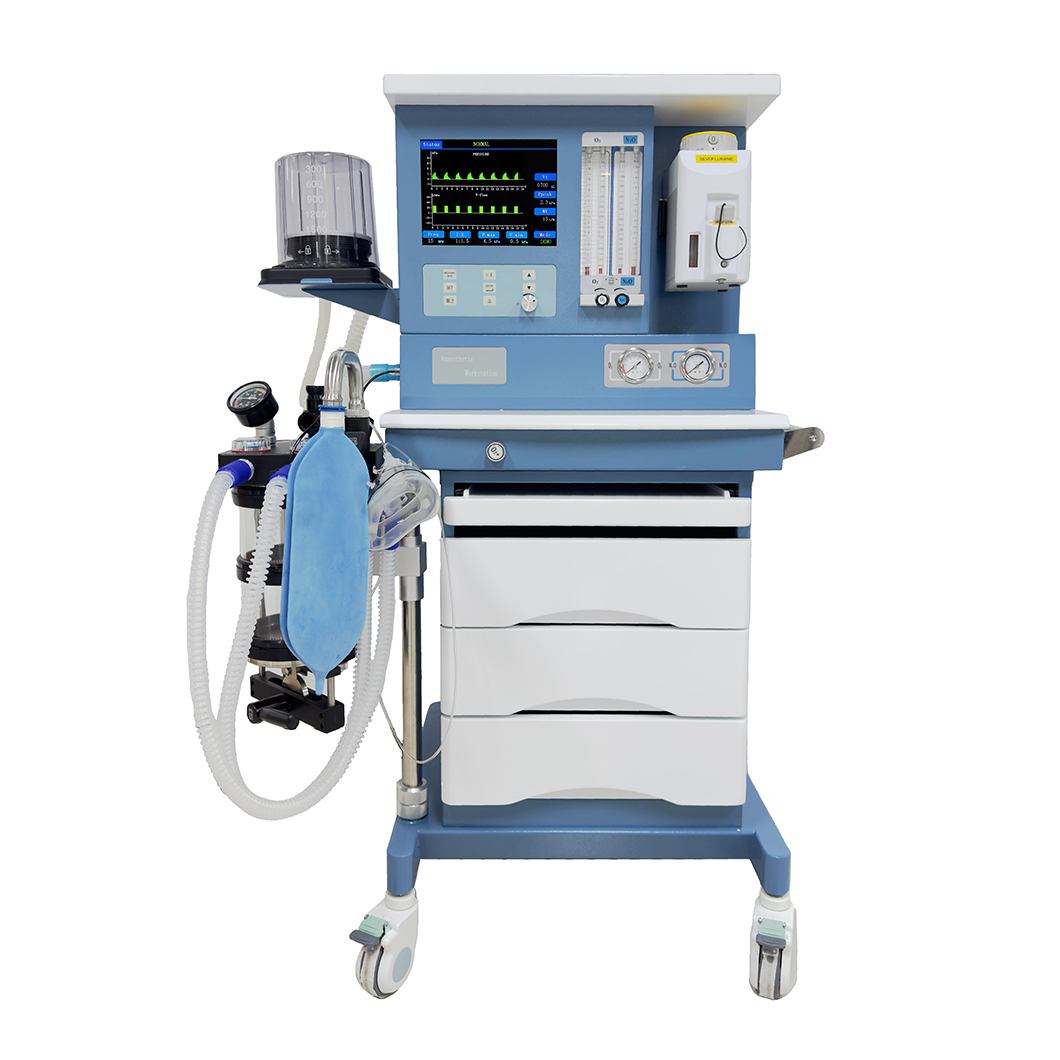 Anesthesia workstation comparison should consider equipment, workflow, and verification needs together.
3. Monitoring, alarms, and information visibility
Compare what the anesthesia machine displays directly and what requires separate equipment or modules. A buyer should map the screen layout, alarm behavior, trend visibility, data export options, and interfaces to the operating room’s existing monitoring plan. More features are not automatically more useful; the practical question is whether the assigned team can see, understand, and verify the information during its normal workflow.
During demonstrations, ask users to perform representative tasks: complete a pre-use check, switch from manual to mechanical ventilation, identify a simulated supply condition, review alarm limits, and document the handoff process. These observations should become part of the evaluation record rather than relying on a sales demonstration alone.
4. Ergonomics and operating-room integration
Equipment layout affects day-to-day use. Compare screen position, control access, drawer and shelf capacity, cable routing, lighting conditions, caster behavior, working height, and clearance around the table. A compact anesthesia delivery system may suit a constrained room, while a larger workstation may be easier to configure for a broader set of accessories. Neither direction is universally preferable.
Also examine utility requirements: electrical supply, gas outlets, backup arrangements, network needs, scavenging connection, room ventilation interfaces, and transport path. Scavenging is worth discussing early because it is part of the site system, not an afterthought attached after installation. The procurement team should verify how the proposed arrangement fits local engineering requirements and operating-room design.
5. Serviceability, training, and lifecycle planning
The purchase price is only one input. Compare the planned preventive-maintenance schedule, consumables, replacement parts, calibration needs, software or firmware management, response arrangements, user training, technical documentation, and acceptance support. Ask who performs each task, what records are produced, and what site conditions are needed. A feature that is useful on day one may create avoidable disruption if its maintenance path is unclear.
For international or multi-site purchasing, request an itemized document list early. For example, a buyer may need to review the applicable declarations, manuals, installation requirements, maintenance information, and the scope of any stated standards. ISO 80601-2-13 addresses basic safety and essential performance for anaesthetic workstations used to administer inhalational anesthesia; it should be used as a documentation and applicability check, not as a substitute for confirming the requirements of the intended market and project.
A practical comparison matrix
| Comparison area | What to define | What to verify |
|---|---|---|
| Gas delivery | Site gases, pipeline/cylinder setup, vaporizer scope | Configuration documents and acceptance checks |
| Ventilation | Patient groups and required workflow functions | Displayed settings, transitions, and user verification steps |
| Breathing circuit | Circuit, absorber, manual-bag, and leak-check arrangement | Connection compatibility and cleaning or replacement responsibilities |
| Monitoring | Information needed at the point of use | Alarm behavior, display readability, and integration boundaries |
| Room integration | Space, power, gas, network, and scavenging needs | Site survey findings and installation prerequisites |
| Lifecycle support | Training, service, parts, and recordkeeping | Written responsibilities, intervals, and response process |
Turn the comparison into an acceptance plan
A strong buying process ends with observable acceptance criteria. List the agreed configuration, documentation to be supplied, installation conditions, user and technical training, functional checks, accessories, and record formats before the purchase order is finalized. If a requirement depends on local engineering, clinical governance, or market rules, mark it as a project verification item rather than making an assumption.
For buyers comparing an anesthesia machine, the central question is not which list is longest. It is whether the anesthesia workstation, anesthesia breathing circuit, room utilities, and support model form a workable system for the intended operating room. A shared comparison matrix makes that decision more transparent and gives each stakeholder a clear next step.
Frequently asked questions
What is the difference between an anesthesia machine and an anesthesia workstation?
An anesthesia machine commonly refers to the core gas-delivery and ventilation equipment. An anesthesia workstation often describes a broader configured system that may include integrated ventilation, displays, monitoring interfaces, drawers, work surfaces, and connections to other operating room equipment. Buyers should confirm the exact scope rather than assuming the terms mean the same package.
Should buyers compare only technical specifications?
No. Technical specifications are important, but they should be assessed alongside workflow, training, maintenance, site readiness, documentation, and acceptance requirements. A feature list alone does not establish fit for a particular operating room.
Why include scavenging in an anesthesia machine purchase review?
Scavenging is part of how waste anesthetic gases are managed within the operating-room setup. Its connection type, site arrangement, and verification responsibilities should be reviewed with the machine configuration and local engineering plan.

 Hot News

