EN


What Gas Delivery and Ventilation Features Should Buyers Review?
Buying an anesthesia machine is not a matter of comparing a short specification sheet. For a hospital, clinic, or distributor, the useful question is whether the anesthesia machine fits the gas infrastructure, clinical workflow, maintenance plan, and acceptance process already in place. A purchasing team should involve anesthesia users, biomedical engineering, facilities, and procurement before it regards any feature as a like-for-like comparison.
This is a procurement framework, not a substitute for local clinical protocols, qualified engineering review, or applicable regulatory requirements. Its purpose is to turn gas delivery and ventilation functions into questions that can be demonstrated, documented, and checked before an anesthesia machine enters service.
Start with the gas pathway, not the front-panel feature list
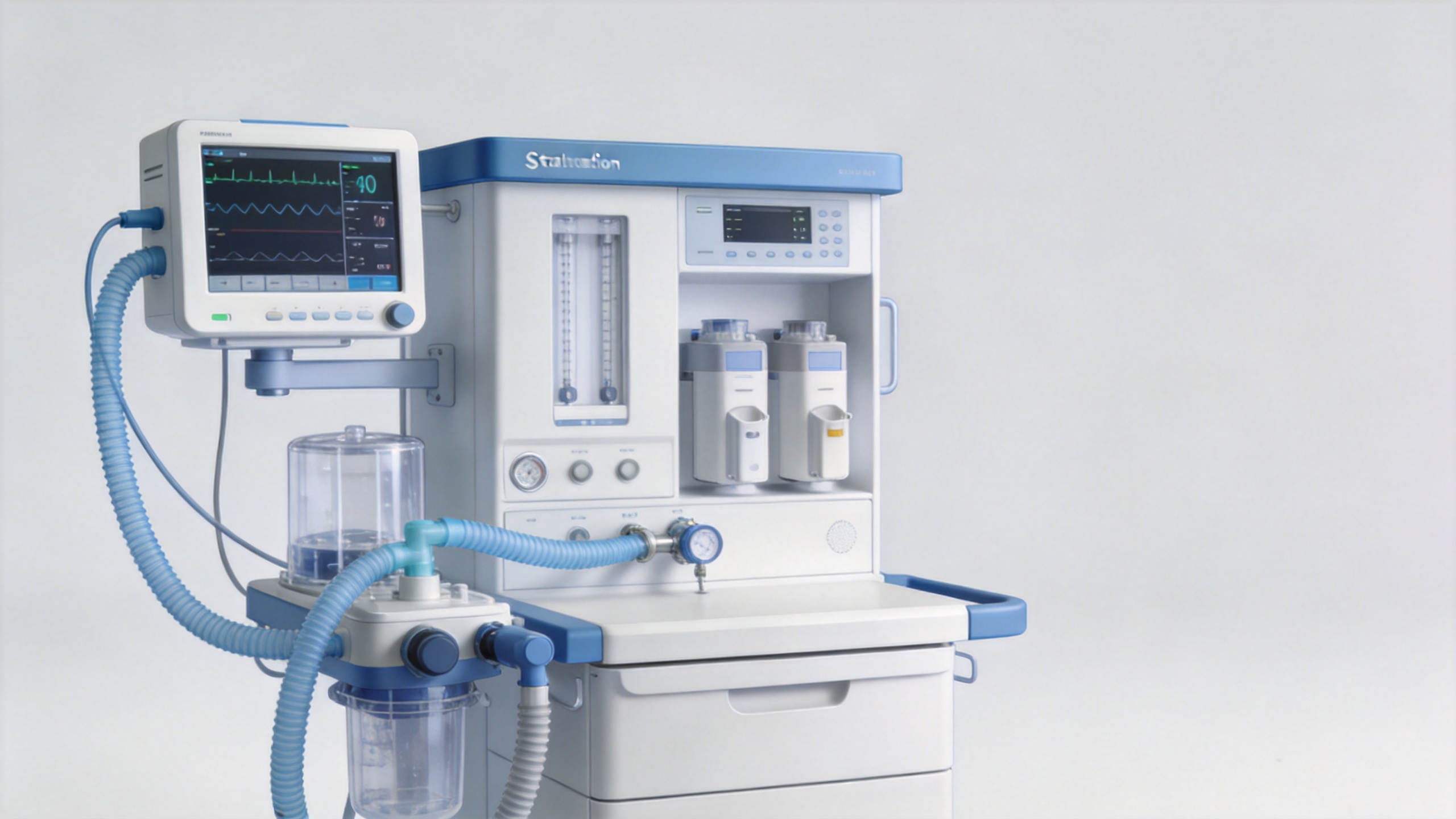
An anesthesia machine sits between supply sources, vapor delivery components, the breathing system, monitoring, and scavenging. A useful review traces the pathway from each planned gas source to the common gas outlet and then through the circuit. Rather than asking whether an anesthesia machine “has oxygen protection,” ask which source conditions it detects, what alarm behavior is specified, what remains available during a supply issue, and how the team verifies that behavior during commissioning.
For the anesthesia delivery system, document the intended pipeline gases, cylinder connections, hose types, pressure indications, backup arrangements, and the room’s outlet configuration. The purchasing specification should also clarify which accessories are included versus optional. This avoids a common comparison problem: two quotes can describe similar anesthesia machine platforms while including different vaporizers, gas modules, scavenging connections, or backup components.
Questions for gas supply and oxygen monitoring
- Which pipeline and cylinder supplies can the anesthesia machine accept in the planned configuration?
- How are supply pressure, low-pressure conditions, and disconnection conditions displayed and alarmed?
- What oxygen concentration monitoring is available, where is it sampled, and how is calibration handled?
- What are the documented checks for the low-pressure system, flow controls, vapor delivery components, and fresh-gas path?
- Can the supplier demonstrate the configured system using the site’s planned gas connections and accessories?
Published anesthesia checkout discussions cover cylinders, pipelines, machine systems, vaporizers, breathing circuits, monitors, integrated ventilation, suction, and scavenging. That scope is helpful because it reminds buyers that a gas-delivery review cannot stop at flow controls. For each anesthesia machine, ask for the manufacturer’s current checkout instructions and map them to the local pre-use process.
Review ventilation functions as workflow choices
The ventilator in an anesthesia machine should be reviewed around the cases, patient populations, and user practices the department expects to support. A mode name alone is not enough. Volume-controlled, pressure-controlled, manual/spontaneous, pressure-support, and other ventilation functions may be relevant depending on the configured system and local use. More accurately, the important issue is whether the available modes, ranges, controls, monitoring, and alarms can be understood and verified by the intended users.
Ask the supplier to distinguish standard functions from options. Have users test the navigation and parameter changes in a supervised demonstration. If neonatal, pediatric, bariatric, or other specific use is anticipated, the clinical team should define the required ranges and acceptance criteria before comparing an anesthesia machine. Buyers should not infer suitability from a general feature label.
Ventilation functions to put in the evaluation matrix
- Mode availability: Identify the required manual/spontaneous and controlled ventilation functions for the department’s planned work.
- Parameter ranges: Request documented ranges, increments, limits, and configuration dependencies for tidal volume, respiratory rate, pressure, PEEP, and related settings.
- Measured versus set values: Review how the anesthesia machine presents delivered volume, airway pressure, oxygen concentration, and respiratory measurements.
- Alarm design: Check audible and visual alarms, priority logic, silence behavior, alarm history where available, and visibility from normal operating positions.
- Leak and circuit checks: Ask how the anesthesia machine guides or records its self-test and what remains a manual verification task.
Ventilation functions should also be tested with the actual breathing circuits and accessories the site plans to use. A display can make a function look straightforward, yet a team still needs to know who performs the pre-use check, how failures are escalated, and whether service staff can retrieve diagnostic information. This is where operating room equipment planning meets everyday accountability.
Include the breathing system, scavenging, and backup path
An anesthesia machine review should cover the breathing system as a whole: circuit connections, unidirectional valves, absorber components where used, APL controls, airway-pressure measurement, sampling lines, and the connection to scavenging. Published safety material specifically highlights the value of examining these connections rather than assuming an automated check covers every condition. A demonstrated self-test is valuable, but it does not remove the need to follow the manufacturer’s instructions and the organization’s local procedures.
Scavenging deserves a separate line in the request for quotation and site survey. Confirm the planned connection arrangement, evacuation infrastructure, hose routing, connection checks, maintenance responsibility, and any room-level prerequisites. An anesthesia machine may be technically suitable while its planned installation still needs facilities work or clearer responsibility boundaries.
Also require the clinical team to verify the availability and readiness of its alternate oxygen source and manual ventilation backup in accordance with local policy. That request is not a claim about one model; it is a practical way to keep the anesthesia machine evaluation connected to the full response path.
Turn specifications into an acceptance plan
A defensible purchase decision uses the same questions at quotation, demonstration, delivery, installation, and handover. Build an acceptance plan before the order is released. It should name the people who will witness each test, the documents they need, and the criteria that must be met before the anesthesia machine is released for intended use.
| Review area | Buyer evidence to request | Owner to involve |
|---|---|---|
| Gas delivery | Configured gas-source list, alarms, checkout instructions, and accessory scope | Anesthesia, biomedical engineering, facilities |
| Ventilation functions | Mode list, parameter ranges, alarm behavior, and supervised demonstration record | Anesthesia and biomedical engineering |
| Breathing system | Circuit compatibility, leak-test procedure, consumable requirements, and cleaning guidance | Clinical users and infection-control stakeholders |
| Scavenging and installation | Connection requirements, room survey, routing plan, and service responsibilities | Facilities, engineering, and supplier |
| Training and service | Role-based training scope, manuals, preventive-maintenance plan, and escalation contacts | Department leadership and biomedical engineering |
For an anesthesia equipment supplier, complete documentation and a structured demonstration are often more useful to a buyer than broad marketing language. Ask for configuration-specific manuals, service intervals, training boundaries, spare-parts expectations, and an unambiguous list of included items. If the anesthesia machine will be deployed across several rooms, repeat the room-by-room infrastructure check rather than assuming that one installation validates every location.
A practical buying checklist
- Define the cases, patient groups, and workflow conditions the anesthesia machine must support.
- Document pipeline, cylinder, scavenging, electrical, and space conditions for each destination room.
- Compare a like-for-like configuration of the anesthesia delivery system, not a base-unit price against a fully equipped quote.
- Require a hands-on demonstration of gas delivery, ventilation functions, alarms, self-test behavior, and backup procedures.
- Set written acceptance criteria with anesthesia, engineering, facilities, and the anesthesia equipment supplier before delivery.
- Plan user training, maintenance, consumables, and escalation paths before the anesthesia machine is put into routine use.
Conclusion
The right anesthesia machine is the one whose configured gas path, ventilation functions, monitoring, alarms, breathing system, scavenging arrangement, and support plan can be verified against the intended workflow. Keep the evaluation conditional and evidence-led: first confirm the use scenario, then validate the configuration, and finally agree on acceptance and service responsibilities. That approach gives buyers a clearer basis for comparing operating room equipment without turning a feature list into an unsupported clinical conclusion.


 Hot News