EN


What Is a Medical Defibrillator and How Does It Work?
A defibrillator is medical equipment designed to deliver controlled electrical therapy in defined circumstances involving certain dangerous abnormal heart rhythms. In a hospital, ambulance service, or prepared public-access setting, a defibrillator is only one part of a response system: trained people, clinical protocols, patient assessment, consumables, documentation, and maintenance all matter. This article explains the equipment at a practical level. It does not replace local emergency procedures, device instructions for use, or clinical judgment.
From a biomedical-engineering communication perspective, the useful question is not simply “what can this defibrillator do?” It is whether the device, its accessories, and the people responsible for it fit the intended workflow. That distinction helps procurement teams discuss a medical defibrillator without turning a specification sheet into a clinical claim.
What a Defibrillator Is Designed to Do
A defibrillator delivers a controlled electrical shock when a trained workflow or an automated analysis identifies a rhythm for which defibrillation may be appropriate. The purpose is to interrupt disorganized electrical activity so that the heart’s own organized rhythm may resume. A defibrillator does not diagnose every cause of collapse, and it is not a general-purpose treatment for all cardiac conditions.
This boundary is important. Defibrillation is associated with specific shockable rhythms, while other rhythms require different responses. Automated external defibrillators analyze rhythm and guide the user through their approved prompts; manual clinical devices give qualified teams more control over monitoring and shock delivery. In either setting, a defibrillator operates within a broader resuscitation protocol rather than as a stand-alone solution.
Main Categories of Cardiac Defibrillation Equipment
Automated external defibrillator (AED)
An AED is a portable defibrillator machine that uses built-in analysis to assess whether a shock is indicated. Its prompts and controls are intended to support users operating within their training and local emergency framework. A public-access AED program therefore involves more than placing a defibrillator in a cabinet: it also needs responsible ownership, visible location information, inspection routines, compatible pads and batteries, and a plan for post-use reporting.
Manual clinical defibrillator
A manual medical defibrillator is commonly used by trained clinical teams in environments such as emergency departments, operating areas, intensive care units, and transport services. Depending on the configured model and approved use, it may integrate monitoring, ECG display, pacing, synchronized cardioversion, data capture, or other functions. These capabilities should be evaluated as workflow requirements, not assumed from the word defibrillator alone.
Implantable cardioverter-defibrillator (ICD)
An ICD is an implanted device managed through specialist clinical care. It differs fundamentally from external cardiac defibrillation equipment because it continuously monitors a person’s rhythm and can provide therapy according to programmed settings. It should not be grouped with portable or hospital external devices for procurement or operations planning.
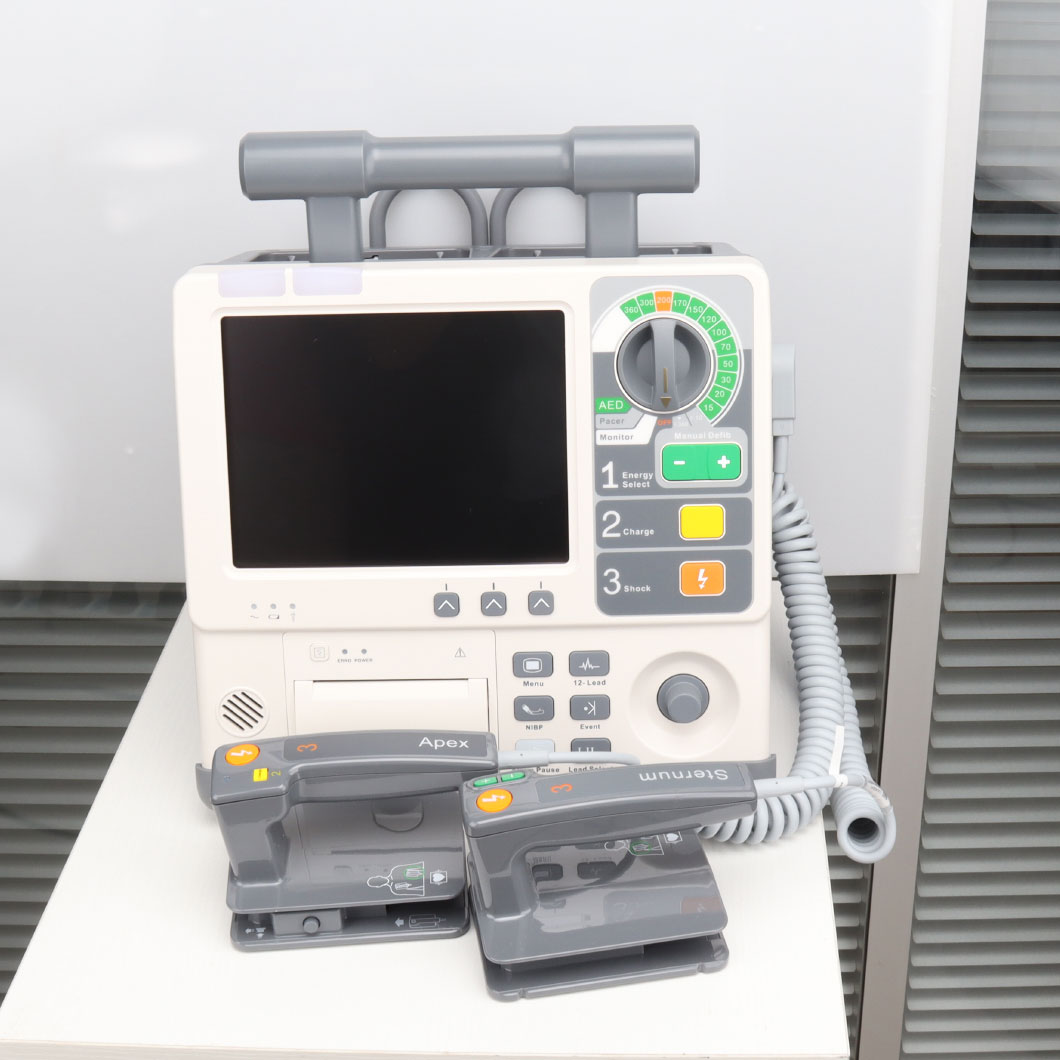 A generic external defibrillator shown in a clinical-equipment context.
How an External Defibrillator Fits the Clinical Workflow
At a high level, the workflow moves from recognition and response activation to rhythm assessment, therapy decisions under the applicable protocol, and documentation. The defibrillator supports only the assessment-and-therapy portion of that chain. Facility teams should define who brings the device, who maintains the scene or clinical record, how a used defibrillator is returned to readiness, and how data are reviewed afterward.
For an AED, the device’s analysis and voice or visual prompts are central to the workflow. For a manual defibrillator, the workflow depends on authorized clinicians interpreting monitoring information and applying local policies. More accurately, the procurement priority is not the number of features but whether those features support the intended users, patient population, and response environment.
Because protocols vary by setting and patient group, staff should follow current local guidance, approved training, and the manufacturer’s instructions for use. A product overview does not substitute for hands-on competency assessment or medical direction.
Operational Checks That Keep a Defibrillator Ready
A defibrillator cannot support a response if its accessories are expired, missing, incompatible, or unrecorded. A readiness program normally assigns ownership and creates a documented check schedule based on the device instructions, local policy, and the operating environment. The following are procurement and operations checks rather than instructions for treating a patient:
- Confirm the defibrillator shows its expected ready status and that any self-test alerts are investigated.
- Check pad type, connector compatibility, packaging condition, and expiration dates for the intended device and patient-use configuration.
- Review battery or power status and the documented replacement plan; keep approved accessories identifiable and traceable.
- Verify that the cabinet, carrying case, signage, and location information allow the designated team to retrieve the defibrillator as planned.
- After any use, arrange prompt cleaning, data handling, consumable replacement, functional verification, and return-to-service documentation under the facility process.
Do not only ask whether a defibrillator has a long accessory list. Ask how the organization will verify the correct accessories are on hand at the time they are needed.
Procurement Questions for Hospital Emergency Equipment
Hospital emergency equipment planning benefits from a requirements-to-verification approach. First clarify the care area, expected users, patient categories, transport needs, and integration requirements. Then compare each defibrillator configuration against those requirements. Finally, define the acceptance evidence and ownership needed before the unit enters service.
| Evaluation area | Questions to document |
|---|---|
| Intended setting | Is the defibrillator intended for public access, in-hospital response, transport, or a specialist clinical area? |
| User group | Which roles are authorized and trained to use this defibrillator, and what refresher process applies? |
| Accessories | Which pads, cables, batteries, and consumables are compatible with the selected defibrillator configuration? |
| Service support | Who completes scheduled checks, corrective service, software management where applicable, and record retention? |
| Acceptance | What commissioning records, labeling checks, training records, and functional tests are required locally? |
For cross-region purchasing, the exact documentation, labeling, electrical requirements, and market authorization evidence require local verification. Compatibility should be confirmed from manufacturer documentation and the organization’s approved procurement process rather than inferred from a similar-looking defibrillator machine.
Training Is Part of the Equipment Decision
Training changes whether a defibrillator can be used as intended. An AED program may need orientation for designated responders, awareness for nearby staff, inspection ownership, and drills that test retrieval and handoff. A hospital clinical defibrillator program may also need role-specific competency, scenario practice, documentation expectations, and escalation pathways. The content and frequency should follow local policy, device labeling, and applicable clinical governance.
A practical training review asks three questions: Who is expected to recognize the need to activate the response system? Who is authorized to operate the specific defibrillator? Who restores the device and record after an event? When those responsibilities are unclear, additional device functions do not solve the workflow gap.
Key Takeaway
A defibrillator is controlled emergency medical equipment for defined rhythm-related situations, not a substitute for a complete clinical response system. Whether evaluating a public-access AED or a clinical medical defibrillator, begin with the intended setting, trained users, compatible accessories, readiness checks, service resources, and evidence required for acceptance. That sequence keeps cardiac defibrillation equipment tied to verifiable conditions and helps teams choose a defibrillator configuration that fits their real operating environment.
 Hot News