 EN


What Should Buyers Consider When Purchasing AED Devices in Bulk?
Buying an AED fleet is not simply a question of multiplying a unit price by the number of locations. An automated external defibrillator becomes useful only when the right AED device is reachable, ready, understood by potential responders, and supported after delivery. For hospitals, campuses, workplaces, venues, distributors, and multi-site organizations, bulk purchasing should therefore be treated as an emergency-readiness project rather than a one-time equipment order.
From a procurement perspective, the useful starting point is a coverage plan. Before comparing quotations, bring operations, safety, facilities, clinical leadership where applicable, and finance into the same discussion. Their questions differ, but each affects whether an AED program can be maintained. This article offers a purchasing framework; it does not replace local requirements, clinical direction, or the device manufacturer’s instructions.
Start with coverage, not device count
Map the places where an AED may be needed: entrances, production areas, public corridors, sports spaces, remote buildings, vehicles, and shifts with limited staffing. Then consider travel routes, locked doors, elevators, security access, and who is likely to notice an emergency. A bulk order can look complete on a spreadsheet while leaving difficult-to-reach areas uncovered.
Ask each site owner to document the proposed location, cabinet or storage arrangement, signage, power or environmental considerations, and the team responsible for routine checks. A building-by-building rule may not fit every site. The appropriate quantity depends on site layout, expected occupancy, response pathways, local guidance, and the organization’s risk assessment. A location map also makes later training and inspection assignments more practical.
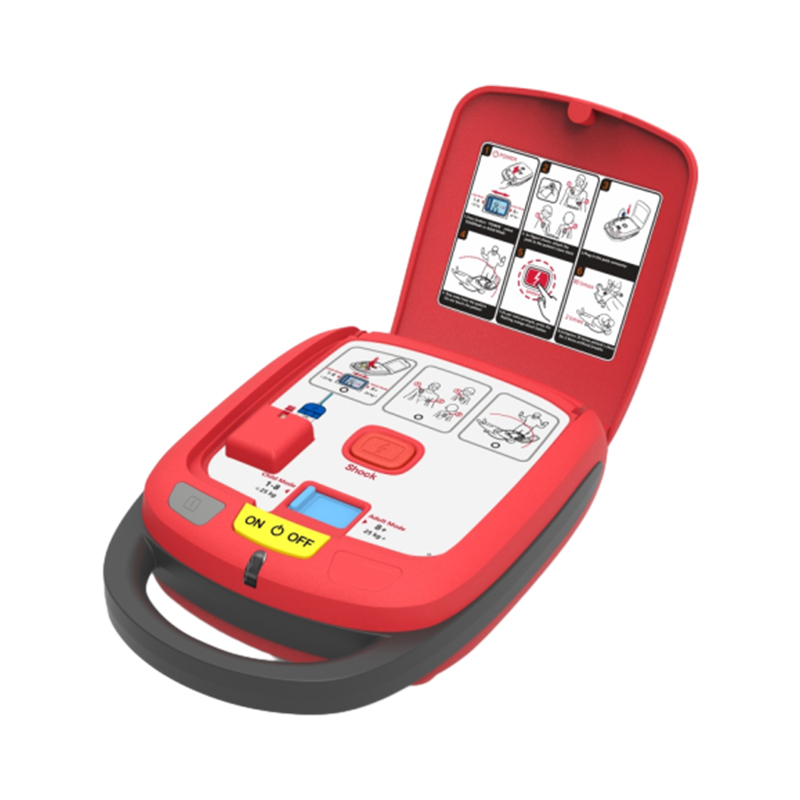 Coverage planning helps connect AED placement, inspection ownership, and replenishment planning.
Standardize where it improves readiness
For a multi-site buyer, using a consistent AED platform can simplify familiarization, purchasing, inventory, and service communication. It may reduce the number of pad types, batteries, manuals, and support contacts that staff must manage. More accurately, the goal is not uniformity for its own sake; it is a manageable level of consistency across the emergency medical equipment program.
Build a comparison matrix that separates core device questions from procurement questions. For every proposed AED device, confirm the intended user environment, language and prompt options, pediatric pathway if relevant to the location, included accessories, cabinet fit, inspection indicators, documentation, warranty terms, and service process. Keep model-specific claims out of the matrix until the supplier has provided current, traceable documentation.
Also ask whether accessories are compatible with the exact AED model and revision being quoted. FDA information on AED systems identifies batteries and pad electrodes as necessary accessories, which is a useful reminder not to assume that visually similar parts are interchangeable. Compatibility, local market documentation, and applicable requirements should be verified before an order is released.
Budget for readiness beyond the initial AED purchase
A low opening quote may omit resources that keep an AED ready over its operating life. Compare complete packages, not bare devices. Include cabinets or brackets, signage, spare adult pads, pediatric accessories where your coverage plan calls for them, batteries, inspection supplies, training materials, shipping, registration support, and replacement logistics.
Consumables need their own plan. The American Heart Association’s on-site program guide notes that pads are single-use and should be replaced after use, with expiration dates checked regularly. It also advises planning extra pads and fresh backup batteries where applicable. Exact shelf life and storage conditions vary by product, so buyers should record the manufacturer’s stated dates rather than apply a generic replacement cycle.
| Bulk-buying question | Evidence to request | Owner after delivery |
|---|---|---|
| What is included per AED? | Itemized quotation and accessory list | Procurement lead |
| When do pads and batteries require attention? | Model-specific instructions and expiry record | Site AED coordinator |
| How will a used AED be restored? | Post-incident replacement process and lead times | Program manager |
| Who handles faults or service questions? | Support route, response terms, and escalation contacts | Facilities or biomedical team |
Make training part of the purchase decision
Training should not be an afterthought once boxes arrive. Decide who needs formal AED and CPR instruction, who needs location awareness, who will conduct inspections, and how refresher training will be scheduled. The American Heart Association implementation material advises appointing people or teams to manage program policies and procedures and planning ongoing training. That principle matters even more when an organization has several sites or staff turnover.
During supplier evaluation, ask what training resources, device familiarization materials, placement guidance, and after-sales support are available. A supplier’s answer should be specific enough for the buying team to translate into an internal rollout plan. It is reasonable to ask for a clear support contact, training format, delivery scope, and process for obtaining updated instructions. It is not reasonable to assume that the purchase alone establishes a cardiac emergency response program.
Create a replacement and inspection system before deployment
Every AED should have a named owner, a location ID, a serial-number record where appropriate, and a routine inspection schedule aligned with its instructions and organizational policy. A centralized register can track installation date, inspection status, pad and battery expiry dates, post-use actions, cabinet condition, and open service issues. For a fleet, this register is often more valuable than a file of original invoices.
Replacement planning should cover more than expiry. Consider what happens after an AED is used, moved, damaged, recalled, or reported with a status alert. Set reorder thresholds for consumables and identify who can approve urgent replenishment. For distributed organizations, decide whether spares sit centrally, locally, or in both places. Those decisions reduce the chance that one missing item leaves an AED unavailable when it is needed.
Evaluate vendors as long-term program partners
Bulk buyers should assess vendor support with the same discipline used for the AED device itself. Request an itemized quote, current product literature, applicable certificates or declarations for the intended market, accessory compatibility confirmation, lead-time assumptions, warranty conditions, service channels, and a process for reporting delivery discrepancies. If a claim cannot be supported by current documentation, list it as an item to verify rather than treating it as a purchasing fact.
A capable vendor conversation also tests whether the supplier understands the handoff after delivery: placement, inventory, training coordination, maintenance documentation, consumable replacement, and escalation. Healicom Medical Equipment Co., LTD. can organize medical-equipment procurement conversations around configuration, training, maintenance, and acceptance questions; buyers should still validate the exact scope for their selected AED device and destination market.
Use a bulk AED acceptance checklist
- Confirm quantities, model identifiers, included accessories, and site allocation against the approved order.
- Record device and consumable dates, serial information where applicable, and designated locations.
- Check cabinets, signage, mounting, access routes, and local placement requirements.
- Assign inspection owners and establish an expiry and post-use replacement workflow.
- Schedule responder training and refresher responsibilities before rollout is considered complete.
- Keep supplier support contacts, instructions, and unresolved verification items in the program record.
Conclusion: buy an AED program, not a stack of devices
The most useful bulk AED purchase is one that connects coverage planning, standardized equipment decisions, consumable control, training, inspection, and vendor support. Start with where an emergency response must work, then confirm the device and service details that make that response sustainable. By treating each AED as part of a managed system, buyers can turn a bulk order into a practical foundation for cardiac emergency response readiness.

 Hot News

