 EN


What Materials Make a Hospital Bed Durable and Easy to Clean?
A hospital bed is exposed to repeated movement, frequent touch, cleaning chemistry, and changing patient needs. For that reason, material selection is not a cosmetic detail. It affects how well the bed tolerates daily use, how quickly staff can clean it, and how reliably the bed supports safe patient positioning over time. From a biomedical-engineering communication perspective, the practical question is not simply whether a finish looks smooth on delivery day. It is whether the frame, covers, joints, and hardware can be inspected, cleaned, and maintained within the actual care workflow.
Whether you are comparing a facility model or an electric hospital bed for a care setting, assess the complete system: the metal frame, protective coating, molded components, mattress cover, seams, fasteners, and interfaces with rails and accessories. A durable hospital bed should make routine cleaning straightforward without creating hidden areas that retain soil or make inspection difficult.
Start with the hospital bed frame and protective finish
Steel remains a common choice for the structural parts of a hospital bed because it can provide strength and rigidity in a compact frame. The important follow-up question is how that steel is protected. A well-applied powder-coated finish can create a continuous, cleanable surface and help reduce exposure of the base metal. If the coating chips, scratches, or lifts around welds and corners, however, moisture can reach the substrate and make corrosion more likely. That is why buyers should inspect coating coverage at welds, under the deck, and around points where accessories contact the frame.
Stainless steel may be used for selected parts where corrosion resistance and repeated wipe-downs are particularly important. It is not automatically the right answer everywhere: the grade, surface finish, joining method, and cleaning chemistry still matter. In either case, request the manufacturer’s cleaning instructions and confirm that the facility-approved disinfectant is compatible with the specific finish. CDC environmental-cleaning guidance emphasizes cleaning and disinfecting high-touch surfaces and selecting compatible disinfectants for noncritical patient-care equipment. In practice, compatibility is a material decision as much as a cleaning decision.
Choose smooth polymers for touch points, but inspect their design
Head and foot boards, hand controls, rail covers, and trim are often made from molded polymers. These parts should have smooth, nonporous surfaces that can be wiped effectively and that resist cracking from normal use and approved cleaning agents. Rounded transitions are helpful because they reduce hard-to-reach edges. Textured finishes can improve grip in certain locations, but heavy texture can hold soil and make visual inspection harder.
Ask to see the underside of plastic covers as well as the visible side. A clean-looking exterior is less useful if the part creates narrow gaps, exposed fasteners, or inaccessible recesses. For an adjustable medical bed, inspect the hand control housing, cable entry points, and actuator covers. Those areas should protect internal components while remaining accessible for routine visual checks. More features do not automatically mean a better cleanability outcome; the design must match the cleaning process your team can consistently perform.
Mattress cover material often determines daily cleanability
A hospital bed mattress is usually protected by a fluid-resistant cover rather than relying on the foam core alone. Look for a cover that is intended to tolerate the expected cleaning and disinfection routine, with seams, zippers, and closures designed to reduce fluid ingress. Welded or sealed seams can be easier to wipe than deeply stitched seams, but the entire cover construction should be assessed. Check the corners, zipper flap, label area, and underside, where wear can begin before it is obvious from the top surface.
Do not treat durability as a substitute for inspection. A torn cover, compromised seam, or delaminating surface changes the cleanability of the mattress and should be handled according to the manufacturer’s instructions and the facility’s infection-prevention process. When comparing options, ask for the approved cleaning agents, contact-time instructions, and any stated limitations on harsh chemicals or repeated exposure. This turns an abstract material claim into a usable maintenance requirement.
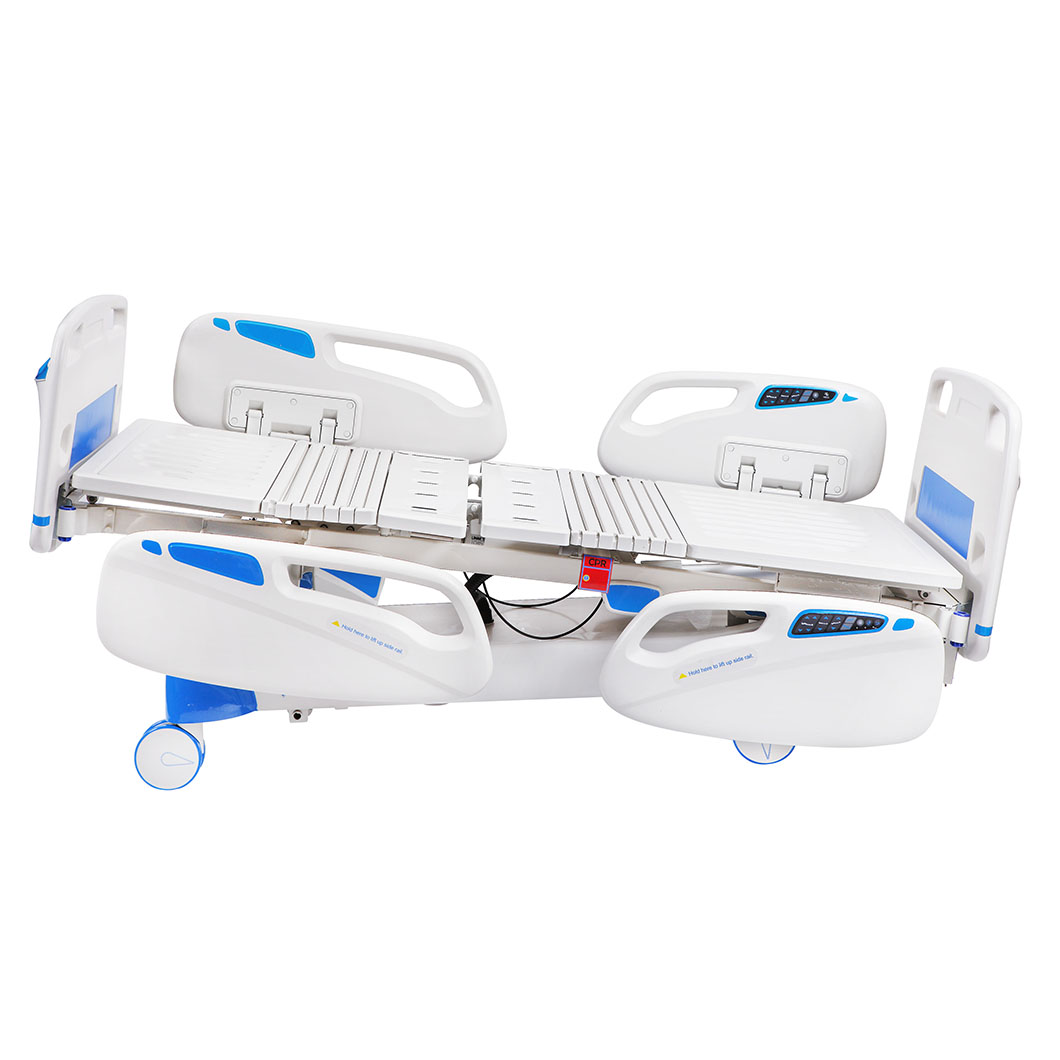 Material design should support cleaning access, inspection, and routine maintenance.
Material choices must support patient positioning and safety
Patient positioning places repeated loads on the deck sections, moving joints, rails, and mattress interface. The materials must work with the bed’s mechanical design so surfaces remain stable and gaps do not become difficult to assess. FDA hospital-bed-system guidance addresses dimensional and assessment issues intended to reduce life-threatening entrapment risk. That means hospital bed safety should be evaluated as a system: bed frame, mattress, rails, accessories, and their condition must be reviewed together.
When assessing an electric hospital bed, check how moving sections are shielded and how cleaning staff can access the areas around the deck and actuators. Covers should not trap moisture, and guards should not prevent the required inspection of moving parts. Also confirm that the mattress dimensions and condition remain appropriate for the rail and deck configuration. A durable material is valuable only when it continues to support the intended safety assessment after repeated use and cleaning.
Pay attention to joints, fasteners, and corrosion-prone zones
Durability problems often start at interfaces rather than on broad, visible panels. Look closely at welds, hinge points, caster mounts, rail pivots, fasteners, and areas where dissimilar materials meet. These are common locations for finish damage, residue accumulation, loosening, or corrosion. A design with accessible fasteners and clear inspection paths can reduce service delays because staff can spot early wear before it affects operation.
Build the evaluation into three stages. First, define the care and cleaning requirements, including expected disinfectants and who will perform inspections. Next, compare frame protection, polymer surfaces, mattress-cover construction, and access to moving parts across equivalent configurations. Finally, include acceptance checks at delivery: verify smooth cleanable surfaces, coating condition, rail and mattress interfaces, movement after cleaning, and the availability of maintenance instructions. This approach avoids comparing a basic frame with a fully equipped configuration as though they were the same scope.
A practical material checklist for a hospital bed
- Frame: Is the metal protected by a continuous finish, including welds and underside areas?
- Touch points: Are polymer covers smooth, intact, and free of hard-to-clean recesses?
- Mattress cover: Are seams, zippers, and corners designed for inspection and compatible with the cleaning routine?
- Moving sections: Can staff clean around the deck, actuators, and cable routes without damaging components?
- Safety interfaces: Can the bed, mattress, rails, and accessories be assessed together for the intended patient positioning and hospital bed safety process?
- Supportability: Does the supplier provide cleaning, inspection, and maintenance documentation for the exact configuration?
Make material selection part of the lifecycle review
The most suitable material package fits the clinical workflow, cleaning chemistry, inspection capability, and maintenance plan. A powder-coated steel frame, cleanable polymer components, and a properly constructed mattress cover can all contribute to a durable hospital bed, but none should be evaluated in isolation. Use the manufacturer’s instructions, confirm disinfectant compatibility, and inspect high-wear interfaces during acceptance and routine service.
For procurement teams, this is a useful shift in perspective: evaluate the hospital bed not only by initial appearance or motion functions, but also by the labor and verification required to keep it safe and clean. That helps make an adjustable medical bed or electric hospital bed easier to support through its working life while keeping patient positioning, cleanability, and safety requirements visible in the decision.



 Hot News

