 EN


What Safety Checks Are Important for Electrosurgical Equipment?
An electrosurgical unit is part of a system, not a stand-alone box. Its generator, active electrode, patient return electrode, cables, accessories, settings, and trained users all affect safe use. For an operating room team or a buyer preparing a new installation, the practical question is not simply whether an electrosurgical generator powers on. It is whether the complete setup is appropriate for the planned procedure and ready to be used according to its instructions for use.
This checklist provides a structured way to review electrosurgery safety before use. It supports, but does not replace, the device-specific instructions, local policies, qualified clinical judgment, or biomedical engineering procedures.
Start with the right equipment and documentation
Before the case, identify the exact electrosurgical unit, its software or configuration where applicable, and the accessories intended for that setup. Confirm that the operating manual, quick-reference material, maintenance record, and local training requirements are accessible to the people who will use the device. A receiving or acceptance check should also document the model, serial number, supplied accessories, installation status, and any site-specific electrical requirements.
- Verify that the planned procedure is within the device’s indicated use and available modes.
- Match the handpiece, electrode, cable, foot switch, and patient return electrode to the manufacturer’s compatibility information.
- Check that required accessories are present, in date where applicable, and visibly intact.
- Make sure staff can identify the alarm signals, controls, and escalation path for the electrosurgical generator.
Buyers should ask the supplier to make these materials part of handover rather than treating them as separate paperwork. That approach helps turn delivery into a traceable readiness review for operating room equipment.
Inspect the generator, cords, and controls
Carry out a visual inspection before connecting the patient. Look for damaged housings, cracked connectors, exposed conductors, loose strain relief, fluid contamination, or labels that cannot be read. Verify that the power source and any required grounding arrangement meet the facility and device instructions. Cables should be routed so they are not pinched, wet, stretched, or placed where they can be confused with other leads.
Turn the electrosurgical unit on and observe its self-test and display. Confirm that controls, indicators, audible alarms, and activation methods behave as described in the instructions. Do not assume that a similar-looking accessory is interchangeable. A seemingly small connector mismatch can affect monitoring or intended operation of surgical energy devices.
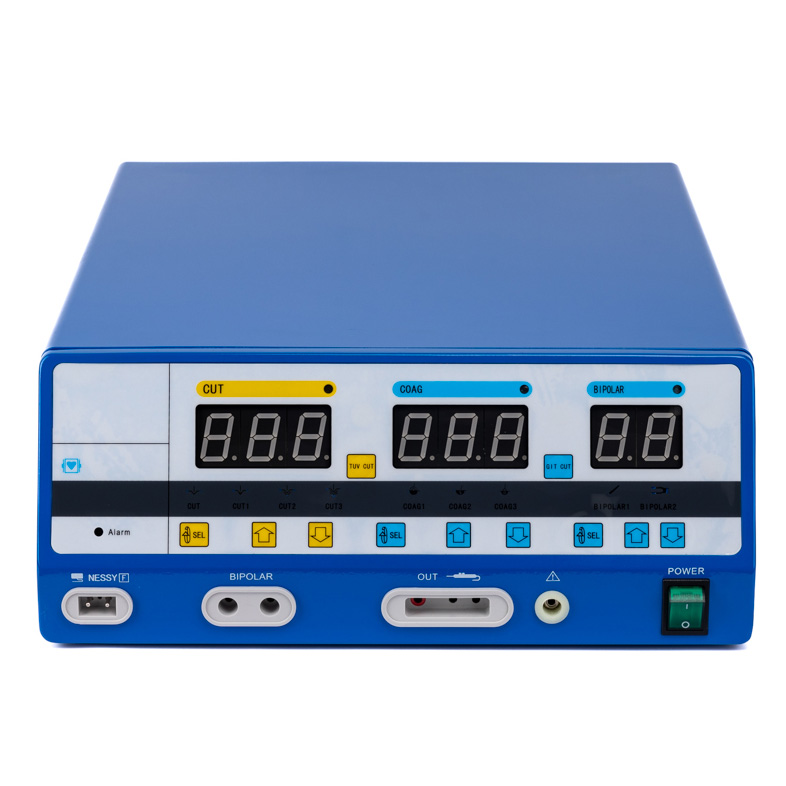 A pre-use check should review the electrosurgical unit, cables, handpiece, and compatible accessories together.
Verify patient return-electrode planning
For monopolar use, the patient return electrode deserves a deliberate check. Select the electrode type and placement approach in line with the device instructions and the patient’s condition. Assess the proposed skin site for adequate contact and avoid areas that local policy or the instructions identify as unsuitable, such as bony prominences, scarred or compromised skin, or locations exposed to pooling fluid.
Where the electrosurgical unit uses contact-quality monitoring, confirm that the return electrode and cable are compatible with that monitoring function. Guidance for electrosurgical devices notes that alarm behavior can depend on use of a compatible monitoring electrode. Secure every connection and make sure the return-electrode cable has a clear path back to the generator. This is a check of the entire circuit, not merely the pad itself.
Review the procedural environment
Electrosurgery safety also depends on the space around the patient. The team should discuss the planned energy modality, the activation method, the location of the active electrode when not in use, and any conditions that increase risk. Keep the active electrode in an appropriate holster or holder when idle; its surface may remain hot after activation. Protect cables from contact with pointed instruments and avoid placing energized accessories on drapes or the patient.
Coordinate with anesthesia and the wider surgical team when oxygen-enriched conditions, flammable preparations, pooled solutions, implanted devices, or other special considerations may be relevant. The correct response is guided by local policy and the specific device instructions, so these factors should be raised in the time-out rather than handled through assumptions.
Set modes and power deliberately
Choose cutting and coagulation modes only after the user has confirmed the intended tissue effect and the procedure plan. Begin with settings that align with the device instructions and clinical protocol, then adjust only as needed by trained personnel. Increasing output to solve an unexpected result without first checking the electrode, cable, tissue contact, and return path can obscure the underlying problem.
A useful pre-use conversation names who may change settings, who responds to an alarm, and where the device will be placed if a fault occurs. This simple division of responsibility is especially valuable when several surgical energy devices share the same operating room.
Make a buyer acceptance checklist part of the purchase
A safe purchase process continues after delivery. Ask the supplier and biomedical team to agree on an acceptance checklist that includes functional testing, accessory compatibility, alarm verification, electrical safety testing where required, operator orientation, service contacts, and scheduled maintenance expectations. Request clear documentation of what was tested, what accessories were used, and which training resources are supplied.
| Acceptance question | Why it matters |
|---|---|
| Are the supplied accessories listed as compatible for this electrosurgical unit? | Compatibility affects activation, monitoring, and the intended use of the system. |
| Can the team recognize alarms and take the specified action? | An alarm is useful only when users know its meaning and response path. |
| Is there a documented maintenance and service route? | Inspection, repair, and recordkeeping need named responsibility. |
| Have users completed device-specific orientation? | General familiarity with surgical energy devices does not replace model-specific instruction. |
Use a repeatable pre-use pause
Immediately before activation, pause to confirm the selected mode, accessories, connections, electrode placement where relevant, cable routing, active-electrode storage, and team readiness. During the case, reassess if the setup changes, an alarm occurs, a cable is moved, or energy delivery seems inconsistent. After the procedure, follow the facility process for inspection, cleaning, reporting, and removal from service when a defect is suspected.
In short, an electrosurgical unit safety check is a system check. When buyers, biomedical personnel, and operating room users verify equipment condition, compatible accessories, patient-contact planning, alarm readiness, documented training, and service support together, they create a clearer basis for responsible use of electrosurgery equipment.

 Hot News

