 EN


What Should Buyers Ask a Hospital Bed Manufacturer?
Buying a hospital bed for an institution is not simply a matter of comparing a specification sheet. A procurement decision affects nursing workflow, biomedical maintenance, patient mobility, room layout, and the compatibility of mattresses and accessories. Before a purchase order is issued, a cross-functional team should turn every supplier conversation into a documented set of answers.
This question list is designed for hospitals, long-term-care facilities, distributors, and project buyers assessing a hospital bed manufacturer. It focuses on evidence rather than promises. The clinical team, biomedical engineering team, facilities team, and purchasing team may weigh answers differently, but they should review the same record.
Start with the care setting and user profile
Ask the manufacturer: Which care settings and patient groups is this hospital bed designed to support? Acute care, rehabilitation, long-term care, bariatric care, and home-transition programs can create different demands. A useful answer should connect the proposed configuration to intended use, patient mobility, nursing tasks, and cleaning routines rather than just naming a model.
Also ask which movements the care team expects to use most often: height adjustment, backrest articulation, knee elevation, cardiac-chair positioning, or trend functions. For an electric hospital bed, ask whether those functions are available through patient controls, caregiver controls, or both, and how lockouts are managed. The goal is not to select the longest feature list. It is to determine whether an electric hospital bed supports the actual workflow and role boundaries of the unit.
Ask for a configuration that can be verified
Request a clear configuration sheet for the proposed hospital bed, including dimensions, safe working load, height range, deck sections, caster arrangement, power requirements, controls, side rails, head and foot boards, and available accessories. Ask which items are standard, optional, or incompatible. If a quotation says “adjustable,” clarify the angles, positions, control locations, and limits that apply to that exact configuration.
For an adjustable medical bed, the manufacturer should explain how configuration changes affect operation, transport, cleaning access, and service access. Ask whether a change in rail type, mattress thickness, extension platform, or accessory mount changes the approved configuration. Request a revision-controlled drawing or bill of materials so that the delivered hospital bed can be checked against the evaluated setup.
Make hospital bed safety a system question
A hospital bed is a system, not only a frame. Ask: Which mattresses, rails, overlays, positioning aids, and accessories are approved with this model? Ask for the manufacturer’s compatibility matrix, the conditions under which it applies, and the procedure for evaluating alternatives. This is particularly important where a facility uses its own mattress inventory or adds equipment after installation.
Questions about hospital bed safety should address rail geometry, mattress compression, gaps that change as the deck articulates, cable routing, pinch points, braking, and stability. FDA guidance on bed systems describes the frame, mattress, rails, and added accessories as connected elements and discusses dimensional assessment for entrapment risk. Ask the supplier to identify the test methods, position changes, and mattress conditions used in its assessment. A statement that a rail is “safe” is not enough without the associated system conditions.
Ask what evidence supports the claimed safety pathway for the target market. IEC 60601-2-52 addresses basic safety and essential performance for adult medical beds; a manufacturer should be able to explain the standard edition, scope, and documentation relevant to the offered hospital bed. This is a document-review question, not a substitute for local regulatory, clinical, or engineering assessment.
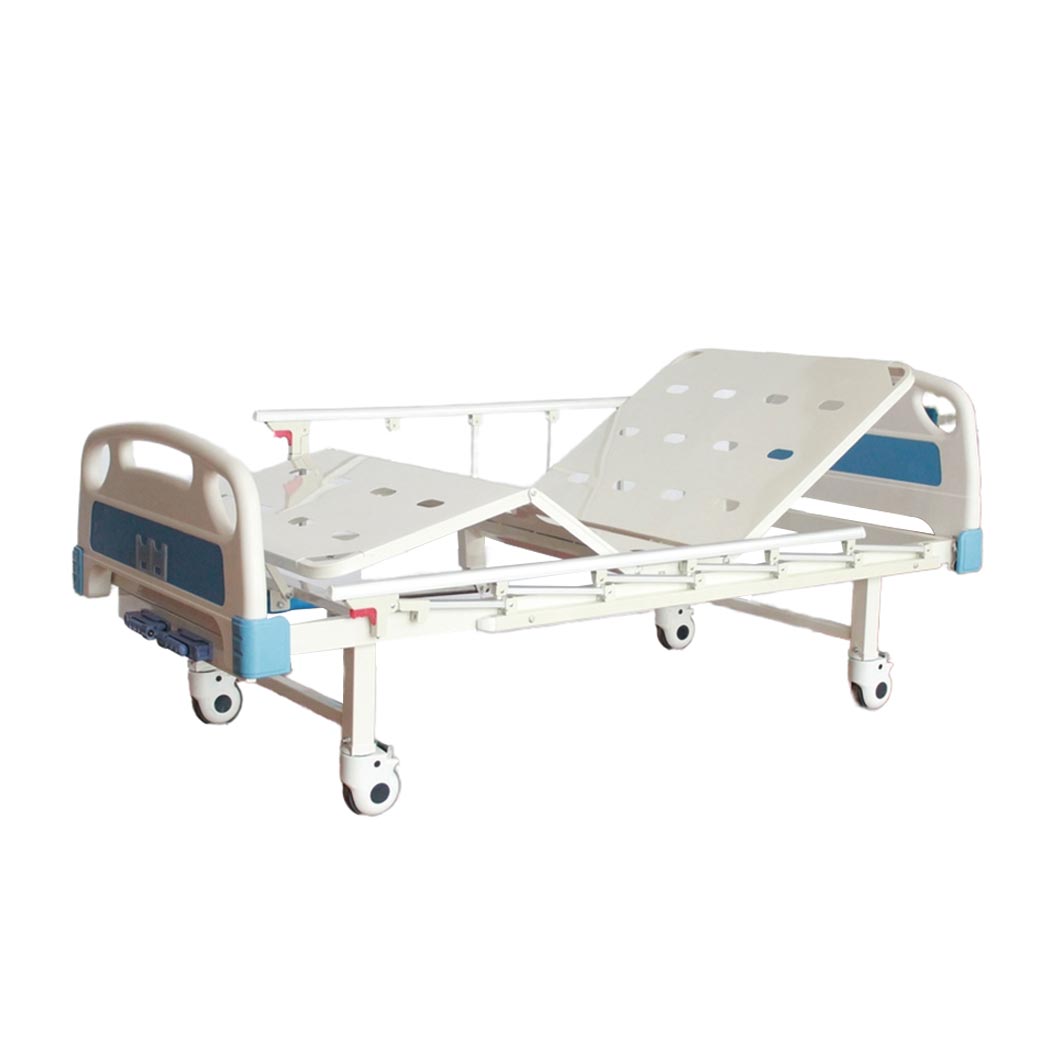 System compatibility should be reviewed across the bed, mattress, rails, and accessories.
Probe patient positioning and caregiver usability
Ask the supplier to demonstrate key movements with the intended mattress and rail configuration. How does patient positioning work when the bed is raised, when the backrest is elevated, or when the patient requires assistance? What feedback does the caregiver receive if a movement is locked out or interrupted? Are controls identifiable during low-light conditions, and what happens after a power interruption?
For patient positioning, request instructions that specify operator roles, cleaning restrictions, and any limits on accessories. Ask how the unit supports transfers, examination, meal positioning, and repositioning tasks without making claims about clinical outcomes. Your team should also ask whether the hospital bed can be moved through intended doors, elevators, and room layouts while maintaining safe handling procedures.
Evaluate manufacturing quality and service controls
Ask: How are frames, welds, electrical assemblies, coatings, and moving mechanisms inspected before shipment? A credible response describes incoming checks, in-process controls, functional testing, final inspection records, and serial-number traceability. Request a sample inspection record with sensitive commercial information removed, plus the process for handling nonconforming units.
For an electric hospital bed, ask about motor identification, control-box traceability, cable inspection, battery backup if offered, and the process for service replacement. Ask who performs warranty work, where spare parts are stocked, what parts are considered consumable, and how long critical components are expected to remain available. These answers help biomedical teams plan for the usable life of the hospital bed rather than only its delivery date.
Clarify installation, training, and acceptance
Ask the manufacturer to define what happens between delivery and handover. Who assembles the hospital bed? What site conditions, electrical checks, unloading equipment, or staging space are needed? What training is included for nurses, porters, biomedical technicians, and cleaners? Ask for the training format, attendee records, language availability, and escalation contacts.
Then request an acceptance checklist agreed before shipment. It should identify the ordered configuration, functional movements, brake operation, rail and mattress compatibility, visible-condition checks, documentation delivery, and the responsible signatories. Usually, earlier agreement on the configuration range makes later comparison more efficient. The acceptance checklist should also tell the facility how to isolate, report, and document a suspected safety or performance issue.
Request a complete documentation package
A manufacturer should be ready to list the documents supplied with each hospital bed. Ask for the operator manual, service manual, cleaning guidance, maintenance schedule, spare-parts list, wiring or technical diagrams where appropriate, warranty terms, packing list, inspection or test records, and applicable declarations or certificates. For an adjustable medical bed, ask whether the manual distinguishes configuration-specific instructions.
Review the documents for consistency: the model name, revision, electrical rating, accessories, and intended-use language should align across the quote, labels, manuals, and inspection records. If the supplier refers to certification, ask for the document, issuing body, scope, expiry information, and whether it applies to the exact hospital bed configuration and target market. Keep unresolved items in a document tracker rather than treating them as verbal assurances.
Use a shared scorecard before choosing
Create a scorecard that separates required evidence from preferred features. Required evidence may include intended-use fit, system compatibility, hospital bed safety documentation, service response responsibilities, installation planning, and acceptance criteria. Preferred features may include control layout, transport options, or an added patient positioning function. This approach makes it easier to compare suppliers without reducing a complex purchase to one headline specification.
Before award, ask one final question: What would cause this proposed hospital bed configuration to change after the order is placed? The response often reveals dependencies involving the mattress, rails, electrical supply, accessories, market documentation, or installation plan. Confirm those dependencies in writing and assign an owner for each open item.
Conclusion
The right questions help buyers turn a hospital bed quotation into a documented decision. Focus on intended use, configuration control, system compatibility, hospital bed safety, maintenance, training, and evidence. An electric hospital bed or adjustable medical bed may be appropriate when its functions match the care workflow and its documentation supports the proposed setup. For final selection, involve qualified clinical, engineering, procurement, and regulatory stakeholders in the assessment.
 Hot News

