 EN


Which Accessories Are Needed for an Infant Incubator?
An infant incubator is not a stand-alone purchasing decision. The enclosure may be central to infant thermal support, but the accessories around it determine whether a neonatal team can prepare, observe, clean, move, and service the system consistently. From a biomedical-engineering viewpoint, the useful question is not “Which add-ons are available?” It is “Which items are approved for this exact infant incubator and support the intended workflow?”
That distinction matters because a neonatal incubator is a patient-care device with model-specific fittings, alarm behavior, cleaning instructions, and service requirements. This guide separates core accessories from optional workflow items. It is for procurement and planning; local clinical policy, the current instructions for use (IFU), and qualified neonatal staff remain the authority for patient use.
Start with the infant incubator configuration, not a generic accessory list
Before ordering any accessory, record the infant incubator model, serial-number range where relevant, software or configuration options, intended care area, and the approved accessory list in the current IFU. A part that fits physically may still be unsuitable if it alters access, airflow, sensor routing, weight limits, cleaning instructions, or electrical safety. Ask the supplier to identify the accessory part number, approved mounting location, inspection interval, and any required consumables.
For newborn care equipment, this up-front check avoids a common purchasing error: comparing quotations where one infant incubator package includes essential patient-contact or support items and another does not. A simple line-by-line configuration sheet is more useful than a long feature list.
Essential accessory categories
“Essential” does not mean every item is needed for every patient. It means the category should be reviewed during each infant incubator purchase or replacement project because its absence can affect readiness, safe operation, or required maintenance.
1. Mattress, mattress cover, and approved positioning surfaces
The mattress assembly is usually a core part of the infant incubator system. Confirm dimensions, permitted thickness, cover material, cleaning method, replacement availability, and whether the selected surface is approved for the particular incubator. Positioning aids may be useful in a neonatal intensive care equipment workflow, but they should be evaluated with the clinical team for intended use, cleaning process, and compatibility with patient access and observation.
2. Skin-temperature probe and cable management items
Where the infant incubator configuration uses skin-temperature monitoring, the correct probe type, lead, holder, and replacement schedule need to be available. Do not assume probes are interchangeable across models. Include a pre-use check for cable condition, strain relief, connector fit, and routing that does not obstruct access panels. Keep spare approved probes in the unit’s ready stock according to local policy.
3. Air filtration or other scheduled-replacement components
Many infant incubator designs have filters or other components that require inspection or replacement at intervals stated by the manufacturer. The exact component and interval are model-specific. Procurement should therefore include the initial service kit, a documented reorder point, and a way to identify the correct part number. This is a maintenance-planning item, not an opportunity to substitute a visually similar part.
4. Humidity-system supplies, if the selected model supports humidity
Humidity capability varies by neonatal incubator. If it is part of the chosen configuration, review the approved reservoir, water handling, cleaning, replacement, and monitoring requirements in the IFU. The accessory plan should state who prepares the system, what supplies are stocked, and what is checked between patients. Do not add a generic humidity attachment to an infant incubator unless the manufacturer confirms it is intended for that model.
5. Power, transport, and backup-readiness items
Power cords, mounting hardware, transport connection kits, and batteries are only core accessories when they are supplied or approved for the intended infant incubator setup. A fixed NICU bay, a recovery area, and an intrahospital transport route can have different needs. Facilities teams should verify outlet access, cord routing, grounding arrangements, and the approved procedure for any movement. If the unit is expected to travel, confirm the complete transport configuration rather than assuming the enclosure alone is transport-ready.
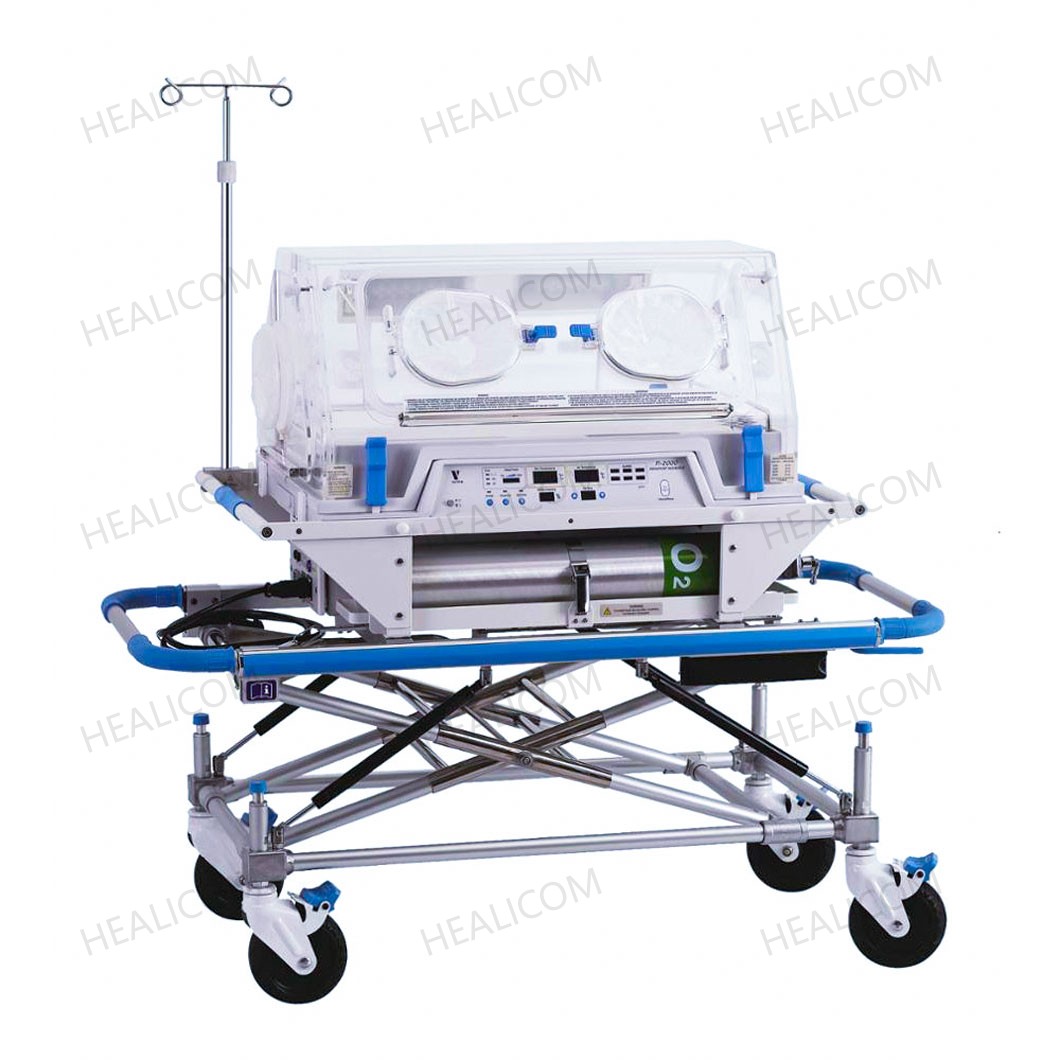 Accessory readiness should be verified against the model-specific IFU before use.
Optional accessories that may improve workflow
Optional accessories should solve an identified task. They are not automatically useful simply because they can be ordered with an infant incubator.
- Storage drawers or shelving: Can keep approved supplies close to the infant incubator, but should not interfere with cleaning access, mobility, or staff movement.
- Equipment poles, rails, and mounting brackets: May support compatible peripherals. Confirm approved load, attachment point, cable routing, and visibility of controls before purchase.
- Procedure or examination lighting: Consider the clinical workflow and whether mounting affects the infant incubator canopy, access doors, or observation. Lighting needs are not interchangeable with the incubator’s environmental controls.
- Documentation holders and label systems: These simple items can support orderly handover and service identification when positioned so that required labels and alarms remain visible.
- Protective covers: Use only where the IFU and local infection-control process allow them. A cover must not obstruct ventilation, indicators, or safe access.
For an infant incubator, an optional item becomes worth funding when it supports a defined workflow without adding a cleaning burden, hiding controls, or creating a compatibility question.
Compatibility checks before an accessory reaches the bedside
A practical acceptance check links the infant incubator, accessory, and care environment. Biomedical engineering, nursing leadership, infection prevention, and procurement can each contribute a part of this review.
- Match the accessory part number to the exact infant incubator model and current IFU.
- Verify the intended attachment point, load restriction, electrical connection, and permitted cable route.
- Check whether the accessory changes cleaning, disassembly, alarm visibility, access-panel operation, or service access.
- Confirm that the room layout leaves space for staff, emergency access, and routine maintenance around the infant incubator.
- Document acceptance, training needs, and the storage location for spares or consumables.
This process is especially important when an accessory originates from a different package, a previous-generation unit, or a third-party source. “Close enough” is not a compatibility result.
Cleaning, inventory, and service belong in the accessory plan
Accessories can complicate infection-control work if their materials, seams, brackets, or storage locations are not considered. Public neonatal cleaning guidance emphasizes following the manufacturer’s instructions, dismantling equipment as directed, training staff, and using products compatible with device surfaces. For each infant incubator accessory, keep the approved cleaning method, responsible role, and replacement trigger available at the point of use.
Inventory should distinguish patient-ready items from service spares. A useful list includes accessory name, approved part number, quantity on hand, reorder point, cleaning status, location, and expiry or inspection date when applicable. This makes a missing probe, cover, filter, or mounting component visible before a neonatal intensive care equipment setup is needed.
Service planning should also name ownership. Clinical users report damage or missing parts; biomedical engineering verifies serviceability; procurement maintains approved supply routes; and infection-control teams review cleaning compatibility. The infant incubator vendor or authorized service resource should be consulted whenever an accessory affects performance, maintenance, or the validated configuration.
Placement and room workflow questions
Accessory selection is inseparable from placement. Observe the real route around the infant incubator: where staff stand, where doors and access panels open, where leads travel, and how cleaning is performed. A rail or shelf that appears convenient on a drawing can make a tight bay harder to clean or restrict access during care. Include power outlets, wall services, storage, sight lines, and transport clearance in the review.
When comparing newborn care equipment packages, ask each supplier to show the complete configured footprint. The goal is a setup that supports the planned workflow while retaining access to infant incubator controls, alarms, and service panels.
A procurement checklist for neonatal incubator accessories
- Exact infant incubator model and approved accessory list confirmed.
- Core items reviewed: mattress assembly, applicable probes, scheduled-replacement components, and configuration-specific supplies.
- Optional rails, storage, lighting, or covers linked to an actual task and assessed for clearance.
- Cleaning instructions and compatible products documented for every selected item.
- Initial stock, reorder point, inspection needs, and service ownership assigned.
- Local neonatal team, biomedical engineering, and infection-control review completed before deployment.
Final takeaway
The needed accessories for an infant incubator are the ones approved for the exact model and justified by the patient-care and maintenance workflow. Start with the configuration-dependent essentials, then add optional items only after checking compatibility, cleaning, placement, inventory, and service impact. That approach gives a neonatal team a more usable setup than a generic accessory bundle and keeps infant thermal support planning connected to the real care environment.

 Hot News

