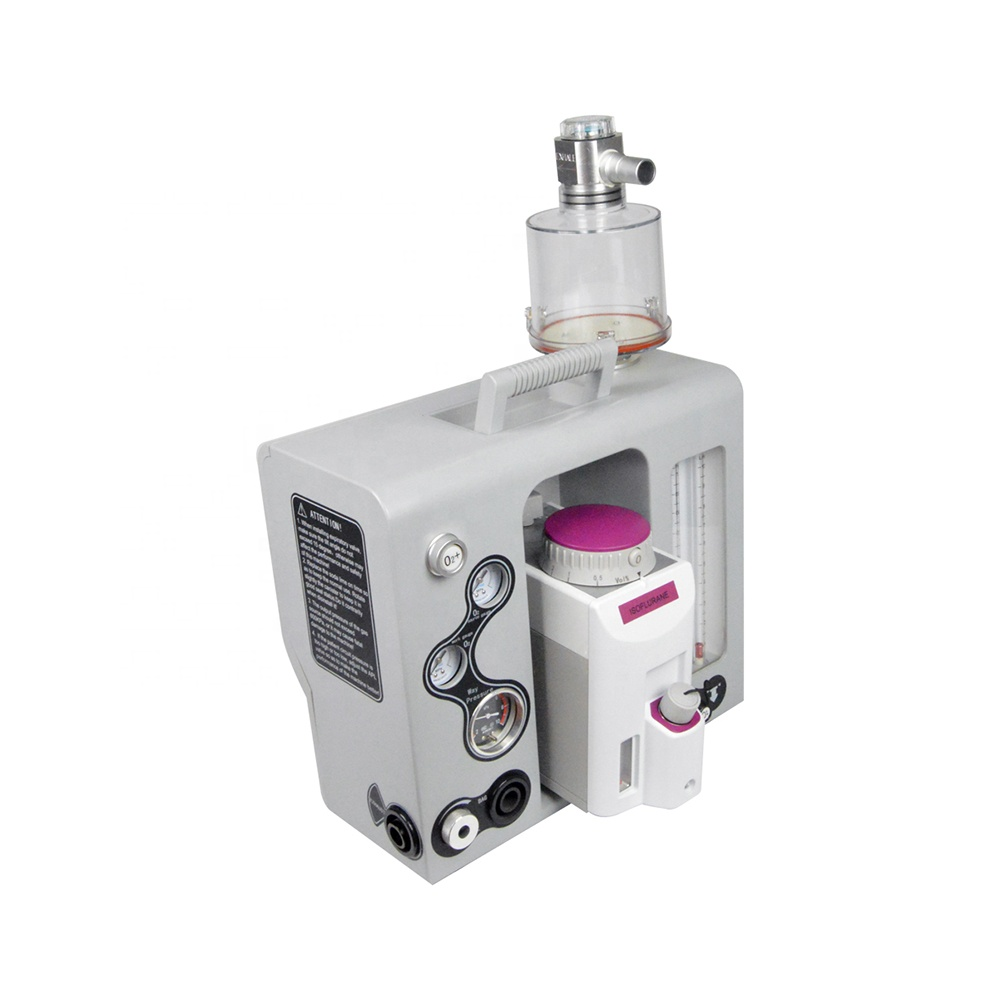
Moving away from manual methods toward automated anesthesia systems represents a major advancement for patient safety during operations. Older equipment depended heavily on analog settings and doctors' personal experience, which often led to mistakes in medication amounts and unstable blood pressure situations. Today's intelligent infusion pumps work with live data models that track how drugs move through the body, keeping medication levels just right. According to research published by Ponemon in 2023, these systems cut down problems related to anesthesia depth by around 37%. What does this mean practically? Anesthesiologists spend less time making constant small changes and more time handling complicated cases where their expertise really matters.
Three innovations define modern anesthesia machines:
These advancements culminated in FDA-cleared systems that automatically adjust anesthetic depth while maintaining blood pressure within 10% of preoperative baselines.
Contemporary devices now interface with hospital EMRs and OR telemetry systems, creating unified safety nets. For example, automated alerts for abnormal vital signs reduced critical incidents by 41% in a 2023 multicenter trial. This interoperability supports data-driven protocols for high-risk patients, though 29% of institutions still struggle with legacy system compatibility.

Closed loop anesthesia systems mark a big change in how we approach precision medicine. These systems adjust drugs on the fly based on ongoing feedback from things like EEG readings, blood pressure monitors, and breathing sensors. Traditional open loop methods need constant hands on adjustments by medical staff, but smart closed loop platforms can tweak medications such as propofol automatically to keep patients at just the right level of sedation without going too far. Recent research from 2024 showed that when hospitals switched to these automated systems, they saw about a 40% drop in problems related to unstable blood pressure during procedures. What makes this technology stand out is its ability to respond differently for each patient in real time, something that's really hard to achieve manually.
| Feature | Open-Loop Systems | Closed-Loop Systems |
|---|---|---|
| Feedback Mechanism | None — preprogrammed drug delivery | Real-time adjustments via physiological data |
| Drug Titration | Manual intervention required | Automated using MPC/RLC algorithms |
| Hemodynamic Stability | 58% incidence of intraoperative hypotension | 37% reduction in hypotension cases (Springer 2024) |
| Cognitive Recovery | 12.4 minutes post-anesthesia | 8.2 minutes post-anesthesia |
By integrating stroke volume variation (SVV) monitoring with vasopressor automation, closed-loop systems achieve 92% time-in-target blood pressure range versus 67% with open-loop approaches. This precision reduces postoperative renal injury risk by 29% and cardiac complications by 18%, as demonstrated in multisite trials spanning 15,000 procedures.
While closed-loop anesthesia machines demonstrate 33% lower critical incident rates, 62% of hospitals maintain open-loop systems as primary workflow tools. This discrepancy stems from conflicting priorities — while 78% of surgeons prioritize hemodynamic stability, 54% of anesthesia teams express discomfort with fully autonomous systems, highlighting the need for hybrid control interfaces in next-generation platforms.
The Bispectral Index, commonly known as BIS monitoring, plays a key role in modern automated anesthesia systems. It gives doctors an actual number to work with when assessing how deep a patient is under anesthesia, based on those brain wave readings from the EEG machine. The BIS score runs between 0 and 100, where lower numbers mean deeper sedation. Most surgeons aim to keep patients in the 40 to 60 range during operations. Recent studies show that looking at sample entropy in EEG data actually makes these depth measurements about 23 percent more accurate than older methods that just analyzed frequency spectra. When this technology gets built into closed loop systems, the anesthesia machine can tweak propofol or sevoflurane dosages all on its own. According to research published in Ponemon back in 2019, this automation cuts down the chances of someone waking up during surgery by roughly 82 percent.
Today's advanced systems use artificial intelligence to read those raw EEG signals as they come in, spotting tiny patterns that even experienced doctors might miss. These smart systems run what are called adaptive neurofuzzy algorithms, crunching through around 256 data points every single second. What makes this really useful is that it can actually forecast how blood vessels will react before there's any noticeable change in blood pressure. Because of this foresight, modern anesthesia equipment can adjust medication doses ahead of time, keeping brain blood pressure steady throughout delicate brain operations. The goal here is to stay within just 5 mmHg above or below whatever target level the surgical team sets for optimal patient safety.
The combination of Model Predictive Control (MPC) techniques with reinforcement learning is changing how we deliver intravenous anesthesia. When it comes to propofol administration during induction phase, MPC algorithms cut down on those annoying overshoots by around 37% when compared against traditional PID controllers. Meanwhile, reinforcement learning approaches are getting better at figuring out just the right amount of remifentanil needed to manage pain after surgery without going overboard. What makes these systems stand out is their ability to monitor more than a dozen different physiological signals all at once. They adapt automatically based on each patient's unique response patterns to medications. Clinical studies across multiple centers published last year in JAMA found that patients who received care using these advanced systems actually spent about an hour and twelve minutes less time in the PACU recovery area. That kind of efficiency matters a lot in hospital settings where every minute counts.
BIS is still pretty common in practice, but there's increasing support for adding EEG data together with things like the nociception response index (NRI) and measures of how blood flow varies. Some folks point out that relying solely on BIS misses around 18 percent of low blood pressure cases during surgery according to a study from NEJM back in 2022. This has led to new approaches that mix in pulse contour analysis along with capnography readings. What we're really talking about here is finding that sweet spot between using smart automated systems powered by AI and keeping doctors involved when dealing with all those complicated body signals that interact in unexpected ways.
Modern anesthesia machines now embed these AI capabilities directly into their safety architectures, creating adaptive protocols that respond to surgical phase transitions and patient comorbidities with millisecond latency. This technological synergy reduces human cognitive load while maintaining vital therapeutic boundaries, representing a paradigm shift in perioperative risk management.
The latest anesthesia equipment comes with smart breathing algorithms that look at end-tidal carbon dioxide levels (EtCO2) and tweak things like how much air gets pushed into the lungs and how fast it happens. This kind of automatic ventilation system keeps patients' blood gases within safe ranges and cuts down on problems from breathing too little or too much. A study back in 2020 checked out these automatic oxygen control systems and found they kept patients in their target oxygen range about 32% better than when doctors had to make all the adjustments themselves. That shows just how valuable those instant feedback loops really are in keeping everything running smoothly during surgery.
EtCO₂-guided systems dynamically modify inspiratory pressure and inspiratory-to-expiratory ratios during laparoscopic or thoracic surgeries where respiratory demands fluctuate rapidly. These systems reduce arterial blood gas analysis needs by 41% (Anesthesia & Analgesia 2023), allowing anesthesiologists to focus on higher-order clinical decisions.
SVV monitoring enables precision fluid administration by analyzing arterial waveform variations caused by respiration-induced preload changes. Smart anesthesia platforms incorporating SVV protocols reduce postoperative complications by 27% in major abdominal surgeries, according to a multicenter trial (Journal of Clinical Monitoring 2023).
Modern devices synthesize data from 8–12 physiological parameters (including cardiac output, cerebral oximetry, and neuromuscular blockade) to guide interventions. This multimodal approach shortens hemodynamic instability duration by 19% compared to conventional monitoring.
All automated systems feature:
These safeguards reduce human error-related adverse events by 53% while preserving clinician autonomy (Critical Care Medicine 2022). However, 68% of anesthesia professionals still prefer semi-automated modes, underscoring the need for balanced human-machine collaboration.
The latest anesthesia machines now come equipped with sophisticated control systems that make drug delivery much more accurate. PID controllers work by constantly adjusting medication amounts according to what's happening inside the patient's body right now. Meanwhile, MPC systems take things a step further by predicting how patients might react next based on complex physiological models. Some newer systems even use reinforcement learning techniques where the machine basically learns from experience during simulated operations. According to research published last year looking at all these automated systems together, they cut down mistakes made by humans when trying to keep patients at the right level of sedation by around one third. This matters because getting the balance right between too much and too little anesthesia can literally mean life or death situations.
| Controller Type | Functionality | Clinical Advantage |
|---|---|---|
| PID Controllers | Adjust drug infusion rates via error correction | Stabilizes hemodynamic parameters |
| MPC Systems | Predict drug interactions using patient models | Optimizes multi-drug combinations |
| Reinforcement Learning | Learns optimal dosing through trial/error | Adapts to atypical patient metabolism |
Modern anesthesia machines powered by artificial intelligence incorporate machine learning models that have been trained on years worth of pharmacokinetic information. These advanced systems look at various factors before surgery starts such as patient age, existing health conditions, and even genetic indicators to estimate how well someone might handle medications like propofol or sevoflurane. When dealing with patients who are considered high risk, these prediction tools seem to cut down cases of postoperative confusion by around 22 percent when compared against traditional dosage methods. This improvement represents a significant step forward for patient safety during complex procedures.
What comes next for anesthesia technology? We're looking at machines that can work on their own while still having doctors watch over them. These new systems will bring together information from brain waves, blood pressure readings, and breathing patterns all at once. They'll then tweak medication doses and ventilator settings in tiny ways as needed during surgery. There's quite a bit of discussion going on right now about ethics too. People want to know how these AI systems make their choices. Hospitals need to create rules so that when something unexpected happens during an operation, the machine doesn't just follow its programming blindly but actually responds appropriately according to what surgeons experience tells them matters most in those critical moments.
 Hot News
 EN
EN