In clinical settings, delivering medications in precise doses is critical for patient safety and treatment effectiveness—especially for high-risk drugs or patients who need slow, controlled infusion. A syringe pump is a specialized medical device designed to address this need, using mechanical force to push fluids from a syringe into a patient’s body at a steady, accurate rate. Unlike manual injection or basic infusion sets that rely on gravity, a syringe pump eliminates human error and ensures consistent drug delivery, making it indispensable in intensive care units, operating rooms, pediatric wards, and other clinical areas. Let’s first clarify what a syringe pump is, then explore how it guarantees accurate drug infusion.
What Exactly Is a Syringe Pump?
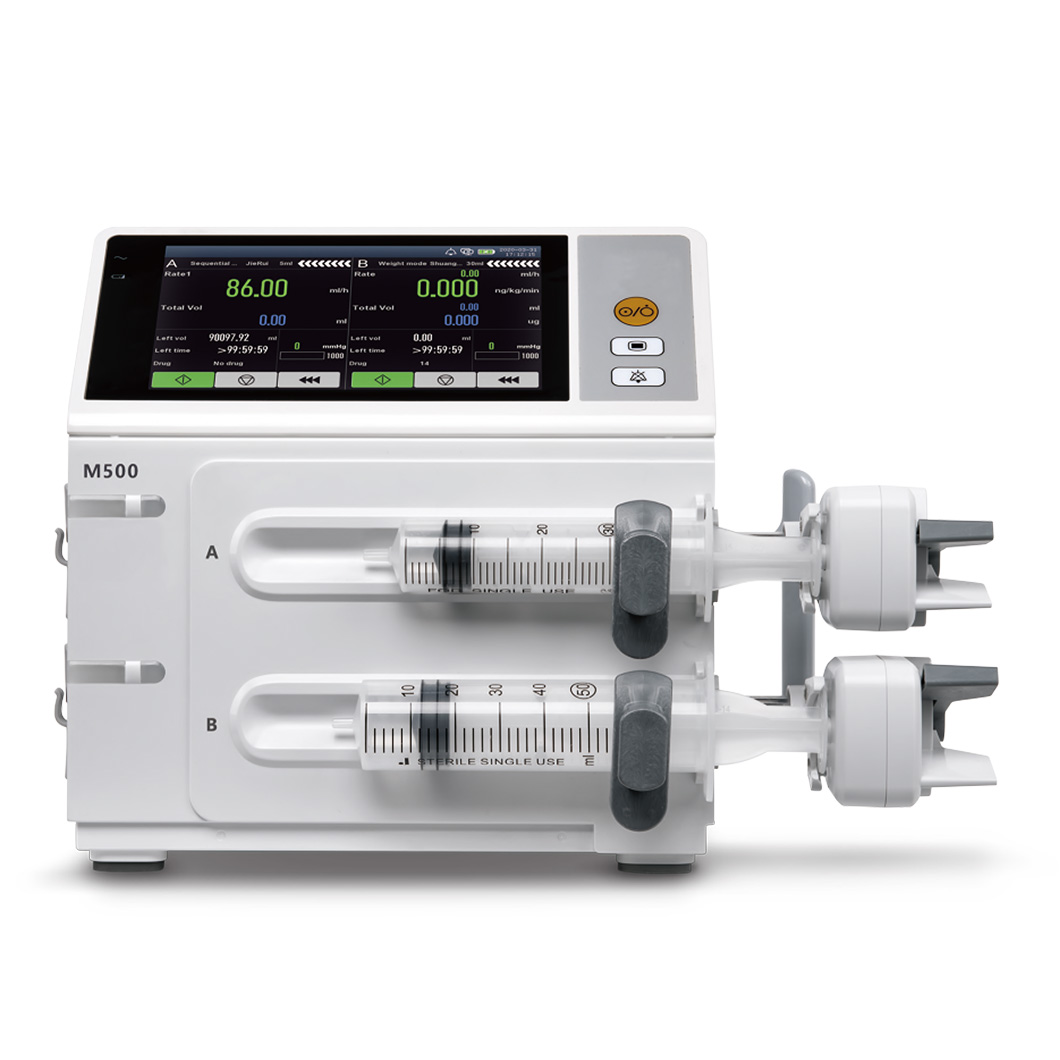
A syringe pump is a compact, programmable medical device that holds a standard syringe filled with medication or fluids and delivers them in precise volumes and rates. It consists of a syringe holder, a drive mechanism (usually a motor and lead screw), a control panel, and safety sensors. The user inputs the desired infusion rate (e.g., milliliters per hour) or total volume via the control panel, and the syringe pump’s motor moves a plunger at a steady pace to push the fluid out of the syringe and into the patient’s bloodstream through an IV line. Syringe pumps are compatible with various syringe sizes, from small 1ml syringes for potent drugs to larger 60ml syringes for fluid replacement. Their compact design allows them to be placed next to hospital beds or carried to different clinical areas, making them flexible for diverse patient needs. Unlike gravity-fed infusion, which can be affected by height or tubing kinks, a syringe pump operates independently, ensuring consistent delivery regardless of external factors.
Precise Flow Rate Control for Accurate Dosing
The core advantage of a syringe pump is its ability to control flow rates with exceptional precision, which is key to accurate drug infusion. Most syringe pumps offer flow rate ranges from 0.01ml/h to 100ml/h or higher, with an accuracy rate of ±1% or better. This level of precision is crucial for medications where even a small dosage error can have serious consequences—such as opioids for pain management, vasopressors for blood pressure control, or chemotherapy drugs. The syringe pump achieves this by using a stepping motor that moves in tiny, consistent increments, pushing the syringe plunger at a uniform speed. The programmable control panel lets clinicians set exact rates based on the patient’s weight, condition, and medication requirements. For example, a pediatric patient might need a drug infused at 0.5ml/h, while an adult in ICU could require 10ml/h—both delivered with the same high accuracy. This eliminates the variability of manual injection, where hand tremors or inconsistent pressure can lead to over-infusion or under-infusion.
Built-in Safety Features to Prevent Errors
A syringe pump is equipped with multiple safety mechanisms to further ensure accurate, safe drug infusion. One key feature is the occlusion alarm, which detects if the IV line is blocked (e.g., from a kink or clot) and sounds an alert to notify staff. This prevents pressure buildup and ensures the drug isn’t delivered too quickly once the blockage is cleared. Another critical safety function is the empty syringe alarm, which alerts clinicians when the syringe is nearly empty, preventing air from entering the patient’s bloodstream. Many syringe pumps also have dose limit settings—clinicians can input maximum dose thresholds, and the device will refuse to deliver more than the set amount, reducing the risk of accidental overdose. Some advanced models include drug libraries with pre-programmed dose ranges for common medications, helping to avoid dosing errors due to miscalculations. These safety features work together to minimize human error and create a fail-safe system for drug infusion.
Adaptability to Diverse Clinical Needs
A syringe pump’s versatility makes it suitable for a wide range of clinical scenarios, all while maintaining accurate drug delivery. In ICUs, it’s used to deliver life-sustaining medications like sedatives or inotropes at slow, steady rates. In operating rooms, it administers anesthesia or analgesics to keep patients comfortable during surgery. For pediatric and neonatal patients, who require extremely small, precise doses, a syringe pump’s ability to deliver as little as 0.01ml/h is invaluable—avoiding the risk of overdosing fragile patients. It’s also used in oncology for chemotherapy drugs, where precise dosing is essential to maximize effectiveness while minimizing side effects. Additionally, some syringe pumps can deliver multiple medications simultaneously (via separate channels) without compromising accuracy, making them ideal for patients with complex treatment plans. Whether the need is for continuous infusion, intermittent boluses, or variable rate delivery, a syringe pump can be programmed to meet the specific requirements, ensuring consistent results across different clinical settings.
User-Friendly Design Enhances Operational Accuracy
While precision and safety are paramount, a syringe pump’s user-friendly design also plays a role in ensuring accurate drug infusion. Most models have large, easy-to-read displays and simple control buttons, reducing the risk of programming errors—especially in high-stress clinical environments. The syringe holder is designed to securely fit standard syringes, preventing slippage that could affect delivery rate. Many syringe pumps also offer data logging and connectivity features, allowing clinicians to review infusion history (e.g., volume delivered, time elapsed) and integrate the device with hospital electronic health record systems. This not only helps with documentation but also enables staff to track patient responses and adjust doses as needed. The lightweight, compact design means the syringe pump can be easily positioned near the patient, reducing the length of IV tubing and further minimizing flow rate inconsistencies. By combining ease of use with technical precision, a syringe pump ensures that even busy clinicians can operate it accurately.
In conclusion, a syringe pump is a vital clinical device that delivers medications and fluids with exceptional accuracy through precise flow rate control, built-in safety features, versatility, and user-friendly design. It eliminates the limitations of manual injection and gravity-fed infusion, ensuring that patients receive the exact dose they need—every time. For high-risk medications, vulnerable patient populations, or complex treatment plans, a syringe pump is not just a convenience but a necessity for maintaining patient safety and treatment effectiveness. As medical technology advances, syringe pumps continue to evolve with more advanced safety features and connectivity options, solidifying their role as a cornerstone of modern clinical care. Whether in a busy ICU or a specialized pediatric ward, a syringe pump’s ability to guarantee accurate drug infusion makes it an indispensable tool for healthcare providers worldwide.
 Hot News
 EN
EN