EN


Electric vs Hydraulic Operating Table: Which Should Hospitals Choose?
Choosing an operating table is not simply a choice between a powered control system and a manual-feeling alternative. For a hospital procurement team, the useful question is whether the table’s movement, backup arrangements, service pathway, and stated limits fit the procedures and staffing pattern in a particular operating room. An electric system and a hydraulic system can both support safe, effective workflows when the model, accessories, installation, training, and maintenance plan are evaluated together.
From a hospital procurement perspective, the drive system should be compared alongside the table base, column, tabletop sections, positioning accessories, and the facility’s biomedical-engineering support. A lower purchase price or a longer feature list does not settle the issue. The practical decision is made when the clinical team can describe the movements it needs, the engineering team can verify the support route, and the buyer can compare the full lifecycle commitment.
Start with the procedure mix, not the drive label
An operating table may be used for general surgery, imaging-led work, orthopedic positioning, or a narrower specialty pathway. These uses place different demands on positioning range, accessory compatibility, tabletop imaging access, and repositioning speed. Before comparing electric and hydraulic drive systems, map the room’s expected procedures and identify the movements that staff need to perform during a case.
This approach also helps when reviewing operating room furniture as a system. Clearance around anesthesia equipment, imaging equipment, lights, carts, and transfer routes can affect whether a movement is genuinely useful. A feature exists on a specification sheet; it still needs to fit the room, the patient pathway, and the people who operate it.
Electric operating table systems: control and workflow strengths
An electric operating table typically uses powered actuators and an electronic hand control, panel, or foot control to adjust height, tilt, sections, and other functions offered by that configuration. In a room that makes frequent position changes, the attraction is usually repeatable control with less physical effort from staff. Some systems may offer stored positions or coordinated movements, but procurement teams should verify which functions are included in the quoted configuration rather than assume that every electric table has them.
Electric control can fit a workflow where multiple users need a clear, consistent control method. It can also make staff training more structured: identify the intended movement, confirm the patient and accessory condition, operate the control, then visually check the final position. The benefit depends on the control layout being intelligible in the actual room and on an agreed response if a controller, cable, battery, or actuator needs service.
Resilience is therefore a purchasing question, not a marketing claim. Ask how the table behaves during loss of mains power, what battery or manual fallback is supplied, how often the backup source is tested, and which functions remain available under each condition. The answer must come from the model-specific documentation and local acceptance test.
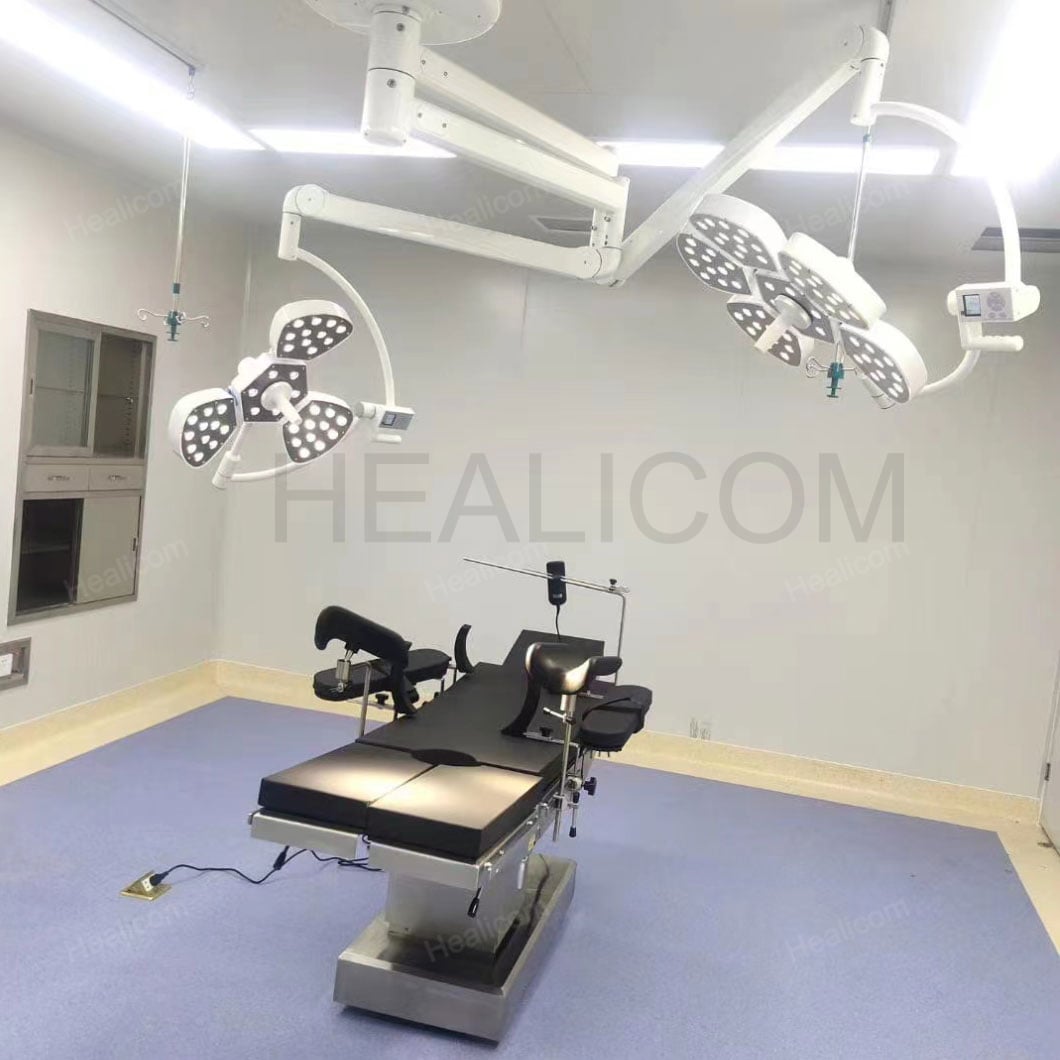 A procurement comparison should connect table controls with the room workflow and service plan.
Hydraulic operating table systems: mechanical continuity and service discipline
A hydraulic operating table uses hydraulic components to create or assist movement. Depending on the design, staff may use a pump, lever, pedal, or powered hydraulic arrangement. Procurement teams often value this route when they want a straightforward mechanical operating concept or when the department has established familiarity with the relevant service practices. That does not make hydraulic systems maintenance-free; it changes what must be inspected and who owns that inspection.
For surgical table maintenance, the service plan should specify scheduled checks, cleaning boundaries, authorized service contacts, and how staff report irregular movement. Uneven motion, fluid leakage, unusual resistance, or a control problem should be handled under the manufacturer’s instructions and the hospital’s maintenance process. The useful procurement comparison is the availability of trained support, parts, downtime arrangements, and documentation—not an assumption that one drive principle will necessarily have fewer service events.
Compare the two systems on the factors that change a hospital decision
| Decision factor | Electric system: questions to ask | Hydraulic system: questions to ask |
|---|---|---|
| Positioning control | Which movements are powered, how are controls labeled, and are there model-specific presets or interlocks? | Which movements use hydraulic action, what physical effort is required, and how is fine adjustment performed? |
| Continuity planning | What battery, manual release, or alternative control method is supplied and tested? | What is the documented fallback method, and what service condition could restrict movement? |
| Maintenance path | Who diagnoses controls, wiring, actuators, and batteries; what are the inspection intervals? | Who inspects seals, fluid-related components, valves, and movement quality; what are the inspection intervals? |
| Workflow fit | Will staff benefit from frequent, repeatable powered adjustment during the intended cases? | Does the room’s procedure pattern and staff practice suit the available mechanical or hydraulic controls? |
| Lifecycle planning | What are the expected support terms, spare-part route, software or controller dependencies, and training needs? | What are the support terms, consumable or service requirements, parts route, and technician capability? |
The table is deliberately a list of verification questions. A hospital should ask an operating table supplier to answer them for the exact configuration offered, including options, accessories, backup method, and service coverage. If a response applies only to a different model or optional package, record that limitation before comparing bids.
Load capacity is a configuration and positioning question
Operating table load capacity should not be treated as a single headline number. The relevant limit may depend on the tabletop orientation, articulation, patient position, attachments, traction or imaging accessories, and the manufacturer’s defined safe working conditions. The procurement file should request the applicable documentation, clarify whether accessories are included in the stated condition, and require acceptance checks appropriate to the facility’s planned use.
More capacity on paper does not automatically mean a better fit. The clinical and engineering teams should agree on the heaviest realistic patient-and-accessory scenarios, the positions needed, and the handling process. This is also where the room layout matters: adequate capacity does not resolve conflicts with imaging clearance, transfer equipment, or staff access.
Build lifecycle cost into the comparison
For either type of operating table, the initial quote is only one part of the decision. Put installation, commissioning, user training, preventive service, response time, parts availability, backup testing, accessories, and potential downtime procedures in the same evaluation sheet. A low initial figure can be less meaningful if the hospital has no practical way to maintain the selected configuration. Conversely, a more feature-rich electric system may not justify its support needs if the room rarely uses the functions that create that complexity.
Ask procurement, perioperative leadership, and biomedical engineering to score the same evidence. First confirm the procedure and positioning need; then compare the configuration and support route; finally agree on acceptance conditions. This sequence makes it easier to distinguish a genuinely useful capability from an attractive but unused option.
Which operating table should a hospital choose?
Hospitals should choose the electric or hydraulic operating table that can be documented to support their actual workflow, resilience plan, maintenance resources, and patient-positioning requirements. Electric systems can suit teams that need frequent controlled adjustment and have a defined plan for power and electronic-service continuity. Hydraulic systems can suit teams that value a particular mechanical operating approach and have a clear inspection and service pathway. Neither label replaces model-specific verification.
Before award, obtain the configuration list, applicable operating and maintenance documentation, backup-process description, operating table load capacity conditions, training scope, acceptance-test plan, and service escalation route. That evidence gives the hospital a more defensible decision than selecting on drive type alone. This article provides a procurement framework and does not replace clinical, engineering, regulatory, or manufacturer-specific evaluation.
 Hot News