 EN


What Factors Affect Operating Table Prices?
An operating table quotation is easier to interpret when it is treated as a configuration and service decision rather than a single equipment number. As a hospital procurement evaluator, I would first ask what procedures the table must support, who will operate it, and what resources will keep it available over its working life. A lower initial price can be appropriate for a straightforward workload; it is not automatically comparable with a surgical operating table built for imaging, orthopedics, bariatric use, or multi-position procedures.
The practical question is not simply “What does an operating table cost?” It is “What is included, what will the operating room need around it, and what ongoing commitments does this configuration create?” The following framework helps teams compare quotations on the same scope.
Start With the Base Configuration
The basic architecture of an operating table drives much of the price. A manual or hydraulic design may suit a defined, lower-complexity procedure mix. An electro-hydraulic or electrically controlled table can add powered movements, programmed positions, and finer adjustment. Those systems introduce actuators, controls, wiring, batteries, and diagnostic considerations, so the price should be reviewed alongside the required function rather than in isolation.
Ask suppliers to state the included tabletop sections, height range, longitudinal shift, tilt, back and leg section movements, patient load rating, and base or column design. A quotation that says “adjustable surgical table” without this detail may hide important differences in capability. Compare the identical patient-support configuration, not just the headline category.
Specialty Capability Changes the Cost Structure
A general-purpose operating table and a specialty platform may look similar at first glance, yet they serve different clinical and workflow requirements. Orthopedic work can require traction components and dedicated attachments. Imaging-oriented use may call for materials and geometry that accommodate C-arm access. Urology, gynecology, vascular, bariatric, and spinal procedures can each change the required positioning range, tabletop design, accessories, or load capacity.
These additions affect both the equipment price and the project scope. Rather than selecting every possible option, create a procedure matrix: list the priority procedures, the positions required, whether imaging access is needed, which accessories are essential, and which capabilities are only future possibilities. This makes it easier to decide whether a broader surgical operating table is justified or whether a more focused configuration will meet the department’s actual workload.
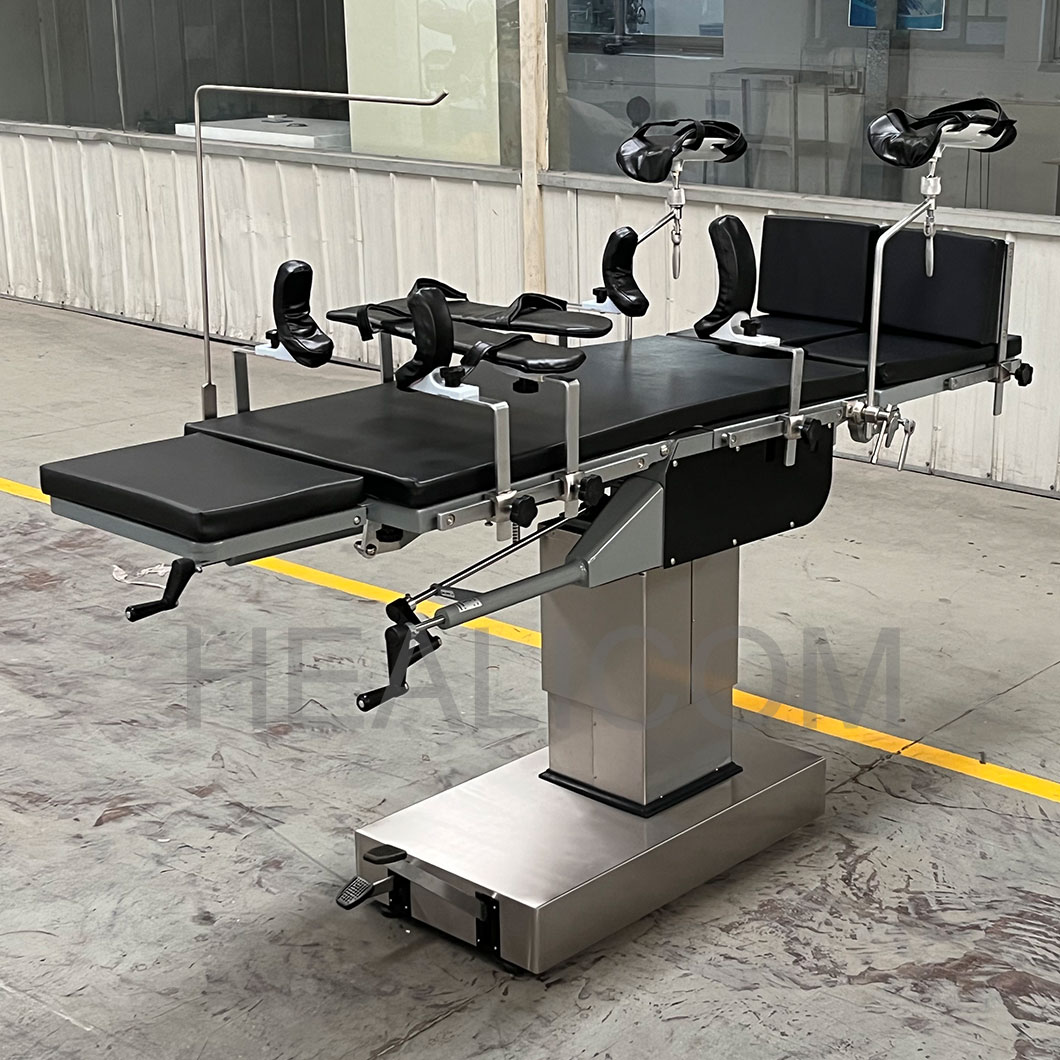 A structured review helps teams compare operating-table configurations on the same scope.
Materials, Build Details, and Cleanability Matter
Materials influence durability, weight, imaging compatibility, cleaning routines, and the construction effort behind an operating table. Stainless-steel components, sealed surfaces, high-quality upholstery, corrosion-resistant mechanisms, and robust casters may add cost, but they should be evaluated against cleaning practice, expected utilization, and maintenance access. Ask how cushions, side rails, joints, hand controls, and column surfaces are cleaned and inspected in the intended environment.
It is also sensible to request documentation relevant to the target market and planned use. IEC 60601-2-46:2023 addresses particular safety requirements for operating tables, including tables with or without electrical parts and transporters. That reference is not proof that a specific product meets every local requirement; procurement and regulatory teams should verify the applicable documentation, edition, scope, and market-specific obligations before a purchase decision.
Controls and Positioning Features Add More Than Convenience
Hand pendants, foot controls, column controls, remote functions, position memory, and battery backup can change the operating table price. The value depends on who uses the controls, how often repositioning occurs, and whether the function reduces workflow friction in the intended cases. More controls also mean more components to train on, inspect, and support.
During an evaluation, ask to see the table perform the positions that matter most. Confirm how movement limits are managed, what happens during power interruption, how batteries are maintained, and which functions remain available in each condition. A feature list is less useful than a clear demonstration linked to the department’s procedures.
Accessories Can Turn a Modest Quote Into a Larger Project
Accessories are often the largest source of quotation mismatch. Headrests, arm supports, leg holders, shoulder supports, extension frames, clamps, side rails, positioning pads, and traction assemblies may be bundled, optional, or supplied by another party. Hospital surgery equipment planning should therefore distinguish essential day-one accessories from items that can be added later.
Build one accessory schedule for every quotation. Include quantity, compatibility, reusable versus consumable status, cleaning requirements, storage needs, and whether an accessory is shared across rooms. This is especially important when operating room furniture is being refreshed at the same time, because storage, transfer equipment, lighting, and room layout can affect how the table and accessories are used.
Installation, Site Readiness, and Training Belong in the Budget
Freight, installation, commissioning, electrical preparation, floor conditions, room access, packaging removal, and acceptance activities may sit outside the base equipment line. A table may also require coordination with operating room furniture, imaging equipment, ceiling systems, or transfer routes. A site survey before the final purchase order can identify access constraints and clarify responsibilities between the supplier, facility team, and installer.
Training is another cost driver that is sometimes under-scoped. Ask who receives initial training, whether biomedical staff receive technical orientation, what materials are provided, and how new staff will be supported later. The right level of training depends on the table configuration and local operating procedures.
Compare Support and Lifecycle Maintenance, Not Just Warranty Length
The total cost of an operating table includes planned inspection, preventive maintenance, batteries where applicable, wear components, cushions, accessories, repair labor, parts availability, and service response arrangements. A longer warranty can be useful, but it does not replace a discussion of exclusions, response expectations, availability of technical documents, and who performs routine checks.
Request a lifecycle cost worksheet that identifies included service, recommended maintenance intervals, expected replacement items, software or controller support where relevant, and the process for obtaining parts. For international projects, confirm the local service pathway and the documents needed for import, installation, and future support. These questions make a price comparison more reliable than simply choosing the lowest initial quote.
A Like-for-Like Operating Table Comparison Checklist
- Define the procedure mix and required patient positions before requesting quotes.
- List the exact base-table movements, load requirements, tabletop features, and controls.
- Separate included accessories from optional accessories and show quantities.
- Record installation, room-readiness, commissioning, and acceptance responsibilities.
- Review cleaning, inspection, training, warranty, parts, and maintenance provisions.
- Verify applicable safety and market documentation with the responsible specialists.
- Compare the total delivered scope for the same operating room, not isolated line-item prices.
Conclusion: Price Follows Scope and Support
Operating table prices vary because operating requirements vary. Configuration, specialty capability, materials, controls, accessories, installation, training, and lifecycle support all shape the final scope. A structured comparison gives procurement, clinical, and engineering teams a common basis for deciding which operating table configuration matches their procedures and resources. For a project-specific quotation, provide the procedure mix, room constraints, required accessories, preferred support model, and documentation needs so the proposed scope can be reviewed transparently.
 Hot News

