 EN


How to Choose an Autoclave for Hospitals, Clinics, and Laboratories
Choosing an autoclave is not mainly a matter of buying the largest chamber or the fastest-looking cycle. It is a workflow decision: what will be processed, how often, by whom, in which room, and with what evidence that the process was completed correctly? A hospital central sterile department, a dental clinic, and a microbiology laboratory may all use steam sterilization, but they place very different demands on an autoclave.
The most useful starting point is to map the intended loads and the reprocessing path before comparing models. Cleaning and correct preparation come before sterilization; an autoclave cannot compensate for instruments or materials that have not been prepared according to their instructions for use. Local regulations, facility policies, and manufacturers’ instructions should define the final requirements.
Start with the work, not the chamber size
List every routine load the team expects the autoclave to handle: wrapped surgical sets, unwrapped instruments, porous goods, liquids, laboratory glassware, culture media, or waste. Then note the busiest period, the turnaround expectation, and whether a delayed cycle would interrupt patient care or laboratory work. That short exercise usually makes the right capacity and cycle options clearer than a specification sheet alone.
- Hospitals: Ask about throughput, instrument-set dimensions, packaging, traceability, loading ergonomics, utility redundancy, and the segregation of clean and dirty workflows.
- Clinics and dental practices: Focus on the daily number of packs, expected turnaround, available counter or floor space, staff training, and a manageable recordkeeping routine.
- Laboratories: Separate media preparation, glassware, liquids, and waste applications. Each load type can impose different requirements for exhaust, cooling, containment, and cycle selection.
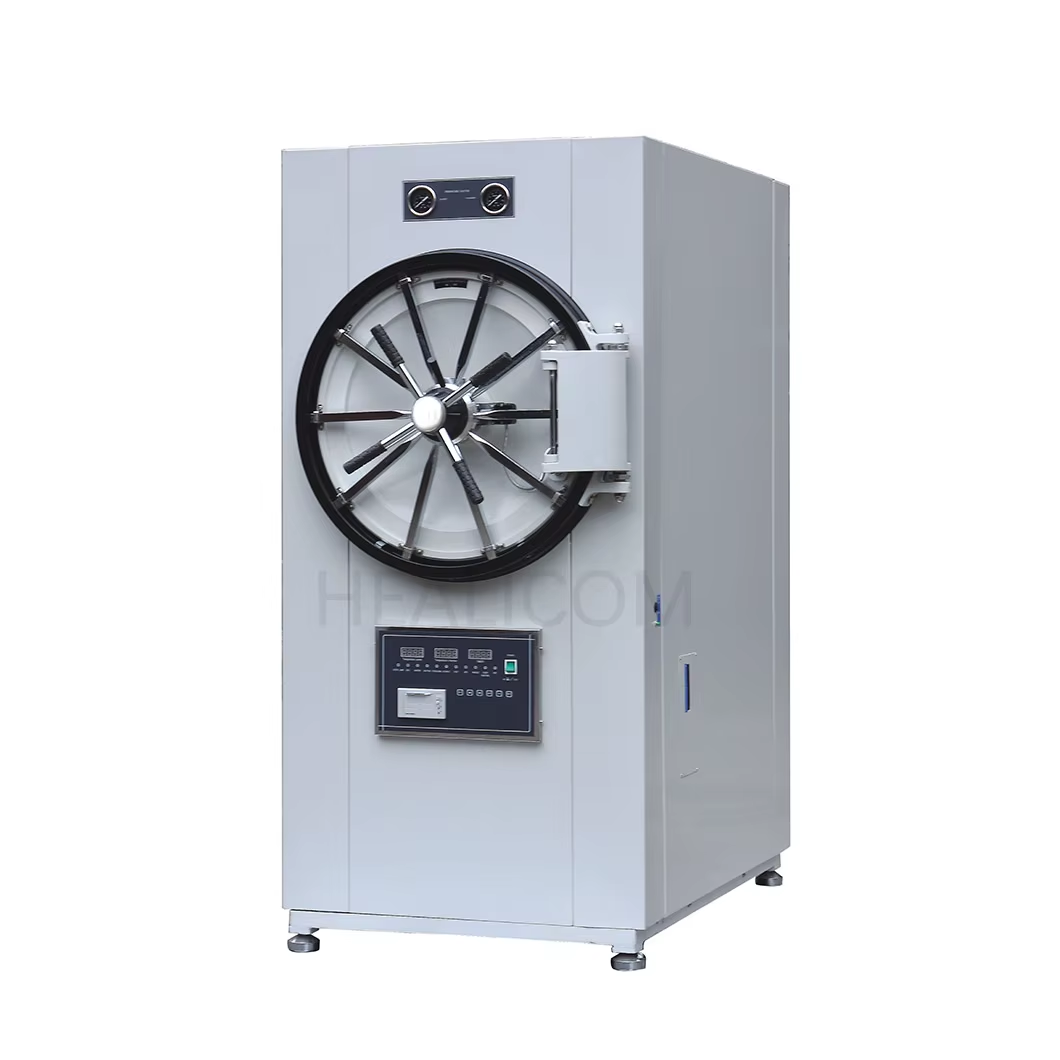
For example, a 150L autoclave may suit a moderate batch workflow, but its appropriateness depends on the physical load, peak demand, available space, and the time needed for a full cycle, drying, unloading, and documentation. Capacity is useful only when it removes a real bottleneck without creating new ones.
Match the chamber and cycle capabilities to the load
An autoclave should support the validated cycles required for the actual materials and packaging your team uses. Compare chamber dimensions rather than volume alone: long instrument trays, tall containers, and mixed packs can limit usable space even when the nominal chamber volume appears generous. Confirm rack configuration, loading aids, door clearance, and the workflow around hot loads.
Ask suppliers to document which cycles are available and what the intended application is for each one. The choice between gravity-displacement and pre-vacuum approaches, for instance, should follow the load and the applicable instructions—not a general claim that one is universally better. For laboratory teams, ask specifically how liquid cycles manage heating and cooling. For clinical teams, verify how wrapped loads, drying, and traceability fit the reprocessing procedure.
It is also wise to distinguish an autoclave machine for hospital from a compact unit intended for a small clinic. The hospital question often includes infrastructure, departmental throughput, service response, and integration with a documented sterile-processing program. The clinic question may instead center on a predictable daily load profile and straightforward operating controls.
Check site readiness before selecting a model
Many procurement delays occur because facilities assess utilities after selecting the equipment. Create a site-readiness checklist early, covering:
- Electrical supply, load, protection, and emergency-power expectations;
- Water quality, treatment needs, inlet pressure, drainage, and condensate handling;
- Ventilation, heat release, clearance, floor loading, and access for installation and service;
- Door swing, loading route, operator reach, and separation from dirty receiving areas where relevant;
- Local building, infection-control, safety, and waste-handling requirements.
These details may need confirmation during a site survey. More accurately, the right autoclave is the unit whose documented requirements the facility can reliably support—not simply the unit with the longest feature list.
Make monitoring and records part of the buying decision
Sterilization assurance should influence the specification from the beginning. CDC guidance describes monitoring steam sterilization with mechanical, chemical, and biological indicators, and notes the use of Geobacillus stearothermophilus biological indicators for steam processes. That does not prescribe one configuration for every facility, but it does make a practical point: buyers need a clear way to review cycle parameters, associate records with loads, and investigate exceptions.
Evaluate the controls, printout or digital export options, audit trail, alarms, user access, and data retention against your own procedure. An autoclave data logger can be relevant where the team needs an independent or supplementary record of conditions, but it should be assessed as part of a complete validation and documentation plan. Confirm compatibility, data ownership, calibration expectations, and how staff will act on an incomplete or abnormal record.
Ask how commissioning, routine monitoring, preventive maintenance, and service documentation will be handled. A supplier quote should not blur the boundary between equipment capability and the facility’s responsibility to validate and operate its process.
Compare usability, safety, and lifecycle support
A technically appropriate autoclave can still be a poor fit if normal use is awkward or maintenance is impractical. Involve the people who will load, unload, clean, document, and maintain the unit. They can identify issues that are easy to miss in a purchasing meeting: wet packs, hot-surface exposure, heavy loads, confusing controls, water-treatment tasks, spare-part availability, and what happens when the unit is unavailable.
Request clarity on installation scope, operator training, commissioning documents, preventive-maintenance intervals, warranty boundaries, remote support where available, and the route for obtaining consumables and replacement parts. For a hospital, service continuity may carry more weight than a small difference in purchase price. For a laboratory, a controllable liquid cycle or a safe waste workflow may be decisive. For a clinic, a simple, repeatable daily process may matter most.
Use a disciplined comparison matrix
Before requesting final quotations, score each candidate autoclave against the same criteria: compatible loads and cycles, usable chamber geometry, peak throughput, site fit, monitoring and records, operator safety, service coverage, total operating cost, and required documentation. Mark each item as confirmed, pending verification, or not suitable. This prevents a persuasive demonstration from replacing a complete comparison.
Finally, ask the supplier to confirm the proposed configuration against your load list and site conditions in writing. Healicom Medical Equipment can help procurement teams translate hospital sterilizer needs into configuration and site-check questions; final selection should still be verified against the facility’s procedures, local requirements, and the equipment documentation.
Ask the right questions during a site and workflow review
A structured review meeting prevents a mismatch between the proposed autoclave and its intended process. Include the process lead, an operator, facilities personnel, quality staff where applicable, and purchasing. Each role sees a different failure mode: awkward loading, unmet utilities, or gaps in records and release procedures.
Walk through an ordinary busy day rather than an idealized load. How many cycles will the autoclave run? What happens if an indicator calls for investigation? Which loads cannot wait until the next shift? A 150L autoclave may fit one department’s daily volume yet be wrong once tray geometry, load separation, and turnaround are mapped.
For an autoclave machine for hospital, ask whether department-level workflows require separate processing areas, high-volume loading, documented release steps, or coordination with a wider sterile-services program. For a clinic, compare the practical effect of cycle time, drying performance, and staff availability on the day’s appointment schedule. For a laboratory, identify whether the autoclave will process liquids, glassware, media, or waste, because those applications can change the required cycle controls and cooling arrangements.
Questions to put on a supplier checklist
- Which documented cycles are intended for each named load, package type, and material?
- What chamber dimensions, racks, trays, and loading accessories are included in the quoted autoclave configuration?
- Which electrical, water, drainage, ventilation, and clearance conditions must be verified before installation?
- How are cycle parameters displayed, retained, exported, and linked to internal load records?
- Where would an autoclave data logger fit, if independent monitoring is part of the facility’s validation plan?
- What commissioning, training, maintenance, calibration, and service evidence will the supplier provide?
The goal is to make assumptions visible before purchase. If the team cannot connect a proposed autoclave configuration to loads, utilities, monitoring, and recovery, the requirement remains incomplete.
Conclusion
The right autoclave is the one that fits a defined reprocessing workflow, supports the relevant loads and records, and can be installed and maintained under real site conditions. Start with the load map, validate the site, include monitoring in the specification, and involve operators early. That approach gives hospitals, clinics, and laboratories a more defensible basis for comparison than capacity or price alone.
 Hot News

