EN


What Should Hospitals Check Before Purchasing Surgical Lighting?
Buying an operating lamp is not simply a question of choosing the brightest head or the newest controls. A hospital is purchasing a clinical work tool that must fit surgical tasks, room conditions, staff practices, and a long-term support plan. From a hospital procurement perspective, the useful comparison starts with the procedure room and the people who will use the light—not with a brochure specification alone.
A surgical operating light should be assessed as part of the operating environment. Good operating room lighting supports the team’s ability to see the field and work without unnecessary interruption, but the right configuration depends on the procedures, room layout, mounting constraints, and local requirements. The checklist below turns those questions into a practical purchasing process.
1. Define the clinical task before comparing an operating lamp
Begin by listing the procedures the room performs, the typical depth and size of the surgical field, the number of clinicians who need a clear view, and whether the space also supports teaching, imaging, or minimally invasive work. An operating lamp that seems suitable for a minor-procedure room may not suit a room with deeper or more varied surgical tasks.
Ask surgeons, perioperative nurses, anesthesia staff, and biomedical engineering to describe when current lighting becomes difficult to position, obstructs access, or creates a distracting reflection. This is more useful than asking whether an operating lamp has a particular feature in isolation. More accurately, the key question is whether that feature helps the team perform its intended workflow under the room’s actual conditions.
- Which specialties and procedures will use the room?
- Where will clinicians stand, and how often will the light be repositioned?
- Will one or two light heads be needed for the expected tasks?
- What other ceiling-mounted equipment shares the working envelope?
2. Compare illumination quality, not brightness alone
When evaluating an operating lamp, ask suppliers to explain how illumination is measured and under what configuration. Central illuminance is important, yet it is only one part of a usable view. The team should also review field size, depth of illumination, shadow management, color rendering, color temperature choices, and how performance changes when the light is repositioned.
A LED surgical lamp may offer adjustable output and color settings, but those controls should be demonstrated in the intended clinical context. Request a side-by-side demonstration using realistic working distances and a simulated field. Have users evaluate whether the LED surgical lamp remains comfortable to use when clinicians, instruments, or the surgeon’s head partly block the light path.
Do not equate a specification sheet with a clinical result. A higher stated value for an operating lamp does not by itself establish that the illumination pattern suits every procedure. Instead, use the room’s clinical tasks as the test case and document which settings and positions were evaluated.
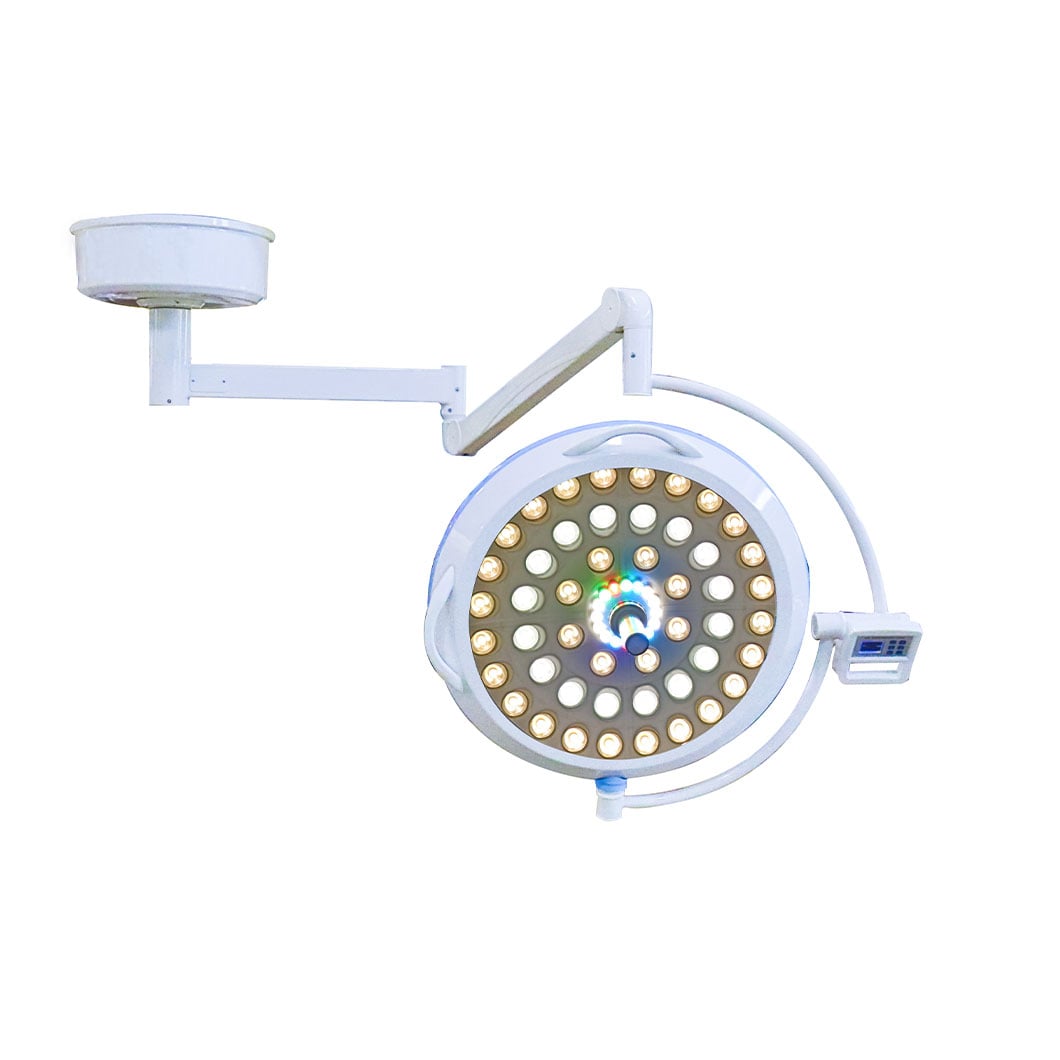 Evaluate surgical lighting in the context of the room, the procedure, and the clinical team’s workflow.
3. Check shadow control, color, and visual comfort together
A surgical team needs a stable visual environment, not just intense light. Evaluate the operating lamp for shadow dilution around the expected field, consistency across the illuminated area, and the ease of aiming the light without repeatedly breaking sterile workflow. If a surgical operating light offers multiple heads or modes, confirm what each configuration is intended to accomplish rather than assuming all options are equivalent.
Color rendering and adjustable color temperature may affect how users perceive tissue and the field, so the procurement team should include representative clinical users in the assessment. Ask how the operating lamp controls respond, whether settings can be reproduced consistently, and whether users can make ordinary adjustments with the applicable sterile or nonsterile workflow. Your team should also clarify who will be trained to use and clean each control surface.
4. Verify standards, market documents, and intended use
An operating lamp should be evaluated as medical lighting equipment, not as ordinary room lighting. IEC 60601-2-41 addresses particular basic-safety and essential-performance requirements for surgical luminaires and luminaires for diagnosis; the applicable edition, documentation, and market pathway must be verified for the hospital’s location and procurement rules. This is a verification step, not a claim that any specific unit complies.
Ask for the exact model documentation, intended-use statement, electrical and safety information, cleaning instructions, maintenance schedule, and the documents required in your market. Where a project involves cross-border purchasing, confirm responsibilities for registration, import documentation, installation, and service. The relevant regulatory review may vary by jurisdiction, so an operating lamp purchase should include the hospital’s compliance and biomedical teams early.
5. Map the operating lamp to the room and ceiling plan
Before selection, obtain a coordinated room drawing that includes ceiling structure, clearances, doors, tables, booms, imaging equipment, air-distribution elements, and service access. A well-specified operating lamp can still create problems if its movement envelope conflicts with other equipment or if the ceiling cannot support the proposed suspension.
Operating room lighting should also be checked against electrical infrastructure, emergency-power arrangements, heat-management considerations, and the project’s infection-control approach. Request written confirmation of installation prerequisites and identify who validates them. Where the operating lamp will share a ceiling zone with pendants or monitors, review all movement ranges together during planning.
6. Evaluate usability, hygiene, and maintainability
A reliable operating lamp must be usable during busy lists as well as impressive in a demonstration. Observe handle ergonomics, reach, balance, cleaning access, control labeling, and the practical effort needed to position the head. Include staff who will clean the device and staff who will call for service; their observations often reveal issues that are not visible in a procurement meeting.
Ask the supplier to define preventive maintenance intervals, expected service response, spare-parts availability, warranty boundaries, remote-support options, and the training package. A LED surgical lamp may reduce routine light-source replacement compared with older technologies, but it still requires a documented plan for controls, suspension, power components, and service responsibility. Compare those lifecycle commitments beside the initial quotation.
7. Use a documented acceptance plan before awarding
Turn the selection into a shared acceptance checklist. For each shortlisted operating lamp, record the clinical task, room layout, evaluated configuration, documents reviewed, installation prerequisites, training needs, and acceptance tests. This makes quotations comparable and reduces the chance that different teams assume different scopes.
| Check area | Question to document | Owner |
|---|---|---|
| Clinical fit | Does the operating lamp support the defined procedures and user positions? | Clinical lead |
| Lighting performance | Were field size, shadow control, color, and controls demonstrated in a realistic setup? | Clinical and biomedical teams |
| Room readiness | Are ceiling, clearance, electrical, and equipment-coordination conditions confirmed? | Facilities and project team |
| Documentation | Are intended use, applicable documents, cleaning, service, and market requirements reviewed? | Procurement and compliance |
| Lifecycle support | Are training, preventive maintenance, parts, and service responsibilities clear? | Biomedical engineering and supplier |
Make the decision around verification, not promises
A defensible purchasing decision is usually the one with the clearest fit between the surgical task, the room plan, and the verification record. A capable operating lamp can support a well-planned operating environment, but it should be selected only after the hospital confirms the conditions under which it will be installed, used, cleaned, and maintained. If requirements differ across rooms, create separate checklists rather than assuming one configuration will suit every setting.
For medical lighting equipment procurement, ask suppliers to respond to the same documented requirements and arrange a structured demonstration before final approval. That process gives the hospital a more defensible basis for choosing a surgical operating light and for preparing acceptance at installation.
 Hot News