 EN


What Installation Requirements Apply to Operating Room Lights?
An operating lamp is part of the operating room’s working environment, not simply a ceiling fixture. Before a ceiling-mounted operating lamp is ordered or installed, the clinical team, facilities team, biomedical engineering staff, and installer should agree on the room layout, mounting approach, utility connections, acceptance tests, and service responsibilities. This is especially important when a procedure room is being upgraded rather than built from scratch.
The right requirements vary by country, facility policy, room classification, and the specific light model. The manufacturer’s installation instructions and local building, electrical, infection-control, and medical-device rules take priority. The following framework helps a project team ask the right questions before the operating lamp arrives.
Start with the intended procedure and clinical workflow
Begin by defining what the operating lamp must support: minor procedures, general surgery, deep-cavity work, or a specialty workflow with imaging, booms, or integrated equipment. A light that appears suitable on a specification sheet may still be poorly positioned for the surgical team’s task. The useful question is not only “How bright is the light?” but also “Can the team place and adjust it without interfering with people, equipment, or the sterile field?”
Document the anticipated table positions, anesthesia zone, staff circulation, ceiling-mounted accessories, and locations where the LED surgical light may be parked. This early map helps prevent collisions between suspension arms and monitors, supply pendants, or ceiling booms. It also gives installers a shared reference when they set the final centerline and travel envelope.
Verify the ceiling structure and mounting system
A ceiling-mounted operating lamp needs a support arrangement designed for that exact model and configuration. The building ceiling finish alone is not assumed to carry the load. The project should obtain the manufacturer’s mounting loads, fixing pattern, arm reach, and any requirements for a structural support plate, reinforcing frame, or dedicated ceiling mount. A qualified structural professional should evaluate the proposed support where the building conditions require it.
Ceiling height matters as well. It affects arm clearance, the usable adjustment range, and whether a shadowless operating light can be positioned over the surgical field without obstructing other equipment. Record finished ceiling height, structural member locations, service penetrations, sprinkler heads, air diffusers, and other overhead conflicts before drilling or closing ceilings. Do not substitute a generic bracket or alter the mounting arrangement without the light manufacturer’s written approval.
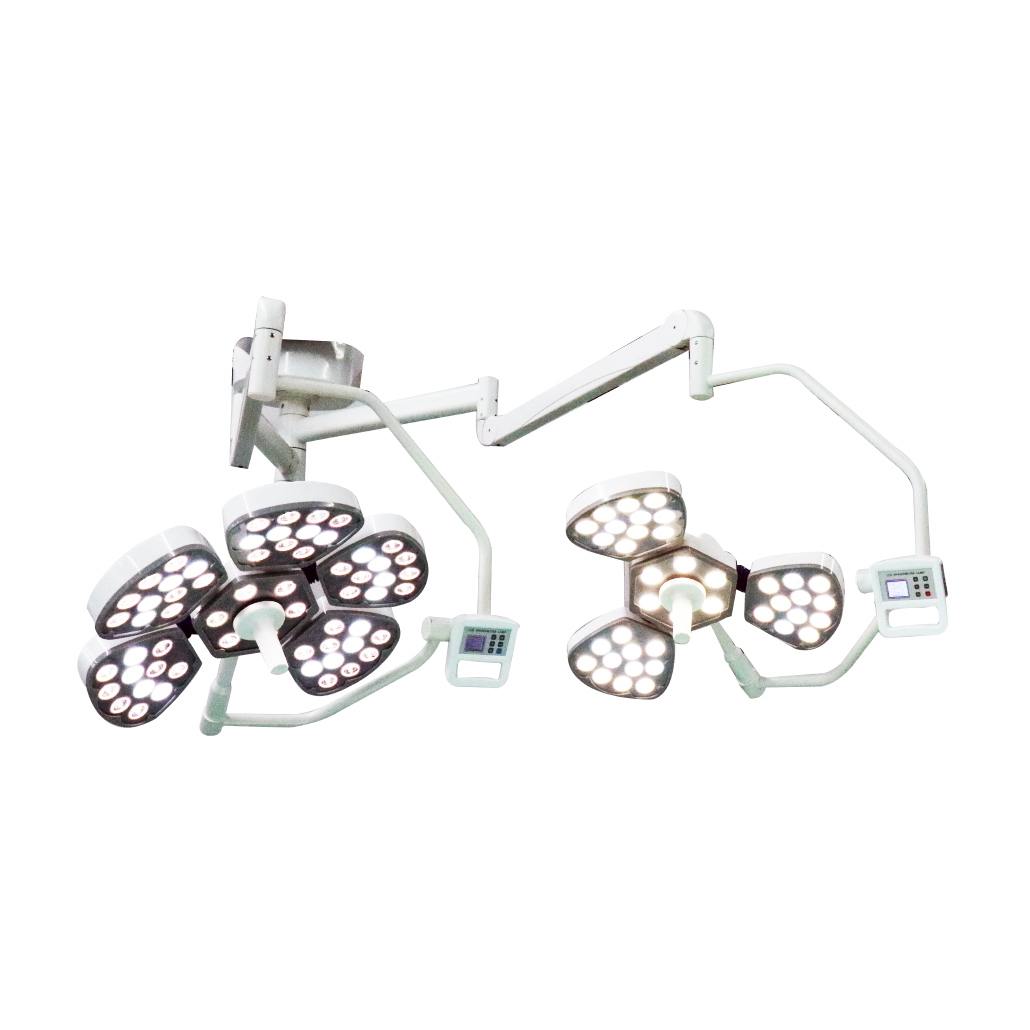 Installation planning should account for structure, clearance, and service routing before the light is mounted.
Plan the electrical supply, controls, and protective measures
The electrical requirements for an operating lamp are model-specific. Confirm voltage, frequency, circuit capacity, earthing or grounding provisions, isolation arrangements where applicable, and the location of accessible protective devices from the current installation manual and local electrical code. If the room uses emergency or essential power, the facility should decide—through its approved electrical design—whether and how the operating lamp is supplied during a normal-power interruption.
Coordinate wall controls, touch panels, cameras, integration interfaces, and cable routes before installation. Cables should be routed and protected exactly as specified so the suspension can move freely without pinching, abrasion, or strain. Any connection to other operating-room systems should be tested as part of commissioning, not assumed to work because the connectors fit.
Use product standards as a verification framework
For the light itself, IEC 60601-2-41:2021 addresses particular requirements for the basic safety and essential performance of surgical luminaires and luminaires for diagnosis. That reference does not replace local design approvals or the manufacturer’s manual, but it helps explain why an operating lamp must be evaluated as medical electrical equipment rather than ordinary architectural lighting.
Ask the supplier for the applicable declarations, instructions, and test information for the specific LED surgical light. Then ask the hospital’s responsible engineering and compliance teams which local regulations, electrical rules, and infection-control requirements apply to the room. Requirements can differ between a new operating theatre, an ambulatory procedure room, and a refurbishment project.
Design for illumination quality and obstruction control
Installation geometry affects surgical illumination. The light must reach the intended field across normal table positions while allowing the team to adjust it during a procedure. Review the model’s stated light-field diameter, working distance, color-rendering information, depth of illumination, and shadow-management characteristics against the clinical use case. Do not treat one headline lux value as a complete answer.
During planning, assess whether the shadowless operating light can maintain useful illumination when clinicians’ heads or hands enter the line of light. Also check whether its handles, sterilizable components, and controls remain accessible. In a crowded room, a theoretically capable operating lamp may underperform if its arm cannot move through the intended range or if the head conflicts with another ceiling system.
Include infection control, cleaning, and service access
Installation choices should support cleaning and inspection. Specify approved surfaces, sealing details around the mounting point, and access provisions consistent with the room’s infection-control plan and the manufacturer’s instructions. Protect manuals, installation records, serial numbers, and commissioning evidence so future technicians can identify the correct service information.
Operating lamp maintenance should be planned before handover. The facility should define who checks movement, alignment, handles, illumination controls, emergency behavior where applicable, and visible cable or cover condition. The exact frequency should follow the manufacturer’s maintenance schedule and hospital policy. Routine cleaning and a visual function check are not substitutes for scheduled preventive maintenance or repairs by qualified personnel.
Commission the installation before clinical use
Do not regard physical mounting as the end of the project. Commissioning should confirm that the operating lamp is securely installed, balanced, moves through its permitted range, holds position, and does not collide with surrounding equipment. Verify electrical operation, controls, intensity adjustment, and any integration functions. The team should also observe the operating lamp over the intended table positions, with the room arranged as it will be used.
A practical handover file normally includes the approved installation record, model and serial information, manufacturer instructions, electrical test records where required, acceptance checklist, training record, and the initial operating lamp maintenance plan. If a condition is unresolved—such as a ceiling conflict, uncertain power arrangement, or restricted arm travel—record it and close it before clinical release.
Pre-installation checklist
- Confirm the clinical procedures, table positions, and required surgical illumination coverage.
- Obtain the exact mounting, clearance, and utility requirements for the selected operating lamp.
- Verify structural support, finished ceiling height, and overhead-service conflicts.
- Confirm power, protective measures, controls, and any emergency-power design with qualified local professionals.
- Review cleaning, sterile-handle, and service-access needs for the LED surgical light.
- Complete documented commissioning, user orientation, and an operating lamp maintenance schedule before clinical use.
Conclusion
A successful operating lamp installation brings clinical workflow, structural support, electrical design, infection-control needs, and service planning together before the first fixings are made. Use the selected model’s current manual as the technical baseline, verify local requirements with the responsible professionals, and make commissioning a formal release step. That approach gives the surgical team a more reliable operating lamp while keeping future inspection and maintenance manageable.

 Hot News

