 EN


What Is an Infant Incubator and How Does It Support Newborn Care?
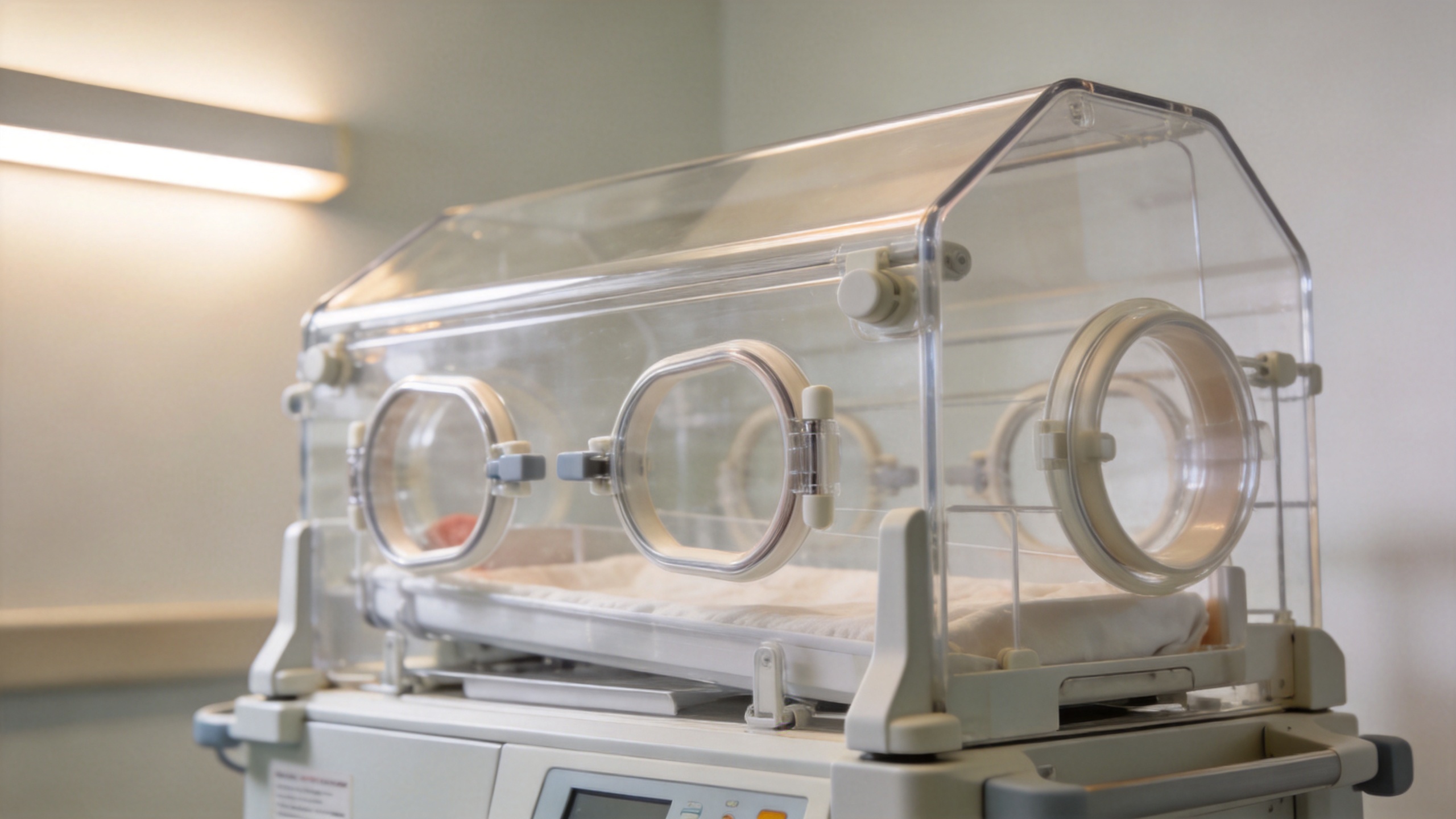
An infant incubator is an enclosed clinical care system that helps a newborn maintain a controlled microenvironment while the care team observes, assesses, and provides care for the baby. It is often used in neonatal settings for premature, low-birth-weight, or medically unstable infants whose temperature control and daily care need close attention. The enclosure is not a substitute for clinical judgment; it is one part of a coordinated care plan.
Families may first notice the transparent enclosure. For clinicians and equipment teams, the more useful view is that it is a managed care environment. A neonatal incubator may support temperature regulation, controlled humidity in configurations designed for that purpose, access through hand ports, and visibility for observation. The clinical team selects settings and care methods according to the infant's condition, local protocol, and the device instructions for use.
Why newborns may need an infant incubator
Newborns lose heat more readily than older children and adults. That challenge can be greater for babies born early, babies with low body weight, or infants recovering from illness or procedures. An infant incubator supports a thermoneutral care environment so the baby does not need to use as much energy to respond to changing room conditions. The aim is balanced thermal care: cold stress and excess heat both require attention.
In a neonatal intensive care setting, an incubator may be chosen when a baby needs an enclosed environment between assessments and routine care. The transparent walls make it possible to observe the infant while reducing direct exposure to room air. Depending on the clinical situation and the specific neonatal intensive care equipment available, the care team may also coordinate respiratory support, monitoring, nutrition, infection-control procedures, and family-centered care around the bed space.
How an infant incubator supports thermal care
The core task of an infant incubator is controlled thermal support. A heater, airflow system, sensors, and control system work together to maintain the chosen environmental conditions. Many systems can operate in air-temperature or skin-temperature control modes. In servo control, the equipment adjusts heat output in response to a temperature signal from a skin probe. That function supports consistency, but it does not make observation optional.
Probe placement, skin condition, the infant's position, open access panels, linens, procedures, and room conditions can all affect thermal management. Staff therefore check the baby and the equipment according to their protocol rather than relying only on a screen value. More accurately, an infant incubator supports the care team's thermal plan; it does not independently decide what is appropriate for an individual newborn.
What else an enclosed neonatal incubator can help manage
Thermal stability is central, yet a neonatal incubator may also help create a calmer and more controlled care space. Depending on the model and clinical configuration, teams may consider humidity management, access-port design, mattress adjustment, alarms, visibility, and compatibility with the surrounding care workflow. These features should be evaluated as linked requirements, not as a simple feature-count exercise.
- Observation: Clear enclosure panels allow visual checks while the infant remains in the managed environment.
- Access: Hand ports and doors support routine care, although every opening changes the enclosure conditions.
- Workflow: Alarm behavior, controls, cleaning steps, and space around the unit influence how an infant incubator fits the NICU.
- Continuity of care: The unit must work alongside monitoring, respiratory devices, and routine nursing tasks without obstructing access.
That is why newborn care equipment should be evaluated against the actual care pathway. Ask what happens during admission, routine assessments, procedures, transport, cleaning, and handover—not only what appears on a specification sheet.
Infant incubator vs. radiant warmer
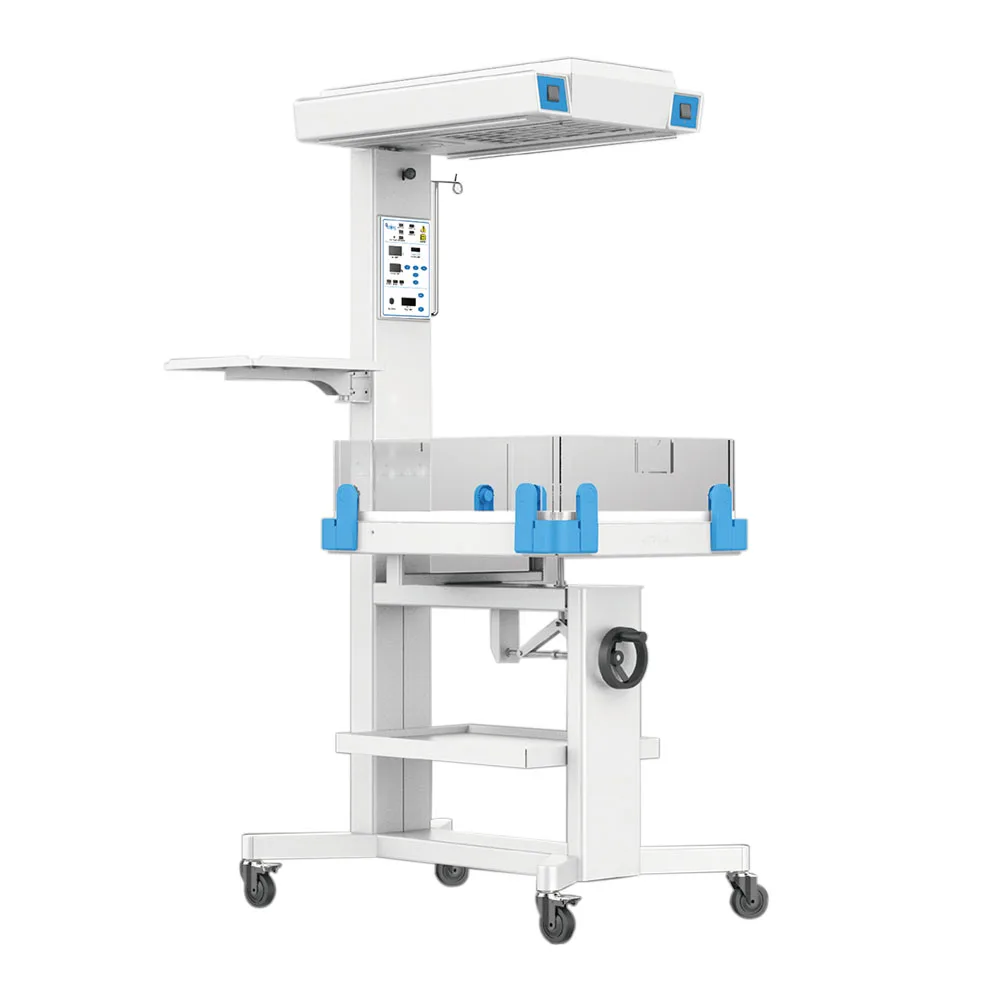
An infant incubator and a radiant warmer both contribute to infant thermal support, but they serve different workflow needs. An incubator uses an enclosed chamber, which can be useful when maintaining a controlled microenvironment is the priority. A radiant warmer is open, giving the team immediate access during resuscitation, procedures, or frequent interventions. The open design may change evaporative and convective heat loss, so it is not simply an interchangeable version of an incubator.
The choice depends on the baby's condition and the planned care activities. A baby needing frequent hands-on intervention may require open access at a particular point in care, while another may benefit from the enclosure of an infant incubator between interventions. Hybrid systems may support transitions between these needs. The clinical team determines the care approach; equipment planning should support that decision rather than attempt to replace it.
Key considerations when evaluating newborn care equipment
For a hospital, distributor, or project team, evaluating a neonatal incubator begins with requirements clarification. Start with the population served, the level of care, room conditions, staffing workflow, and adjacent devices. Then compare the configuration scope on equal terms.
- Define whether the priority is enclosed care, open access, or a workflow that requires both.
- Confirm the intended temperature-control modes, probes, alarms, and user training requirements.
- Review cleaning access, consumables, maintenance responsibilities, and service documentation.
- Check dimensions, power requirements, movement pathways, and compatibility with the planned NICU layout.
- Agree on acceptance criteria and the records needed before installation and handover.
A useful question is: can the team explain how this infant incubator will support its normal care routine, not just how many functions it offers? That question turns technical terms into an implementable neonatal intensive care equipment plan.
Important care boundaries
This article explains the general role of an infant incubator. It is not clinical guidance for a specific newborn and does not replace local policies, trained neonatal professionals, manufacturer instructions, or applicable regulatory requirements. Settings, monitoring methods, and the choice between a neonatal incubator and other infant thermal support approaches must be made by qualified care teams for the individual patient.
Conclusion
An infant incubator is a controlled enclosure used to support newborn thermal care, observation, and an organized care environment. Its value comes from how it fits the infant's needs and the care team's workflow. When assessing newborn care equipment, look beyond isolated features: clarify the care scenario, verify configuration and training needs, and plan for maintenance, validation, and daily use.
 Hot News

