 EN


What Questions Should Buyers Ask an ECG Machine Supplier?
Buying an ECG Machine is not just a matter of comparing a screen, a printer, or a quoted price. A useful purchase conversation connects the device to the examination workflow, the users who will operate it, the records that must be produced, and the support available after delivery. For a hospital, clinic, distributor, or project buyer, the strongest supplier is usually the one that can answer specific questions with configuration-level documents rather than broad claims.
This guide treats an ECG Machine quotation as the start of a verification process. It is a procurement framework, not clinical, engineering, or local regulatory advice. The exact answers will depend on the intended use, target market, facility workflow, and professional review requirements.
Start with the job the ECG Machine must perform
Before discussing models, ask the supplier to restate your use case in writing. Will the ECG Machine be used for routine resting recordings, bedside rounds, outpatient examinations, screening, or a mobile service? Who prepares the patient, acquires the trace, reviews the output, and archives it? Those details determine whether a feature is genuinely useful or simply attractive on a specification sheet.
For a 12 lead ECG machine, ask how the supplied configuration captures, displays, prints, exports, and labels the requested lead set. Do not assume that a phrase such as “12 lead” describes every workflow in the same way. Ask for the applicable intended-use statement, user documentation, sample output, accessories list, and a clear explanation of what is standard versus optional.
- Which care setting and user roles was this ECG Machine configuration designed to support?
- What patient identifiers, acquisition steps, printouts, and electronic outputs can it produce?
- Which functions require additional software, accessories, licenses, or local setup?
- Can the supplier demonstrate the quoted ECG Machine using a workflow similar to ours?
Ask for a complete configuration, not a headline specification
A quote for an ECG Machine is comparable only when its scope is comparable. Ask the supplier for a line-by-line configuration sheet: the main unit, patient cable, lead wires, electrodes or adapters where applicable, paper or print options, battery, trolley or carry case, manuals, software, and any data-transfer components. This reduces a common problem in cardiac diagnostic equipment procurement: two offers appear similar until a buyer learns that key operating items are excluded.
Ask the supplier to identify consumables and replaceable accessories separately. Can the electrocardiograph use the consumables your team expects? Are cable sets, clips, batteries, and paper available after delivery? More accurately, the issue is not whether an accessory exists; it is whether the offered ECG Machine and its accessories are included, documented, and supportable in your project.
Check how the device fits the reporting and data workflow
Many buyers focus on waveform display but leave the reporting path vague. Ask where the record goes after acquisition: printed output, local storage, removable media, a networked destination, or another defined route. If integration is important, ask what interfaces, file formats, software versions, network prerequisites, and responsibility boundaries apply. Compatibility should be demonstrated or documented for the proposed ECG Machine; it should not be inferred from a general statement.
FDA diagnostic ECG guidance, for example, describes intended-use information that may specify functions such as acquiring and recording 12-channel electrocardiographic waveforms. That is a useful prompt for buyers: request documentation for the functions that matter to your workflow, not a generic assurance that the device is “advanced.” Automated measurements or interpretations may be available on some systems, but they do not remove the need for appropriate professional review.
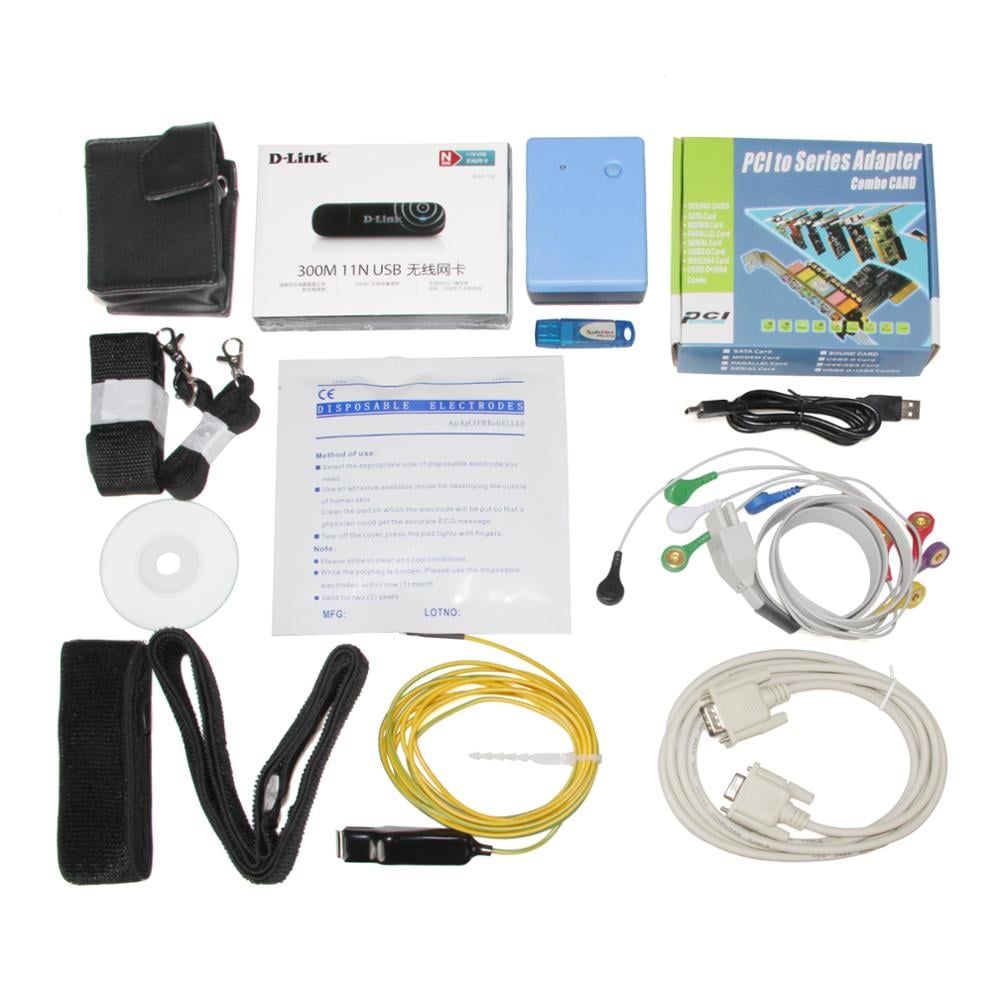 Illustrative AI-generated ECG equipment scene: use a checklist to compare the quoted configuration, documents, and support scope.
Request evidence for safety, performance, and market documentation
Questions about documentation are especially important when purchasing a heart monitoring device across markets. Ask which documents the supplier can provide for the specific ECG Machine configuration and target destination, who issued them, what product variants they cover, and what still needs local confirmation. Avoid treating a logo, a catalog statement, or a document for another model as proof for the offered system.
IEC 60601-2-25:2011 addresses the basic safety and essential performance of electrocardiographs within its stated scope. That does not mean every buyer needs the same document set or that the standard applies identically in every market. Instead, ask the supplier which edition and scope are relevant, whether the quoted electrocardiograph is covered, and what traceable test or conformity documentation can be shared for review.
- What is the documented intended use of this ECG Machine?
- Which documents apply to this model, software version, accessories, and destination market?
- Can the supplier distinguish confirmed evidence from information that requires local verification?
- What acceptance records can be reviewed before final handover?
Make service, training, and maintenance questions contractual
An ECG Machine can look straightforward at delivery yet still create friction if the team lacks a defined support route. Ask who handles installation guidance, user training, troubleshooting, spare parts, warranty claims, and preventive-maintenance questions. If your team expects calibration checks, lead troubleshooting, electrical-safety testing, or a service schedule, ask whether those items are included, available, or outside the supplier’s scope.
Also ask for realistic response channels and escalation steps. A supplier should be able to state what information is needed to diagnose a problem—such as serial number, configuration, error details, and operating context—and what remote or local support can reasonably be provided. Do not reduce this to a yes/no warranty question; the useful answer describes process, exclusions, parts availability, and responsible parties.
Agree on inspection and acceptance before placing the order
Set acceptance criteria while comparing suppliers, not after the ECG Machine arrives. A practical checklist may cover the agreed configuration, visible condition, included accessories, basic startup, specified output, user documentation, training records, and any project-specific demonstration. If a function matters to your team, define how it will be observed and recorded during acceptance.
This approach also improves quote comparison. Ask every supplier to respond to the same question set and identify exceptions. An ECG Machine with a lower initial price may not be the easier option if it leaves critical accessories, documentation, training, or service responsibilities unresolved.
A short supplier-question checklist
- What intended use and workflow does the quoted ECG Machine support?
- What exactly is included in the ECG Machine configuration and what is optional?
- How does the electrocardiograph create, store, print, or export records for our process?
- Which device-specific documents can be supplied for our target market and configuration?
- What training, troubleshooting, maintenance, spare-parts, and warranty path applies?
- What written inspection and acceptance criteria will both sides use?
Turn answers into a defensible buying decision
The right ECG Machine supplier is not necessarily the supplier with the longest feature list. It is the supplier that helps your team define the required configuration, provides evidence at the right level of detail, states limitations plainly, and supports a workable path from quotation to acceptance. Use the answers above to create a shared comparison sheet, then have clinical, procurement, engineering, and compliance stakeholders review the questions that fall within their responsibilities.
 Hot News

