 EN


Autoclave vs Dry Heat Sterilizer: What Are the Differences?
Choosing a sterilizer is not simply a matter of comparing chamber size or purchase price. For reusable medical and dental instruments, the right process must suit the device materials, the manufacturer’s instructions for use (IFU), the intended load, packaging, local policy, and the way the reprocessing area actually operates. The central choice is often between a steam autoclave and a dry heat unit. Both can be valid sterilization technologies, but they work differently and impose different demands on instruments and workflow.
From a hospital procurement perspective, a useful comparison starts with the process rather than the specification sheet. Ask which instruments need to be processed, how quickly they must return to service, who will load and release them, and how each cycle will be monitored and documented. That approach turns a broad sterilizer decision into a checkable set of requirements.
Autoclave vs Dry Heat Sterilizer at a Glance
| Decision factor | Steam autoclave | Dry heat sterilizer |
|---|---|---|
| Sterilizing medium | Saturated steam under controlled conditions | Heated air with no added moisture |
| Typical exposure context | Common steam temperatures include 121°C and 132°C; validated times vary by cycle, load, packaging, and equipment | Common hot-air relationships include 170°C for 60 minutes or 160°C for 120 minutes; validated times vary by equipment and load |
| Often considered for | Heat- and moisture-tolerant reusable instruments and packs | Items for which moisture is unsuitable, subject to IFU and validated processing instructions |
| Workflow consideration | May offer shorter exposure phases, but drying, cooling, loading, and monitoring remain part of the total turnaround | Usually requires longer high-temperature exposure and planned capacity |
| Selection boundary | Do not process materials that the IFU excludes from steam | Do not assume every heat-tolerant item is appropriate for dry heat |
The temperature-and-time figures above are context, not a universal recipe. The validated cycle selected for a particular sterilizer must follow its manual, the instrument IFU, packaging instructions, and the facility’s quality system. In the comparison file, record the approved load, the selected sterilizer cycle, and the evidence used to release it.
How a Steam Sterilizer (Autoclave) Works
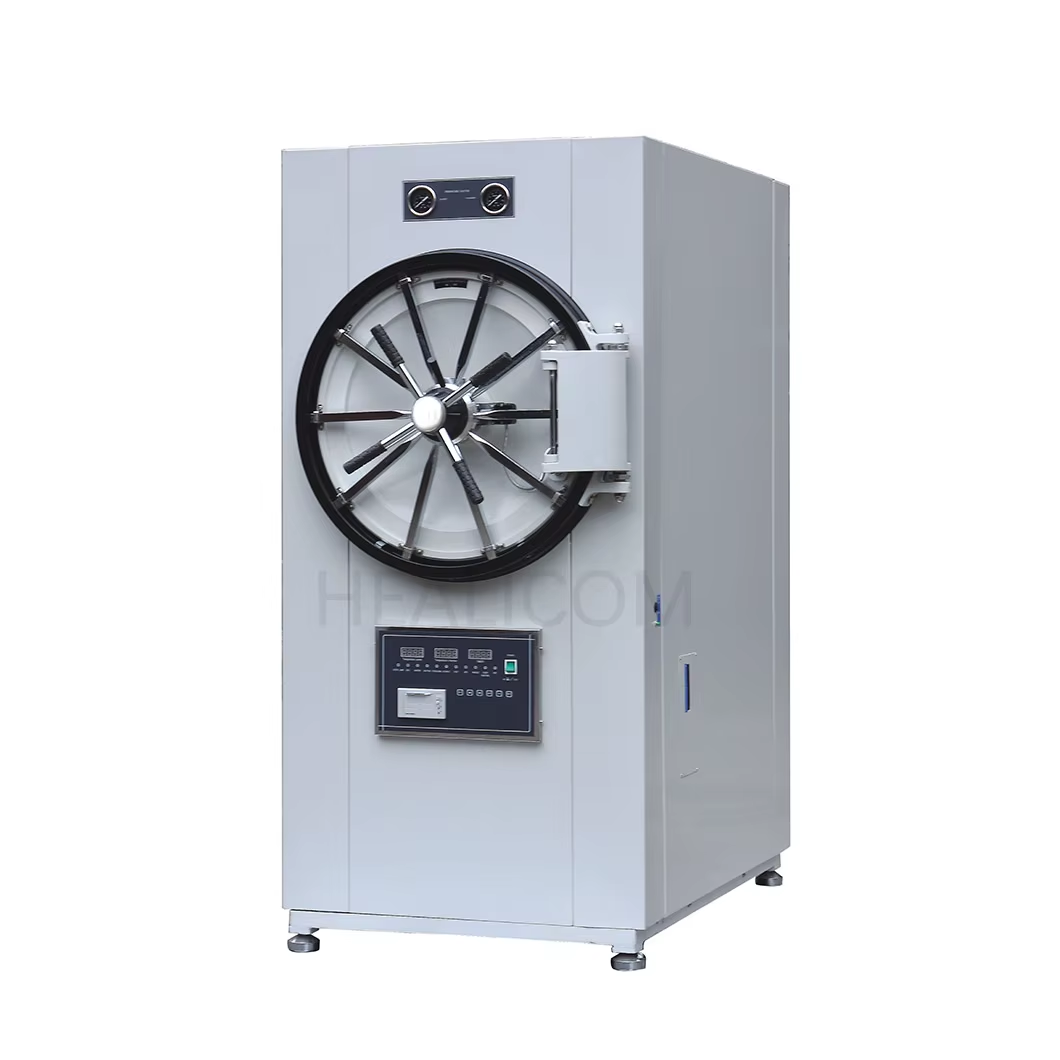
A steam autoclave uses saturated steam, temperature, pressure, and time to expose every reachable surface of an appropriately prepared load. Pressure itself is not the agent that kills microorganisms; it enables steam to reach the required temperature. Good steam penetration and air removal matter, especially for wrapped, porous, or complex loads.
CDC guidance identifies 121°C and 132°C as common steam-sterilizing temperatures. It also illustrates why cycle labels cannot be compared casually: a gravity-displacement cycle for wrapped supplies can have a much longer exposure phase than a prevacuum cycle. The complete release decision still includes cleaning, inspection, correct packaging, loading, cycle monitoring, drying/cooling where applicable, and record review.
Steam sterilizers are often a practical fit where instruments are compatible with both heat and moisture and where throughput matters. However, steam is not automatically the better option for every item. Corrosion risk, trapped water, delicate components, adhesives, optics, or manufacturer restrictions can change the answer. The proposed sterilizer should be assessed with the entire approved load, not with one favorable instrument alone.
How a Dry Heat Sterilizer Works
A dry heat unit transfers heat through hot air rather than steam. Because dry air transfers heat less efficiently than saturated steam, the exposure temperatures and times are generally higher and longer. CDC examples for hot-air sterilization include 170°C for 60 minutes, 160°C for 120 minutes, and 150°C for 150 minutes.
That longer cycle profile is the defining planning issue for a dry heat sterilizer dental workflow or other reusable-instrument setting. It can be useful when the approved load is moisture-sensitive, but the team must account for warm-up, exposure, cooling, capacity, and the effect of high heat on instrument finishes and accessories. Forced-air and static-air designs may also behave differently, so settings should not be transferred from one sterilizer unit to another without validation. A dry heat sterilizer dental purchase should therefore include enough capacity for the longest approved workload.
The Differences That Matter in Daily Use
1. Instrument compatibility comes first
Start with the instrument manufacturer’s written reprocessing instructions. A metal instrument may tolerate steam, dry heat, both, or neither in a particular configuration. Lumens, hinges, coatings, seals, and accessory materials can be decisive. More accurately, the question is not “Which sterilizer wins in the abstract?” but “Which validated method is permitted for this load?” This check prevents a dental autoclave sterilizer from being selected for instruments whose IFU requires another method.
2. Turnaround time is more than exposure time
An autoclave can have a shorter exposure stage than dry heat, but teams should compare the full process: pre-cleaning, inspection, packaging, loading, the cycle, drying or cooling, documentation, and release. A short listed cycle does not justify skipping those steps. For a busy dental or outpatient setting, that full-flow view is more useful than focusing on one number.
3. Moisture and heat affect materials differently
Steam introduces moisture, which may be unsuitable for some approved applications. Dry heat avoids added moisture but subjects items to higher temperatures for longer. Before buying either type of sterilizer, compare the IFUs for the instruments, trays, packaging, indicators, and accessories that will be processed together.
4. Monitoring and traceability are part of the equipment decision
Both methods need a defined monitoring program. The team should clarify how physical cycle parameters, chemical indicators, biological indicators, load records, maintenance, and corrective action will be managed. A purchase comparison that omits these responsibilities is incomplete, even if the chamber and cycle options look attractive. Monitoring expectations should follow the relevant policy for that sterilizer and the approved processing method.
When Is an Autoclave the Better Fit?
A steam autoclave is often the more workable choice when the routine load is made of heat- and moisture-compatible reusable instruments, the facility needs predictable processing capacity, and approved cycles align with the daily schedule. It may also be the easier option when wrapped packs or porous loads are common, provided the equipment, packaging, loading configuration, and validation support that use. Teams comparing steam sterilizers should document those conditions before treating cycle speed as a differentiator.
For a larger department, an industrial autoclave may be evaluated as part of an overall reprocessing workflow, not as an isolated machine. Confirm utilities, installation space, water requirements, drainage, ventilation where relevant, service support, training, documentation features, and the staff role responsible for release. These are procurement questions, not claims about a specific model.
When Is Dry Heat the Better Fit?
Dry heat may be appropriate where the IFU permits it and where avoiding moisture is a real requirement. Examples can include certain compatible metal instruments, oils, or powders, but local policies and validated instructions define the actual load. It can also be a considered choice for a limited, predictable set of instruments where longer high-temperature cycles do not disrupt service. For a dry heat sterilizer dental process, verify the instrument mix and daily demand before installation.
Do not select a dry heat unit merely because it appears simpler. The higher-temperature, longer-duration profile can limit what is processed and how quickly items return to use. A practical plan should include load segregation, cycle scheduling, cooling time, indicator use, and a contingency for demand peaks.
A Five-Step Selection Checklist
- Map the load. List instruments, accessories, packaging, and expected daily volumes. Record each item’s IFU-approved sterilization methods.
- Map the workflow. Include cleaning, inspection, packaging, loading, cycle time, cooling, documentation, and release—not just the chamber cycle.
- Compare validated capabilities. Ask suppliers how the proposed sterilizer supports the approved loads, monitoring approach, utilities, and space constraints. For steam sterilizers and dry-heat units alike, request evidence specific to the intended configuration.
- Plan quality controls. Define responsibility for training, preventive maintenance, cycle records, indicator review, and corrective action.
- Verify before implementation. Confirm the final configuration with instrument IFUs, the equipment manual, infection-prevention leadership, and applicable regulations or standards.
Final Takeaway
An autoclave and a dry heat sterilizer are not interchangeable versions of the same solution. Steam usually provides a different heat-transfer environment and may suit many compatible reusable loads, while dry heat can be valuable for approved moisture-sensitive applications but often needs longer, hotter processing. A suitable sterilizer matches the documented load, the validated cycle, the facility workflow, and the monitoring plan. A dental autoclave sterilizer or dry-heat unit should be approved only after these checks are complete. If those conditions are not aligned, a lower purchase price or a faster-looking cycle will not solve the underlying reprocessing problem.

 Hot News

