 EN


How to Choose a Ceiling-Mounted or Mobile Operating Lamp
Choosing an operating lamp is not simply a question of how bright the light looks on a specification sheet. From a medical-equipment selection perspective, the better starting point is the clinical task, the room layout, and the way staff need to position people and equipment. A ceiling-mounted operating lamp and a mobile operating lamp can both be appropriate, but they solve different installation and workflow problems.
Before comparing options, map the intended procedures, table positions, staff circulation, other ceiling services, and the rooms that may share the light. This prevents a common purchasing error: selecting an operating lamp for its headline output and discovering later that its reach, mounting position, or cleaning routine does not fit the room.
Start with the procedure and room, not the mounting label
A ceiling-mounted operating lamp often suits a room with a stable procedure location, enough structural support above the ceiling, and a predictable equipment layout. Its arm system can keep the floor clear and give the team a consistent working envelope around the table. It may be a sensible choice for dedicated operating rooms or procedure suites where the light will be used frequently in the same location.
A mobile operating lamp is often more useful where rooms are shared, procedures move between spaces, or a facility cannot alter the ceiling structure. Its value is flexibility, subject to the same workflow and safety verification. The team should still verify the base footprint, caster behavior, storage location, cable routing, and whether it can approach the target area without interfering with personnel or other equipment.
Put differently, the question is not which format is best. It is whether the operating lamp can be positioned, cleaned, maintained, and safely used in the actual workflow. That condition matters more than a long feature list.
Compare ceiling-mounted and mobile options on the same decision matrix
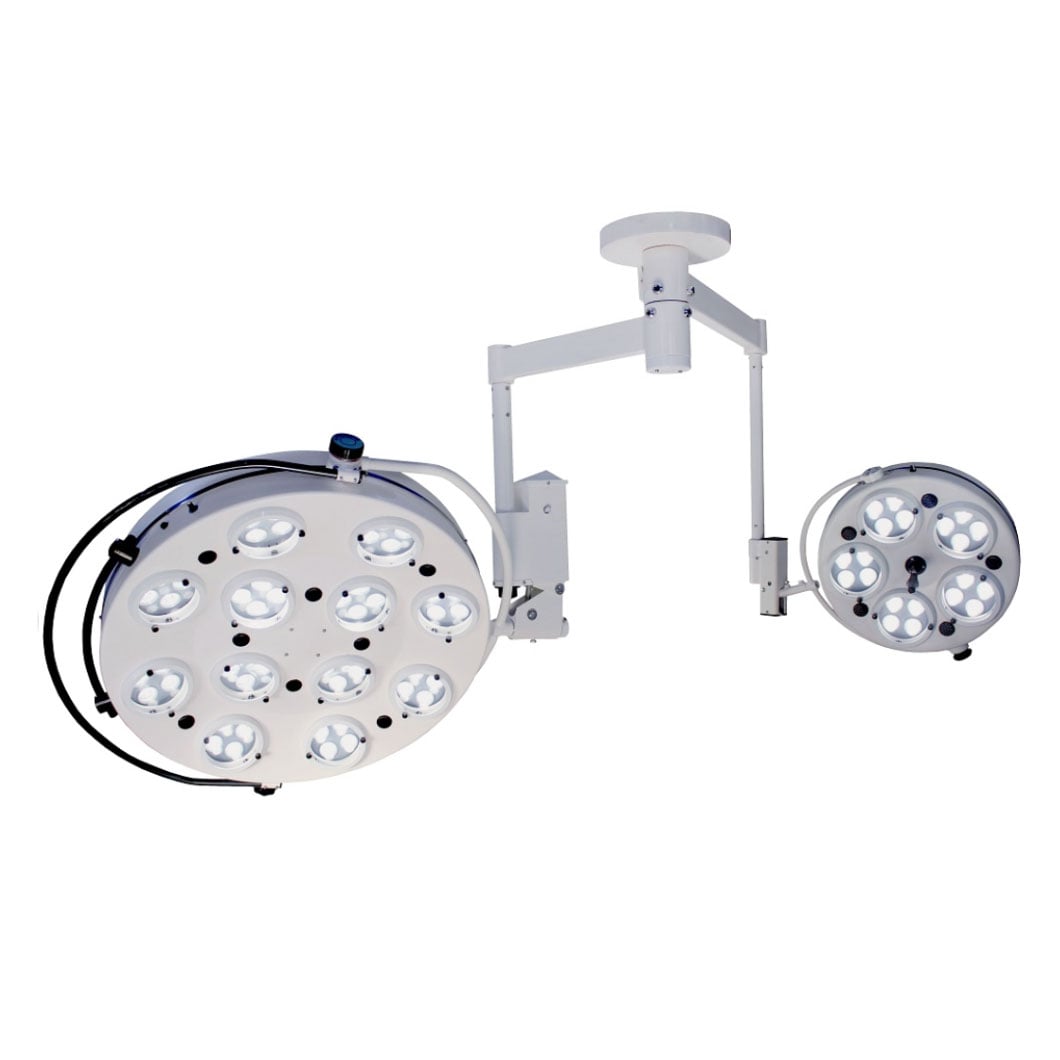 A ceiling-mounted operating lamp can preserve floor clearance when the room and structure support a fixed installation.
| Decision factor | Ceiling-mounted operating lamp | Mobile operating lamp |
|---|---|---|
| Room fit | Best evaluated for a fixed procedure zone and verified overhead structure. | Evaluate for shared rooms, movement paths, storage, and base clearance. |
| Installation impact | Requires planned medical lighting installation, load review, routing, and acceptance testing. | Requires power, charging or cable management, and a safe parking location. |
| Workflow flexibility | Provides a repeatable position within its installed reach. | Can move between eligible spaces but needs a practical setup routine each time. |
| Floor environment | Preserves floor space around the procedure area. | Adds a base and may affect circulation if the room is crowded. |
| Service planning | Coordinate access, arm movement, and facility maintenance with the installed system. | Check wheels, battery or cable condition, cleaning, and storage inspection routines. |
For a ceiling mounted operating lamp, ask the facility team to confirm the mounting substrate, reinforcement approach, ceiling height, collision zones, electrical route, and relationship to pendants, booms, HVAC diffusers, and imaging equipment. Do not assume that a finished ceiling can accept the required load. The supplier’s approved installation documentation and the facility’s structural review should govern the decision.
For a mobile operating lamp, conduct a short route test in the narrowest doorway and busiest setup. Can the unit move into position without crossing a sterile boundary? Can the base sit where it does not conflict with pedals, stools, suction, or staff? A mobile unit that is easy to roll in an empty showroom can be awkward in a fully prepared room.
Evaluate light quality as a set of usable characteristics
Brightness matters, but it is only one part of operating-lamp performance. Ask an operating lamp supplier to document the intended measurement conditions and explain the light-field diameter, illumination pattern, depth of illumination, shadow management, and heat or comfort considerations. A useful evaluation includes demonstrations at the working distance and positions your clinicians actually use.
Surgical light color temperature should also be evaluated with color rendering and user preference rather than treated as a stand-alone promise. IEC 60601-2-41:2021 covers particular requirements for the basic safety and essential performance of surgical luminaires and luminaires for diagnosis. Retrieved standards material identifies adjustable characteristics such as light-field diameter, correlated colour temperature, illuminance level, and operating mode. It also cites a 3,000 K to 6,700 K correlated-colour-temperature range for surgical luminaires. These points are verification prompts, not a substitute for confirming the exact device documentation and local requirements.
During a demonstration, ask the team to change the operating lamp position, introduce realistic head-and-hand obstructions, and view a representative procedure area. Do not only ask whether the lamp has an adjustment. Ask how the adjustment is verified at the target distance and whether staff can use it without disrupting the workflow.
Plan medical lighting installation before placing an order
For fixed equipment, medical lighting installation should be a coordinated project rather than a final delivery task. The pre-installation review should cover the approved mounting method, electrical isolation and controls as applicable, arm reach, service clearances, ceiling interfaces, commissioning responsibilities, and site acceptance criteria. Confirm what drawings, load information, and handover documents the supplier will provide.
For a mobile operating lamp, the same discipline applies in a different form: identify the nominated parking location, electrical outlet or charging process, cleaning ownership, preventive-maintenance routine, and a check that the unit remains available when needed. If the light will serve more than one department, define who checks it between moves.
Use a supplier comparison checklist
- Describe the procedure types, working distances, room dimensions, and expected frequency of use.
- For each operating lamp, request the current technical documentation, applicable compliance evidence, and installation requirements.
- For a ceiling-mounted option, obtain a documented site and structural review before confirming the configuration.
- For a mobile option, observe a real route, setup, positioning, cleaning, and storage trial.
- Ask the operating lamp supplier how illumination, light-field diameter, shadow behavior, controls, and surgical light color temperature are specified and checked.
- Define acceptance tests, training, maintenance responsibilities, spare-part support, and escalation contacts before handover.
Make the final choice with a room-specific verification plan
A ceiling-mounted operating lamp is often the stronger fit when the procedure location is fixed and the facility can support a properly planned installation. A mobile operating lamp can be the practical choice when room flexibility and deployment speed matter, provided the team has tested the route, base placement, and storage process. In either case, compare the configuration against a written room-specific checklist.
The most reliable buying decision comes after the facility team, clinical users, and operating lamp supplier agree on what will be verified before acceptance. That approach shifts the discussion from “which lamp has more features?” to “which operating lamp supports this procedure, this room, and this maintenance plan?”
 Hot News

