 EN


What Features Should Buyers Compare in LED Operating Lamps?
When a hospital team compares an operating lamp, the useful question is not simply which head has the highest published lux figure. A surgical operating light has to fit the procedures, room layout, users, cleaning routine, and acceptance process around it. For procurement teams, that means comparing each proposed operating lamp on the same declared configuration before treating price as a meaningful difference.
This buyer guide treats an LED surgical lamp as part of a working system. It does not replace clinical, engineering, infection-control, or local regulatory review. It does provide a practical way to ask suppliers for comparable evidence and to turn an operating room lighting shortlist into a defensible decision.
Start with the surgical task, not the brochure headline
Before comparing an operating lamp, define the procedures, expected working distances, field sizes, team positions, and room constraints. A light suitable for a minor-procedure room may not offer the same reach, field management, or suspension options needed in a full operating theatre. Conversely, a larger system may add complexity that a limited procedure mix does not require.
Ask surgeons, theatre nurses, biomedical engineering, facilities, and infection-control colleagues to describe the actual lighting task. Where does the operating lamp need to reach? Which positions are common? How often do people or instruments block the light path? Is the goal a single head, a dual-head arrangement, or a combination with cameras or other ceiling-mounted equipment? These questions make a comparison more useful than a feature count.
Compare illumination as a set of related measurements
Illuminance is important, but it is only one part of an operating lamp evaluation. Request the test conditions and the configuration behind every published figure. Compare central illuminance, field diameter, field adjustment range, uniformity, and depth of illumination at the stated reference distance. A high maximum value does not automatically mean the light field will suit every procedure.
For a surgical operating light, shadow management deserves equal attention. Ask how the supplier reports shadow dilution and whether documentation describes performance when heads, shoulders, or instruments obstruct the beam. If the clinical team works in deeper cavities, ask what evidence addresses the relevant use condition rather than assuming a surface-field result answers every question.
Buyers should also compare color rendering, correlated color temperature settings, and the way a model controls light intensity. IEC 60601-2-41:2021 covers basic safety and essential performance for surgical luminaires and luminaires for diagnosis. It is a useful prompt for a document request, not a shortcut to assume that an unspecified LED surgical lamp meets a particular market requirement. Request applicable declarations, test reports, and the exact model and options covered.
Check optical comfort and control at the point of use
An operating lamp is adjusted repeatedly during real work, so the control method matters. Compare sterile and non-sterile control options, handle design, touchless functions where offered, display readability, and the number of steps needed to change intensity, field size, or color temperature. More features are not automatically better; the key question is whether the intended team can use them reliably within its workflow.
Ask for a live demonstration or structured evaluation against the room’s likely setup. Observe whether the surgical operating light remains stable after positioning, whether the beam follows the expected area, and whether the controls can be reached without disrupting the team. Record these observations in the same matrix used for specifications so a smooth demonstration does not outweigh missing evidence elsewhere.
Put suspension, room interfaces, and ergonomics on the matrix
For ceiling-mounted medical lighting equipment, the light head is only part of the purchase. Compare suspension-arm reach, rotation, vertical travel, collision zones, ceiling load requirements, mounting interface, power requirements, and compatibility with other ceiling services. These points may need confirmation from facilities and engineering teams before a preferred model is named.
Evaluate positioning with the operating table, anesthesia equipment, monitors, booms, and staff movement in mind. An LED surgical lamp that performs well on a showroom stand can still create avoidable clashes in a constrained theatre. Include a room drawing or site-survey record in the supplier request, then state which interface items remain to be verified.
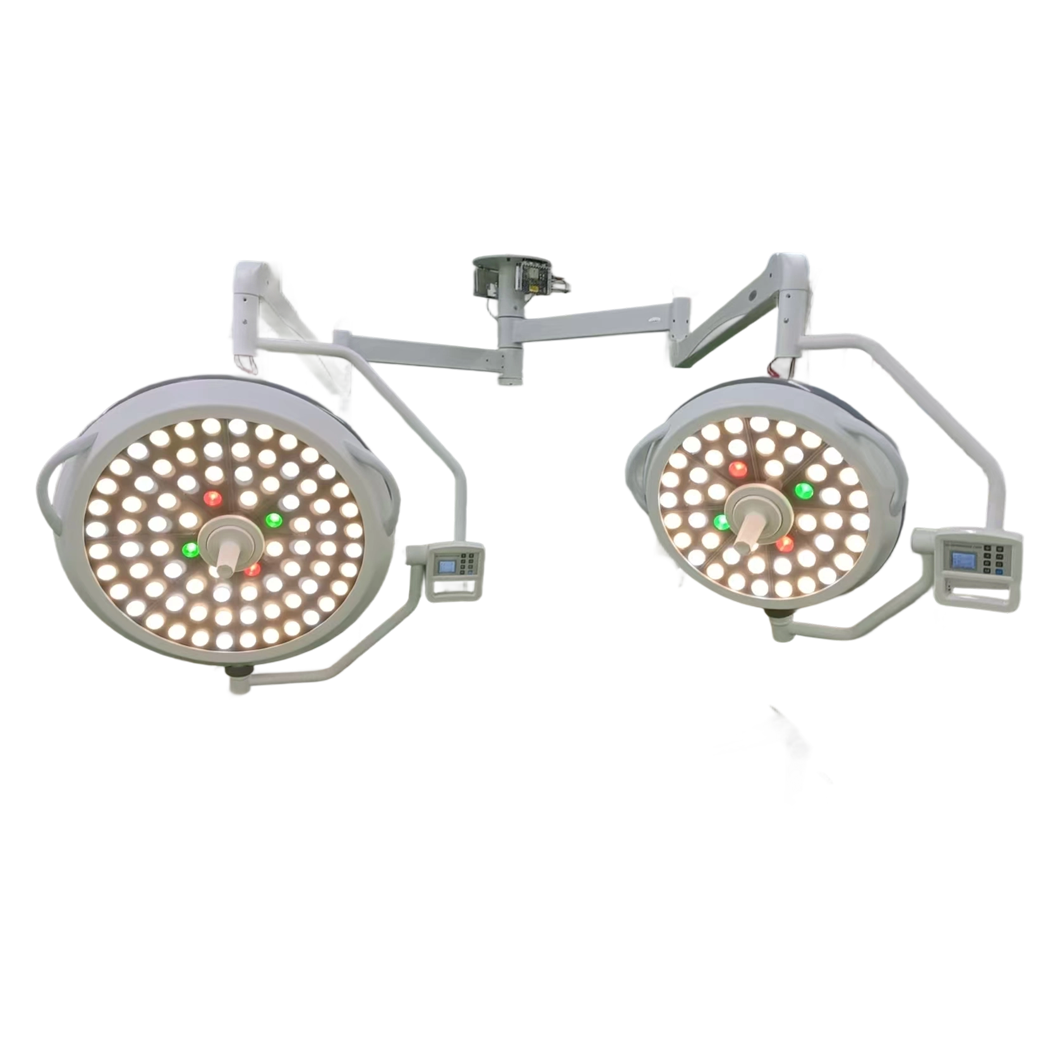 A ceiling-mounted operating lamp should be assessed together with its reach, room interfaces, and positioning workflow.
Compare cleaning, maintenance, and serviceability
Operating room lighting is exposed to frequent handling and cleaning. Ask how the operating lamp is intended to be cleaned, which surfaces and handles are removable, whether seams and joints are accessible, and what approved products or methods the manufacturer specifies. Infection-control review should use the supplier’s current instructions rather than a generic claim about cleanability.
Also compare LED module life claims, driver access, preventive-maintenance requirements, spare-parts availability, response arrangements, warranty scope, and the training required for routine checks. A lower initial price may not represent lower project effort if an operating lamp requires more disruptive servicing or has unclear support responsibilities. Request the maintenance schedule and name the party responsible for each task.
Make configurations and quotations genuinely comparable
A fair operating lamp comparison begins with a common scope. List the light-head count, suspension type, control accessories, cameras or integration options, installation inclusions, commissioning, training, documentation, and service coverage. Then mark each item as included, optional, excluded, or to be confirmed. This prevents a low quotation from appearing equivalent to a more complete surgical operating light package.
| Comparison area | What to request | Buyer check |
|---|---|---|
| Light performance | Test conditions, illuminance, field and shadow data | Same reference distance and configuration? |
| Visual quality | Color-rendering and color-temperature documentation | Suitable settings for the planned tasks? |
| Mechanical fit | Arm reach, ceiling and room-interface requirements | Verified against the actual room? |
| Use and cleaning | Controls, instructions for use, cleaning method | Reviewed by users and infection control? |
| Lifecycle support | Maintenance plan, warranty, spare-parts and training scope | Named responsibilities and acceptance criteria? |
Finish with acceptance criteria, not a vague promise
Before award, turn the operating lamp shortlist into an acceptance checklist. It should identify the ordered configuration, required documentation, installation conditions, functional checks, user orientation, handover records, and the people who will sign off. If the project has local regulatory, electrical, or clinical requirements, assign each verification to the appropriate qualified reviewer.
The most useful LED surgical lamp is the one whose documented performance, room fit, controls, cleaning pathway, and support plan match the intended task. By comparing those items on a common scope, buyers can select medical lighting equipment with fewer assumptions and a clearer path from quotation to commissioning.
 Hot News

