 EN


What Capacity Should You Choose for a Hospital Sterilizer?
Choosing a hospital sterilizer is not a matter of buying the biggest chamber the budget can reach. As a procurement team evaluates a medical sterilizer, capacity should mean the number of correctly prepared instrument sets the department can turn around during its busiest operating window. A chamber that looks generous on a specification sheet can still become a bottleneck if trays cannot be loaded in validated patterns, drying holds up release, or staff must wait for one critical set.
The practical question is: How much validated throughput does this sterilizer deliver for our real loads, shifts, and recovery plan? That wording brings sterile processing staff, surgical services, infection prevention, and facilities teams into the same decision. It also prevents a common mistake—treating chamber volume as if it automatically equals usable capacity.
Start with demand, not chamber liters
Before comparing hospital sterilization equipment, document what arrives at decontamination and when it must be available again. Count trays, wrapped sets, rigid containers, basins, and other recurring loads by service line. Then mark the rush periods: first-case preparation, turnover between procedures, and late add-on cases usually matter more than the daily average.
For each representative load, record its footprint, height, weight, packaging method, required cycle, cooling or drying time, and whether it can share a load with other items under local policy and the validated instructions for use. A steam sterilizer may have room physically, yet a particular configuration may not be appropriate for the required cycle or load arrangement. Capacity planning therefore starts with the usable tray pattern, not an empty chamber photograph.
A useful first-pass calculation is:
Required throughput per peak hour = critical sets needed during the peak ÷ the usable turnaround time in hours.
Turnaround time should include loading, the selected cycle, drying, cooling, unloading, documentation, and any hold time in the local process. It is deliberately more conservative than simply dividing a chamber volume by a cycle time. If a department needs six comparable sets ready in a two-hour peak and its validated turnaround is one hour, the process needs capacity for at least three usable set-equivalents per hour—plus a sensible allowance for interruptions and rework.
Translate workload into a real load pattern
Once demand is visible, ask the supplier and the sterile processing team to map the hospital’s typical loads onto each candidate sterilizer. This is where the choice between a compact unit, a medium chamber, or a larger configuration becomes meaningful. The map should show rack positions, shelf spacing, container sizes, and clearance requirements, not just a nominal chamber number.
| Question to test | Why it changes usable capacity |
|---|---|
| How many of our most common sets fit in a validated arrangement? | Instrument sets and packaging consume capacity differently from empty space. |
| Which loads need a different cycle or longer drying time? | A longer cycle can reduce effective hourly output even in a larger sterilizer. |
| Can routine and urgent loads share the same production window? | Critical add-ons can create queues when one unit is occupied. |
| What is the practical unloading and cooling sequence? | Staffing and staging space may limit the flow after the chamber opens. |
CDC guidance highlights that test packs are placed in an otherwise fully loaded chamber at the area least favorable to sterilization. The takeaway for a capacity decision is simple: a full chamber has to be evaluated as a full chamber. Do not assume that every available cubic inch can be used for every load. A qualified team should confirm load configurations and monitoring practices against the current instructions, applicable standards, and local policies.
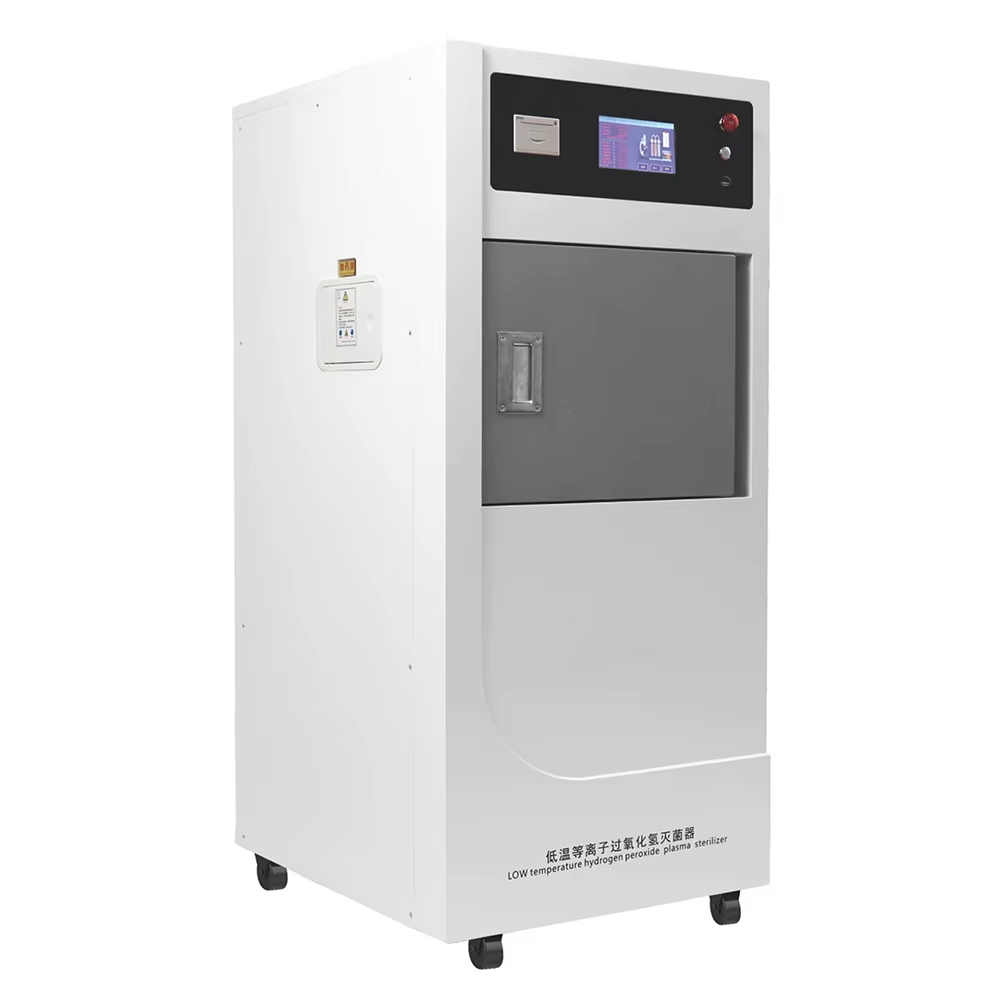
Match the sterilizer to the department’s peak workflow
Hospitals rarely have a single, steady demand curve. An outpatient procedure center may have sharp morning and midday peaks. A surgical department may have variable case mix, urgent trays, or loaner sets that change the load profile. A central sterile department may also serve multiple areas that compete for the same sterilizer. That is why capacity should be tested against the busiest credible window, not an average Tuesday.
For a steam sterilizer, create a short peak-period scenario with actual representative sets. Include at least one difficult configuration, one high-volume routine load, and the urgent load that cannot wait. Then ask whether the candidate keeps enough protected capacity for an unexpected demand spike. If it only works when every cycle starts perfectly and no set is reprocessed, it is probably too tight for the intended workflow.
Also distinguish resilience from excess. Buying the largest possible chamber is not automatically the safest answer. Oversized equipment can add capital cost, utility demand, floor-space pressure, and inefficient small-load operation. The right medical sterilizer gives the department a repeatable buffer without forcing staff to wait until a large chamber is worth filling.
Check the constraints outside the chamber
Capacity can be lost before the sterilizer is installed. Confirm the equipment room dimensions, door swings, cart routes, drainage, steam or electrical service, water quality requirements, ventilation, and access for maintenance. Consider where clean loads will cool and where records will be reviewed. A larger hospital sterilization equipment installation may be impractical if it blocks the work area or cannot be serviced safely.
Staffing deserves the same attention. One operator may manage a moderate workload well during a predictable shift but struggle when decontamination, assembly, loading, release documentation, and transport all converge. Discuss handoffs and training before a final selection. A workable capacity plan is one staff can run consistently, not one that assumes an ideal schedule.
Use validated cycles, not marketing speed claims
Cycle time is only valuable when it is appropriate for the device, packaging, load, and process. CDC search guidance describes typical steam exposure conditions of 132°C to 135°C for 3 to 4 minutes for porous loads and instruments, but that is not a sizing shortcut or a universal cycle prescription. The device instructions for use, the sterilizer instructions, local policies, and qualified sterile processing professionals determine what is valid for each load.
Similarly, medical instrument disinfection is not interchangeable with sterilization. The required level of processing depends on the device’s intended use and applicable guidance. When estimating capacity, classify each item correctly so the hospital does not use a sterilizer forecast to solve the wrong processing requirement.
A practical capacity checklist
- List peak-hour demand by representative set, not only annual procedure volume.
- Measure real tray, container, and packaging dimensions for the recurring loads.
- Calculate validated turnaround from loading through release, including drying and cooling.
- Test candidate rack layouts with the loads that create the most pressure.
- Reserve capacity for urgent cases, reprocessing, preventive maintenance, and downtime.
- Verify utilities, room flow, operator workload, service access, and training requirements.
- Ask stakeholders to approve the assumptions before selecting a sterilizer capacity.
Make the final selection defensible
A defensible sterilizer choice is documented as a workflow decision. State the peak demand assumption, the representative load patterns, validated cycle constraints, required buffer, and installation conditions. This gives procurement a clear basis for comparing quotations and gives clinical and engineering teams a shared record of what the selected capacity is expected to handle.
Healicom Medical Equipment Co.,LTD. can help purchasing teams turn a hospital sterilizer request into a structured discussion of load profile, installation conditions, configuration scope, and records to verify. Before committing, involve qualified sterile processing, infection prevention, biomedical engineering, and facilities stakeholders. Their review helps ensure that the selected sterilizer supports the hospital’s real workflow rather than only its headline chamber size.
 Hot News

