 EN


What Accessories Are Needed for an Anesthesia Machine?
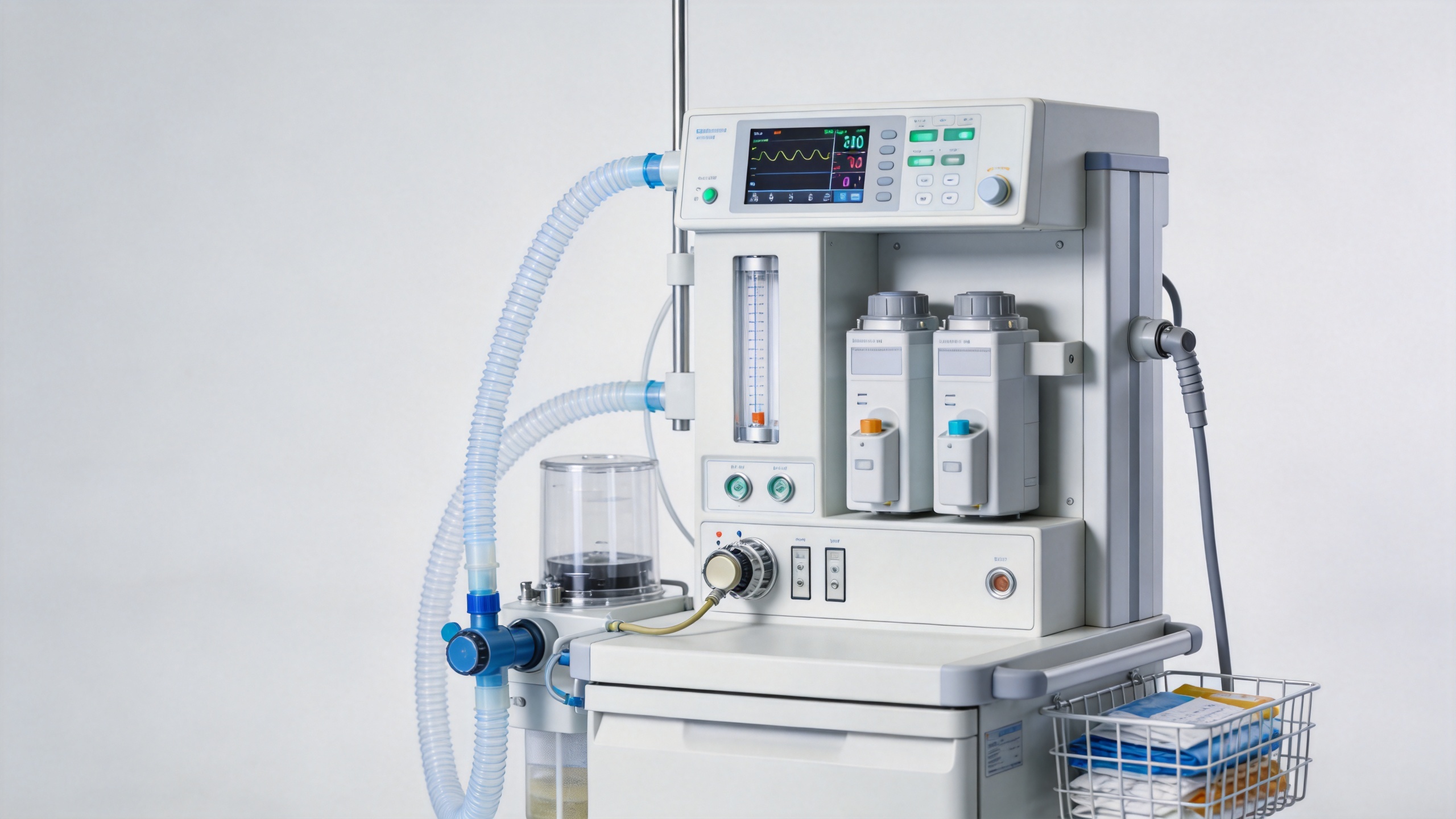
An anesthesia machine is rarely ready for clinical use as a stand-alone cabinet. A workable setup brings together gas delivery, a patient breathing path, monitoring, suction, scavenging, and a documented service routine. The exact configuration depends on the intended patient group, procedure mix, local policy, and the compatible accessories named in the workstation manual. This overview is a procurement and readiness framework, not a substitute for clinical, biomedical-engineering, or regulatory review.
Start with the anesthesia workstation, not a generic accessory list
When teams ask what belongs with an anesthesia machine, the first question should be: what must the workstation support in the intended workflow? An anesthesia workstation may integrate a ventilator, gas-delivery controls, alarms, and monitoring connections, but included items and approved options vary by model. Before requesting quotations, create a configuration sheet that separates supplied components, reusable accessories, single-patient items, and service tools.
From a biomedical-engineering communication perspective, compatibility, maintenance pathway, and risk controls need to be clear before comparing individual items. More precisely, a long feature list does not show whether the configuration supports the planned workflow. Ask the supplier to identify connector standards, power requirements, approved circuit types, monitoring connections, consumable references, and the items that must be sourced locally.
Core accessories for the patient breathing path
The anesthesia breathing circuit is the connection between the machine and the patient. A typical circle system may include inspiratory and expiratory limbs, unidirectional valves, a reservoir bag, an adjustable pressure-limiting valve, and a Y-piece. The specific arrangement and sizes must match the workstation, patient category, and clinical protocol.
- Compatible breathing circuits: Select adult, pediatric, neonatal, reusable, or single-use circuit options only after confirming approved connectors and intended use.
- Reservoir bags and connectors: Keep the appropriate sizes and connection types in the planned accessory set rather than treating them as interchangeable extras.
- Airway connection accessories: Masks, filters, elbows, sampling lines, and related connection items should be specified against local practice and the equipment instructions.
- Carbon-dioxide absorbent system: Confirm the compatible canister or cartridge format, consumable availability, and the process for identifying exhausted absorbent.
- Leak-test and pressure-test readiness: The pre-use process should verify that the selected breathing system is complete, unobstructed, and suitable for pressure and leak testing.
Do not buy a circuit bundle solely because it appears to fit. Your team should confirm which accessories remain attached during testing, whether extra humidification or pressure-control components are planned, and how those additions affect the approved setup.
Monitoring: treat the gas monitoring system as a required verification area
A gas monitoring system is not simply a screen beside the anesthesia machine. The configuration should support the monitoring expectations and alarm workflow used at the site. Common planning points include inspired oxygen analysis, carbon-dioxide monitoring, airway-pressure monitoring, respiratory-volume or spirometry capability where required, and alarm audibility and visibility. The ASA basic-monitoring standards state that inspired oxygen concentration should be measured with a low-oxygen alarm in use during general anesthesia delivered with an anesthesia machine; they also describe continual evaluation of oxygenation and ventilation.
For procurement, ask how oxygen sensors, water traps, sampling lines, filters, cables, modules, and calibration checks are supplied and replaced. Some items are reusable; others are consumable or model-specific. It is also worth clarifying which alarms are generated by the workstation, which depend on an external monitor, and how the team will test alarm function before use.
Gas supply, backup, and scavenging accessories
The anesthesia machine must be considered as part of a broader gas-delivery environment. Depending on local infrastructure and the approved machine setup, accessory planning may include pipeline hoses, gas-specific connectors, a spare-cylinder arrangement, regulators, and adapters authorized for the model. These are not areas for improvised substitutions.
Waste anesthetic gas management also needs a deliberate plan. A scavenging connection, transfer tubing, receiving-system connection, and related fittings may be separate from the base workstation. Confirm the facility connection point, the allowable tubing path, and any local inspection requirements. This is a good example of why a workstation quote should be reviewed with facilities and biomedical engineering as well as clinical users.
Suction, power, and ergonomic support items
Accessory needs extend beyond the gas path. A pre-use checkout framework commonly includes verification that suction is available, required monitors and alarms are present, and power is available. Depending on the room and the equipment instructions, the project may also require compatible suction tubing and collection components, an equipment cart or mounting solution, secure cable management, and approved backup-power arrangements.
These items matter because the workstation operates in a crowded environment. Positioning should allow the clinical team to see displays, reach controls, connect the patient circuit without strain, and carry out routine checks. Your team should also decide who owns restocking of disposable accessories and who confirms that backup items are available.
Plan anesthesia machine maintenance from the first order
Anesthesia machine maintenance should be part of the initial accessory decision, not an afterthought. Include the manufacturer-recommended preventive-maintenance kit or schedule, compatible replacement sensors, batteries if applicable, filters, seals, cleaning materials, calibration resources, and documentation tools. The required list will vary by model, so the manufacturer’s instructions and service agreement take priority over generic lists.
Procurement teams can avoid gaps by asking four practical questions: Which accessories are consumable? Which need scheduled replacement? Which tests require a service technician or trained user? Which parts must be available locally to keep the approved workstation configuration intact? This turns maintenance from an unplanned cost into a tracked readiness requirement.
A purchasing checklist for a complete anesthesia machine setup
| Configuration area | Questions to confirm before ordering |
|---|---|
| Workstation base | What is included, optional, or excluded in the exact model quotation? |
| Breathing system | Which circuit sizes, bags, filters, connectors, and absorbent format are approved? |
| Monitoring | Which gas, oxygen, pressure, and ventilation monitoring functions are integrated or externally supplied? |
| Gas and scavenging | Are hoses, connectors, backup arrangements, and scavenging connections compatible with the facility? |
| Room readiness | How will suction, power, mounting, cable routing, and equipment positioning be checked? |
| Maintenance | What consumables, test items, replacement parts, training, and service documentation are required? |
Build the final list around verification
The useful answer to “What accessories are needed for an anesthesia machine?” is not one universal shopping list. It is a verified configuration that connects the anesthesia machine to an appropriate breathing circuit, monitoring arrangement, gas and scavenging path, suction and power resources, and maintenance plan. Before purchase or deployment, have qualified clinical and biomedical personnel compare the proposed list with the workstation manual, local protocols, facility connections, and the intended patient workflow. That review is where a complete accessory list becomes an accountable setup.
 Hot News

