 EN


What Factors Influence Anesthesia Machine Prices?
When a hospital team asks why one anesthesia machine quote is much higher than another, the answer is rarely a single feature. An anesthesia machine is usually priced as a configured anesthesia delivery system: gas supply and delivery, agent delivery, breathing components, ventilation functions, monitoring options, accessories, and support can all sit inside or outside the base quotation. For procurement teams, the useful question is not “Which anesthesia machine costs less?” but “Are we comparing the same clinical and project scope?”
From a hospital procurement perspective, price discussions work better when clinical users, biomedical engineering, and finance agree on the intended use before requesting quotations. This article offers a neutral way to compare an anesthesia machine without assuming that one configuration suits every operating room.
Start with the scope behind the anesthesia machine price
A base anesthesia machine quotation may cover the core workstation while leaving choices such as vaporizers, gas monitoring, patient-monitoring connections, breathing circuits, scavenging connections, or optional ventilation functions for separate lines. That does not make a quote incomplete; it means the configuration boundary must be visible. Ask each supplier to identify what is included, what is optional, and what must be supplied or prepared by the facility.
Modern anesthesia delivery systems are commonly described as combining gas delivery, vaporizers, a ventilator, a breathing circuit, and waste-gas handling. The exact boundary varies by market and product configuration. Therefore, a lower anesthesia machine price can reflect a narrower supplied package rather than a like-for-like saving.
1. Core gas-delivery design and vaporizer scope
Gas-source compatibility, flow-control architecture, the number and type of vaporizer positions, and the supplied vaporizer configuration can materially affect an anesthesia machine quote. A purchasing team should describe the gases available in its operating room equipment, its preferred agent workflow, and whether vaporizers are included, shared, or sourced separately. It is also sensible to distinguish between a prepared mounting position and an installed, supplied component.
Rather than treating this as a specification checklist only, ask how the anesthesia delivery system will be verified at installation. The answer should address connections, labeling, local gas infrastructure, and the documentation expected for the project. These details can change both equipment scope and implementation cost.
2. Ventilation functions and intended patient mix
Ventilation functions are often a significant price driver because they shape the workstation’s intended operating capability and the related controls, sensors, displays, and accessories. A team evaluating an anesthesia machine should first define the patient groups, procedures, and ventilation modes its clinicians expect to use. It should then ask suppliers to show which functions are standard, which require an option, and what consumables or accessories are needed for the stated setup.
More functions do not automatically create more value. The relevant test is whether those ventilation functions fit the department’s workflow, training plan, and verification process. If a feature will not be used or supported in the target environment, including it may add cost and complexity without improving the project outcome.
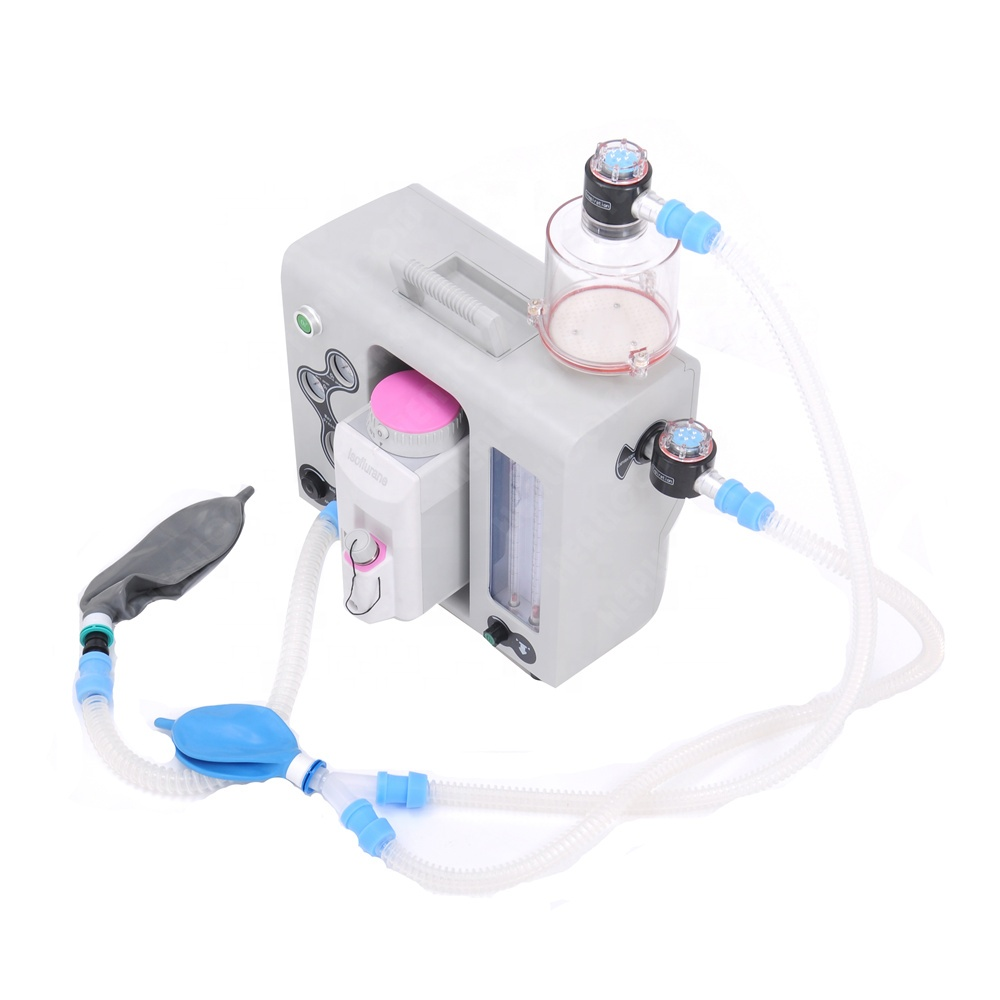 Configuration scope influences how an anesthesia machine quotation should be compared.
3. Monitoring, safety architecture, and documentation
Another reason an anesthesia machine price changes is the level of integrated monitoring, alarms, gas analysis, data connectivity, and protective design included in the scope. Buyers should avoid assuming that similarly named workstations contain the same monitoring functions. Request a line-by-line description of included parameters, sensors, cables, displays, software options, and any links to existing operating room equipment.
For inhalational-anesthesia workstations, ISO 80601-2-13:2022 is a relevant reference for particular requirements concerning basic safety and essential performance. It is not a substitute for a project-specific assessment. The buyer should confirm the applicable edition, local regulatory expectations, and the documents that demonstrate the offered configuration’s scope. This verification work can influence the anesthesia machine price, especially in cross-border procurement.
4. Accessories, consumables, and room integration
An anesthesia machine may require accessories that are easy to overlook during an early budget discussion. Examples can include breathing-system components, hoses, gas connections, scavenging connections, mounting hardware, spare parts, batteries, and cables. The purpose is not to assume every item is needed; it is to make the quotation boundary clear.
Room conditions can matter just as much. Confirm electrical supply, gas outlets, space around the workstation, waste-gas arrangements, network needs, and the relationship with other operating room equipment. A quote that looks attractive before a site review may not include the same installation responsibilities as another proposal. Turning these conditions into a shared checklist makes the anesthesia machine comparison more reliable.
5. Training, commissioning, service, and warranty
The purchase price is only one part of the commitment. Commissioning, acceptance testing, user training, preventive maintenance, response arrangements, spare-parts availability, and warranty terms can alter the practical cost of an anesthesia machine over its working life. Ask an anesthesia equipment supplier to state the service boundary in writing: who performs installation, who trains users, which visits are included, and which items are charged separately.
It helps to compare service on the same assumptions. For example, one anesthesia machine quotation may include commissioning and a defined training session, while another may price the equipment alone. Neither approach is inherently preferable; the procurement team needs a normalized total so it can judge the resource plan.
6. Logistics, market documentation, and procurement volume
Freight, insurance, packaging, import handling, delivery terms, currency exposure, and market-specific documents can all affect the final anesthesia machine price. The impact depends on the purchasing route and destination. In international projects, document requests and support arrangements should be clarified before a purchase order is compared solely on unit price.
Order quantity may also influence a proposal, but it should not obscure configuration differences. If multiple rooms are planned, ask for a schedule that separates unit price, common accessories, installation activities, training, and service. This format gives the team a clearer view of which costs scale with each anesthesia machine and which are project-level costs.
A practical quote-comparison checklist
- Define the intended clinical workflow and required ventilation functions.
- List the gas sources, vaporizer scope, breathing-system scope, and scavenging connection.
- Record included monitoring, sensors, software, accessories, and links to operating room equipment.
- Confirm site conditions, installation responsibilities, commissioning, and acceptance criteria.
- Compare warranty, training, maintenance, parts, logistics, and relevant documentation on the same basis.
Send the same checklist to each anesthesia equipment supplier. A comparable response makes it easier to identify whether an anesthesia machine price difference comes from capability, accessories, support, commercial terms, or an unconfirmed assumption.
Choose the right question before choosing a price
An anesthesia machine should be evaluated as part of a clinical and operational system, not as an isolated cabinet. Before approving a purchase, align the configuration with the expected workflow, site conditions, documentation needs, and long-term service plan. The most useful quotation is one that makes those boundaries explicit, supports a fair comparison, and leaves the team with clear items to verify before acceptance.
 Hot News

