 EN


What Should Buyers Check Before Purchasing an Autoclave?
Buying an autoclave is not simply a matter of choosing the largest chamber or the fastest listed cycle. For a purchasing manager, sterile-processing lead, laboratory supervisor, or clinic owner, the right decision begins with the work that must move through the unit every day. A well-matched autoclave supports safe, repeatable processing; a poorly matched one can create queues, retraining, wet loads, avoidable service calls, and weak documentation. Before requesting quotations, turn the purchase into a practical review of loads, utilities, evidence, and lifecycle support.
1. Start with the actual sterilization workflow
Map the sterilization workflow before comparing equipment. List what will be processed, how it is prepared, how often loads run, who loads the chamber, how items are cooled, and where they go next. A small dental practice, a central sterile department, a research lab, and a medical-device production area may all use steam, but their loads, traceability needs, staffing patterns, and downtime tolerance are not the same.
Ask users to record a representative busy-day load mix rather than relying on an average estimate. Include packs, instruments, glassware, media, porous goods, waste, liquids, and any special containers that are permitted for the intended process. The question is not only “Will it fit?” but also “Can the team load, run, unload, cool, release, and document it without creating a bottleneck?” This workflow view makes chamber size, cycle configuration, racks, carts, and drying capability easier to assess.
2. Match chamber capacity to load geometry, not just volume
Chamber volume is a starting point, not a purchasing answer. Check usable chamber dimensions, shelf or rack configuration, door clearance, loading height, and the real footprint of trays or containers. An autoclave that accepts the nominal load but leaves no space for correct arrangement may undermine throughput. Conversely, oversizing an autoclave can consume floor space, utilities, and budget without solving the actual peak-load problem.
Request a demonstration or documented loading guidance using the buyer’s representative articles. Discuss the hardest loads, not only simple open instruments. Confirm whether the proposed unit and cycle options suit the intended materials and packaging instructions. If future services, departments, or product lines may increase demand, distinguish a realistic growth scenario from a vague preference for “more capacity.”
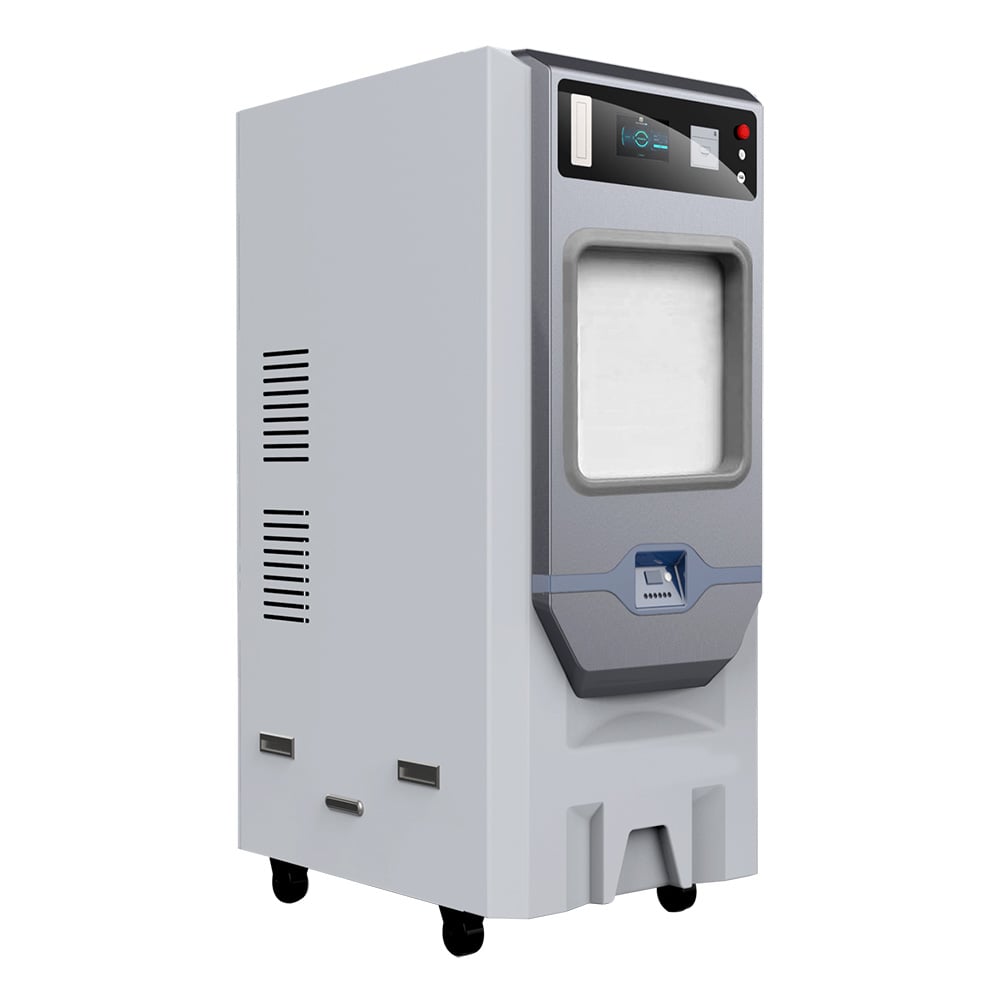 Workflow planning should shape an autoclave purchase before equipment comparisons begin.
3. Verify cycle suitability and usable operating controls
A steam sterilizer supplier should be able to explain which cycles are available, what their intended applications are, and what limits apply. Buyers should not assume that one cycle works for every load. Review the process instructions for the devices, packaging, and materials that will be treated, then compare them with the autoclave manufacturer’s validated cycle options and operating instructions.
Pay attention to controls that help operators run the intended process consistently: clear program selection, access controls where appropriate, readable alarms, complete cycle records, and a sensible response to interrupted cycles. Ask what data are recorded and how they can be retained, reviewed, or exported. In a high-accountability environment, an autoclave should fit the documentation process instead of forcing staff to reconstruct what happened after the fact.
4. Treat quality testing as a purchase requirement
Autoclave quality testing is not an accessory to add later. Before buying, ask how the unit supports the facility’s monitoring plan and applicable requirements. Routine oversight commonly brings together mechanical cycle information, chemical indicators, and biological indicators; the details should follow the facility’s policies, the equipment instructions, and the regulations or standards that apply to its setting.
For a dynamic-air-removal system, clarify how the team will perform and document required air-removal testing. Ask where indicators are placed, how results are captured, what happens after an out-of-specification result, and whether the proposed reporting functions support the facility’s review process. A capable supplier will discuss both normal operation and failure response rather than presenting a pass/fail display as the entire quality system.
Buyers in regulated or highly controlled environments should also ask about the documentation available for installation, operation, and performance qualification. The terms IQ, OQ, and PQ are often used to separate evidence that the unit was installed correctly, operates within its intended range, and performs consistently under actual conditions. The depth of qualification depends on the application, but the vendor’s ability to provide specifications, calibration information, test support, and change documentation is worth confirming before a purchase order is issued.
5. Check utilities, site readiness, and safety provisions
An autoclave can only perform as intended when the site can support it. Put facilities, infection prevention or quality, and end users in the same pre-purchase conversation. Confirm electrical supply, water quality and treatment needs, drainage, steam source where applicable, ventilation, heat release, floor loading, access route, and service clearance. Review the installation manual early enough to resolve gaps before delivery.
Also inspect the practical safety details: door interlocks, surface-temperature hazards, emergency procedures, ergonomic loading, and the room layout around carts or transfer points. Where a hospital autoclave will serve multiple teams, a clear flow from decontamination through preparation, sterilization, cooling, and storage is especially important. An equipment specification cannot compensate for a room that forces people or clean goods to cross the wrong path.
6. Evaluate the supplier after the sale
Choosing a steam sterilizer supplier means evaluating more than the quotation. Ask who installs the unit, trains operators, performs preventive maintenance, responds to alarms, and supplies common replacement parts. Request service coverage by location, response targets, escalation contacts, maintenance intervals, and the expected availability of critical components. For a busy department, downtime planning should be part of the commercial discussion, not an afterthought.
Training should cover the actual sterilization workflow: acceptable loads, loading practices, cycle selection, monitoring, record review, and first actions after an alarm or failed indicator. Ask whether refresher training is available for new staff and whether the supplier can support commissioning with the buyer’s quality team. A supplier that can explain these handoffs clearly is usually easier to work with over the equipment’s life.
7. Compare lifecycle cost and acceptance evidence
Price comparisons are more useful when they include installation, utility upgrades, accessories, consumables, monitoring supplies, service contracts, calibration, training, validation support, and anticipated downtime. Create a side-by-side table that separates one-time costs from recurring costs. Then define acceptance criteria before delivery: documentation to receive, utilities to verify, training to complete, representative loads to challenge, and records needed before routine use.
The final decision should answer a simple question: can this autoclave perform the intended work safely, consistently, and sustainably in this facility? If the answer depends on assumptions that neither the buyer nor the supplier can document, pause the purchase and resolve them. A suitable autoclave is one whose capacity, cycles, controls, quality evidence, site requirements, and service plan all fit the real operation.
A practical buyer checklist
- Document representative loads, peak demand, and the full sterilization workflow.
- Confirm usable chamber geometry, loading accessories, and permitted cycle/load combinations.
- Review reporting, alarms, traceability, and the facility’s autoclave quality testing plan.
- Verify utilities, room layout, safety controls, installation access, and service clearance.
- Assess the steam sterilizer supplier for training, maintenance, parts, qualification support, and response coverage.
- Set written acceptance criteria and compare lifecycle cost—not only the initial equipment price.
By treating an autoclave purchase as a process decision, buyers can select equipment that supports dependable sterilization today and remains manageable as workloads change.
 Hot News

