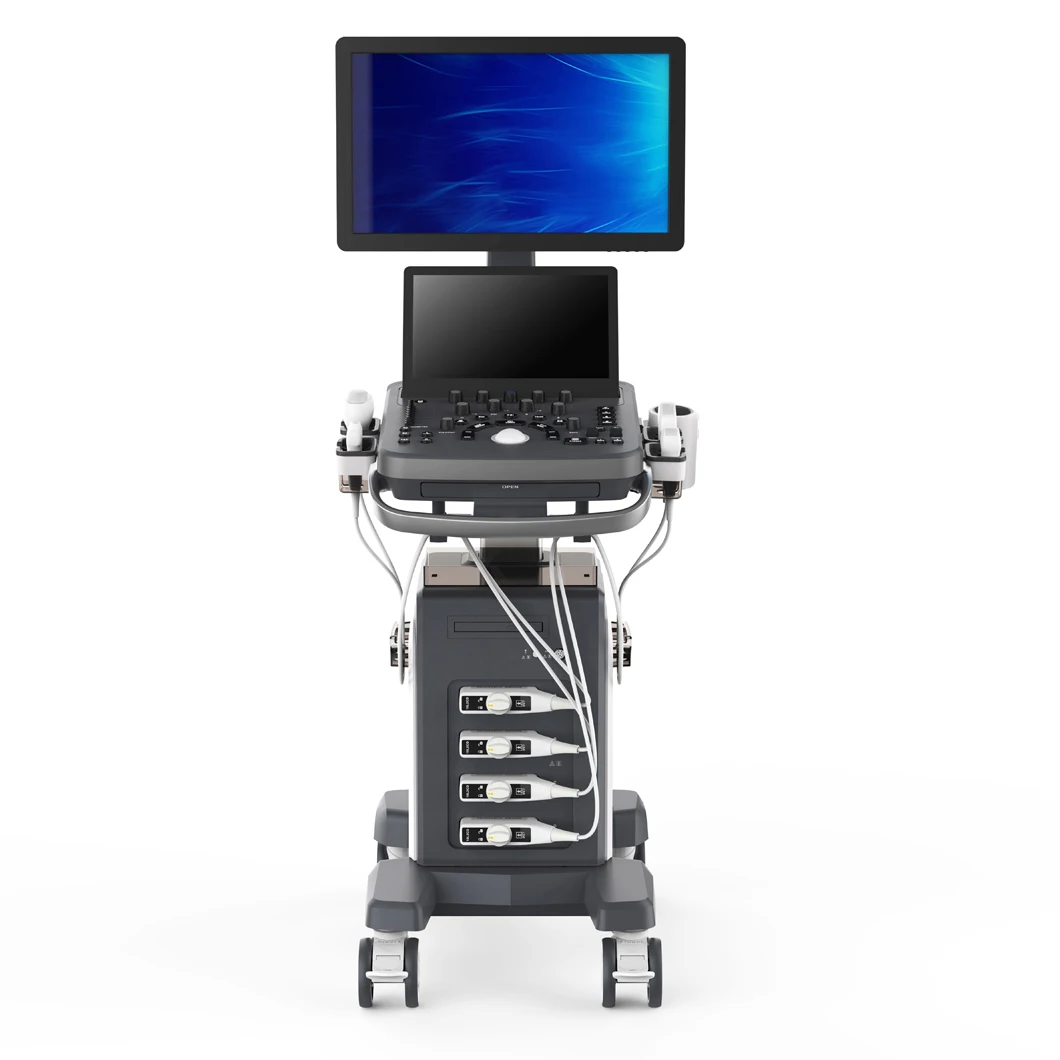
Color Doppler ultrasound combines regular black and white imaging with the principles of Doppler physics to show how blood moves through vessels in real time. Standard ultrasound just gives us pictures of what's there, but Color Doppler goes further by picking up those tiny changes in frequency when red blood cells are actually moving. What happens next is pretty cool too these frequency changes get turned into colorful maps that sit right on top of the body structures we're looking at. Red means blood flowing towards the device, while blue shows it going away. For doctors working on diagnosing problems or performing procedures, seeing this color information makes all the difference. They can check if blood vessels are open and working properly, which helps them make better choices about treatment options in almost every medical specialty.
Doppler technology works because when sound waves bounce off blood cells that are actually moving, they change frequency based on how fast the blood is flowing. Smart software then takes those frequency changes and turns them into both direction info and actual numbers, shown on screen between 15 to 30 times every second. Because of this fast updating rate, doctors can spot weird flow patterns right away. Think about things like spiral flows or turbulence that show up in cases where arteries are narrowed down, like what happens with carotid artery blockages. These quick observations give valuable information about blood flow dynamics while the scan is happening, which makes diagnosis much more effective in real time.
B mode or grayscale ultrasound does a great job showing what organs look like structurally, while color Doppler gives doctors insight into how blood actually flows through those structures. Take a clot in the leg vein for instance it might show up on regular scans, but without Doppler we wouldn't know if blood was still moving past it or completely stopped. Putting these together makes diagnosis much more certain. Research has found that when dealing with tricky vascular cases where things aren't clear cut, combining both methods boosts accuracy by around 40% over just using grayscale images alone. Cardiologists find this especially helpful because they can check heart valves without needing invasive procedures, which saves time and reduces risks for patients undergoing evaluations.
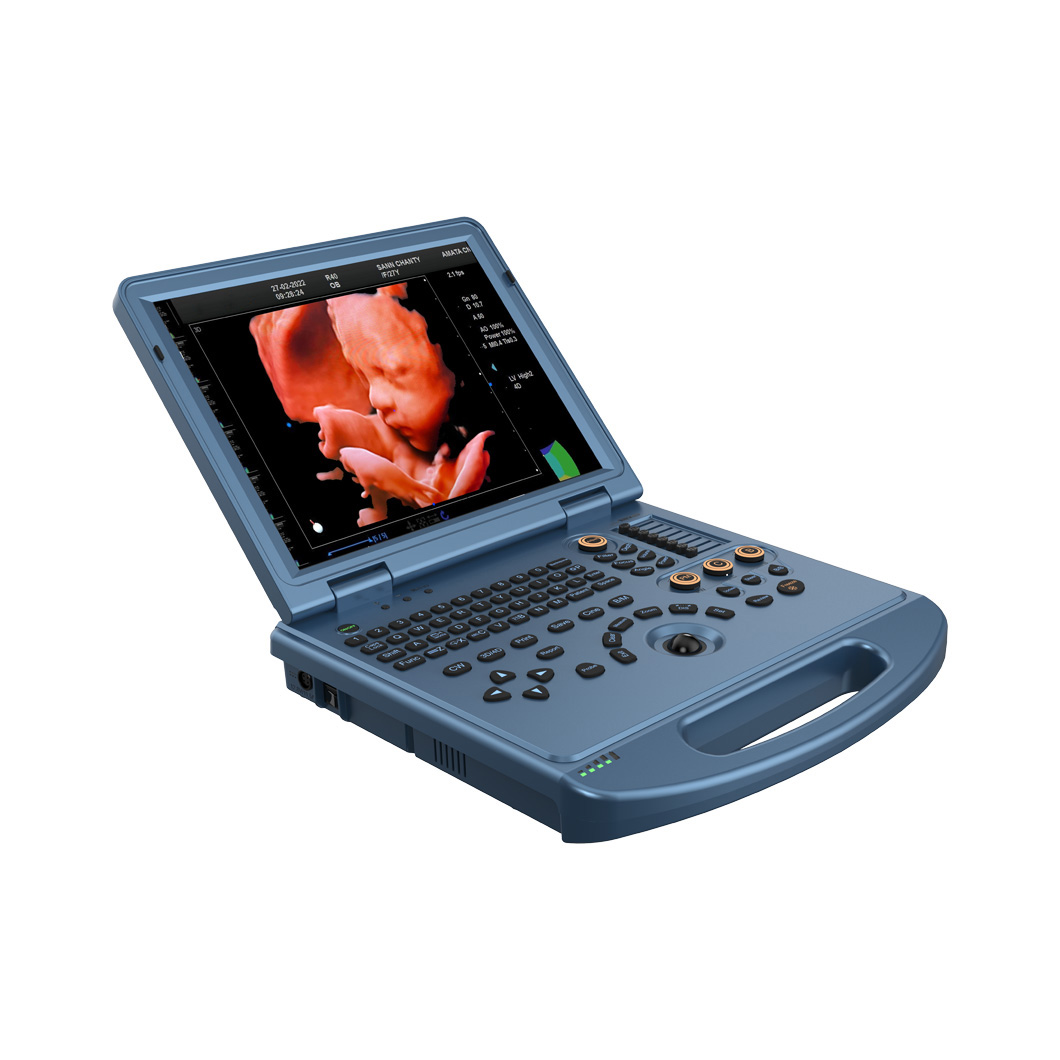
By analyzing frequency shifts in reflected ultrasound waves, color Doppler evaluates blood flow dynamics. When red blood cells move toward the probe, the returning waves compress (increasing frequency); when they move away, the waves stretch (decreasing frequency). This shift enables precise measurement of flow velocity and direction. Deviations from normal laminar flow, such as increased speed or turbulence, help identify pathologies like stenosis, aneurysms, or valvular regurgitation.
Color mapping translates flow characteristics into visual cues: red for antegrade flow, blue for retrograde. Turbulent regions appear as mosaic patterns due to mixed velocities, signaling potential issues like arterial plaque or venous thrombosis. A 2024 meta-analysis found this method achieves 92% sensitivity in detecting abnormal flow patterns during vascular assessments, making it a reliable tool for early pathology identification.
Quantitative analysis uses the formula: Velocity = (Frequency Shift × Speed of Sound) / (2 × Transducer Frequency × Cosine θ). Accurate measurements require proper angle correction (θ < 60°), minimizing errors in peak systolic velocity (PSV)—a key metric for grading stenosis. Research confirms PSV exceeding 200 cm/s in carotid arteries correlates strongly with >70% lumen narrowing.
When it comes to detecting deep vein thrombosis, color Doppler ultrasound stands out as the go to method. It checks how well veins can be compressed while also showing blood flow in real time. If there's no flow detected in a vein that shouldn't compress, that usually means there's a clot present. Research shows this technique gets things right about 87 percent of the time when looking at clots in the upper part of the legs. This high success rate means doctors don't have to resort to those uncomfortable contrast venography tests as often anymore. Plus, patients get their results quickly right there in the exam room instead of waiting days for lab work.
A 2025 meta-analysis in Frontiers in Physiology reviewed 18 trials (n=4,752 patients), showing color Doppler achieves 92% sensitivity and 89% specificity for symptomatic DVT. Performance drops to 81% and 83% in asymptomatic individuals, underscoring the importance of clinical context and operator expertise in interpretation.
Color Doppler identifies arterial narrowing using two primary indicators:
During Valsalva maneuvers, reflux duration helps quantify valve incompetence:
0.5 seconds in superficial veins indicates pathological insufficiency
1.0 seconds in deep veins signifies clinically significant dysfunction
This standardized assessment guides treatment planning, from conservative management to endovenous ablation.
When looking at blood flow dynamics, most clinicians combine color Doppler imaging with spectral Doppler techniques. This combination allows doctors to analyze waveforms and get accurate readings on how fast blood is moving through vessels. Two key measurements stand out when assessing narrowing in arteries: peak systolic velocity (PSV) and end-diastolic velocity (EDV). According to the latest European Society of Cardiology guidelines from 2023, if someone shows a PSV over 230 cm/s in their carotid artery, that usually means there's more than 70% blockage happening. Looking at the actual spectral patterns can tell us about problems further down the line too. When we see dampened signals or those flat monophasic waveforms, it often points toward occlusive disease somewhere downstream in the vascular system.
Modern systems use red-blue hue coding to depict flow direction, with green mosaic patterns highlighting turbulence. This real-time feedback aids in identifying retrograde flow in incompetent valves and collateral pathways in chronic blockages. Compared to grayscale imaging alone, color mapping reduces interpretation errors by 34% in complex vascular cases.
Artificial intelligence tools are helping automate how we classify blood flow patterns and spot unusual hemodynamic issues that need closer looks. Research published last year in Applied Sciences found that machine learning approaches boosted detection rates by about 22 percent when dealing with tricky cases like slow moving blood in newborns suffering from brain bleeds. These systems have been trained using well over a hundred thousand anonymous medical images, allowing them to identify various problems ranging from deep vein thrombosis to abnormal connections between arteries and veins. The real benefit comes in busy clinical environments where quick accurate diagnosis makes all the difference.
Standardized protocols are crucial for maximizing diagnostic reliability. Proper patient positioning, optimal machine settings (gain, pulse repetition frequency, wall filters), and consistent technique reduce artifacts by 18%, according to a 2023 hemodynamic imaging study. Key recommendations include:
Structured training programs focusing on probe placement have reduced false-positive DVT diagnoses by 60% in multicenter trials, emphasizing the role of competency development.
In acute scenarios like trauma or limb ischemia, color Doppler prioritizes rapid detection of life-threatening obstructions. Per the 2024 Vascular Imaging Guidelines, emergency scans should be completed within 15 minutes, achieving 92% sensitivity for arterial occlusions. Recommended strategies include:
A Johns Hopkins pilot (2023) demonstrated that pairing focused Doppler with AI-assisted analysis cut diagnostic delays by 34% in stroke alerts, though broader validation remains ongoing.
Even with all the technological progress we've seen, spotting those really low blood flow states below 5 cm/s still gives doctors headaches, especially when dealing with cases of septic shock or severe peripheral artery disease. Field tests have shown these systems miss the mark about 12 to 19 times out of 100, which isn't great at all. According to the latest findings from the Hemodynamic Imaging Consensus group released this year, nearly 4 out of every 10 clinics in rural areas don't even have the right equipment to detect these tiny flows, making deep vein thrombosis screenings pretty unreliable there. Some interesting developments are happening though. Researchers in Malawi tested smartphone connected probes that matched expensive hospital equipment around 84% of the time. There's also work being done on special compression techniques that boost detection rates by almost 30% for heavier patients. And finally, there are new approaches where trained imaging technicians perform scans while getting guidance remotely from specialists through video calls.
These approaches help bridge the gap highlighted in a 2023 WHO report, which found only 22% of low-income countries meet minimum ultrasound training standards.
 Hot News
 EN
EN