 EN


How to Choose an Anesthesia Machine for a Modern Operating Room
Choosing an anesthesia machine is a clinical-workflow and procurement decision, not a contest to collect the longest feature list. A modern operating room needs a configuration that fits its case mix, gas infrastructure, staffing model, monitoring practices, and service plan. This guide gives hospital purchasing teams a practical way to compare an anesthesia machine with input from anesthesia professionals, biomedical engineering, facilities, infection-control stakeholders, and finance.
The useful starting point is simple: define the work before comparing equipment. An anesthesia machine supports inhalational anesthetic delivery and ventilation, but its appropriate configuration depends on local protocols and trained-user requirements. This article is a selection framework only; it does not replace clinical judgment, local policy, engineering assessment, or market-specific regulatory review.
Start With Operating-Room Demand, Not a Brochure
Before requesting quotations, map where each anesthesia machine will be used. List procedure types, expected patient populations, room turnover patterns, preferred ventilation approaches, anticipated accessories, and whether the unit will move between locations. A workstation suitable for a general operating room may need a different package from one planned for pediatric work, ambulatory surgery, or a remote anesthetizing location.
- Which clinical team will use the anesthesia machine, and how will they verify readiness before each case?
- What gas sources, backup arrangements, scavenging provisions, electrical supply, and space constraints exist at the installation site?
- Which monitoring signals must be visible at the workstation versus available elsewhere in the room?
- Which accessories, consumables, connectors, and training materials need to be specified in the same quotation?
For an anesthesia workstation, the practical question is not whether a function is offered. It is whether the function supports a documented workflow and can be verified during installation and routine use.
Compare the Gas-Delivery Configuration
The gas-delivery section of an anesthesia machine deserves a line-by-line comparison. Ask suppliers to state the supplied gas inputs, flow-control arrangement, vaporizer mounting and compatibility, auxiliary oxygen provisions, and any configuration limits. Match those details to the hospital’s piped-gas system, cylinder backup plan, and anesthetic-agent policy rather than assuming that similarly named options are interchangeable.
Request documentation for the exact proposed configuration, including the standards and market documentation relevant to the intended location. ISO 80601-2-13:2022 addresses particular requirements for the basic safety and essential performance of an anaesthetic workstation used for inhalational anesthesia. That reference can guide a document-review discussion; it is not evidence that a proposed anesthesia machine meets every local requirement. Ask the supplier to identify applicable documentation, exclusions, and configuration dependencies.
Assess Ventilation and the Anesthesia Breathing Circuit Together
Ventilator modes, controls, displayed values, and alarm behavior must be considered with the full anesthesia breathing circuit. During a demonstration, have intended users examine how the circuit is assembled, how it is supported around the patient area, how components are changed, and how routine leak checks are performed. Small usability differences can affect setup and between-case work.
Clarify the circuit options, absorber arrangement, manual ventilation controls, pressure-relief behavior, and cleaning or replacement responsibilities. Your team should also determine which items are reusable, single-use, or supplied by another department. Do not treat a breathing circuit as an afterthought attached to an anesthesia machine; it is part of the system your acceptance plan must cover.
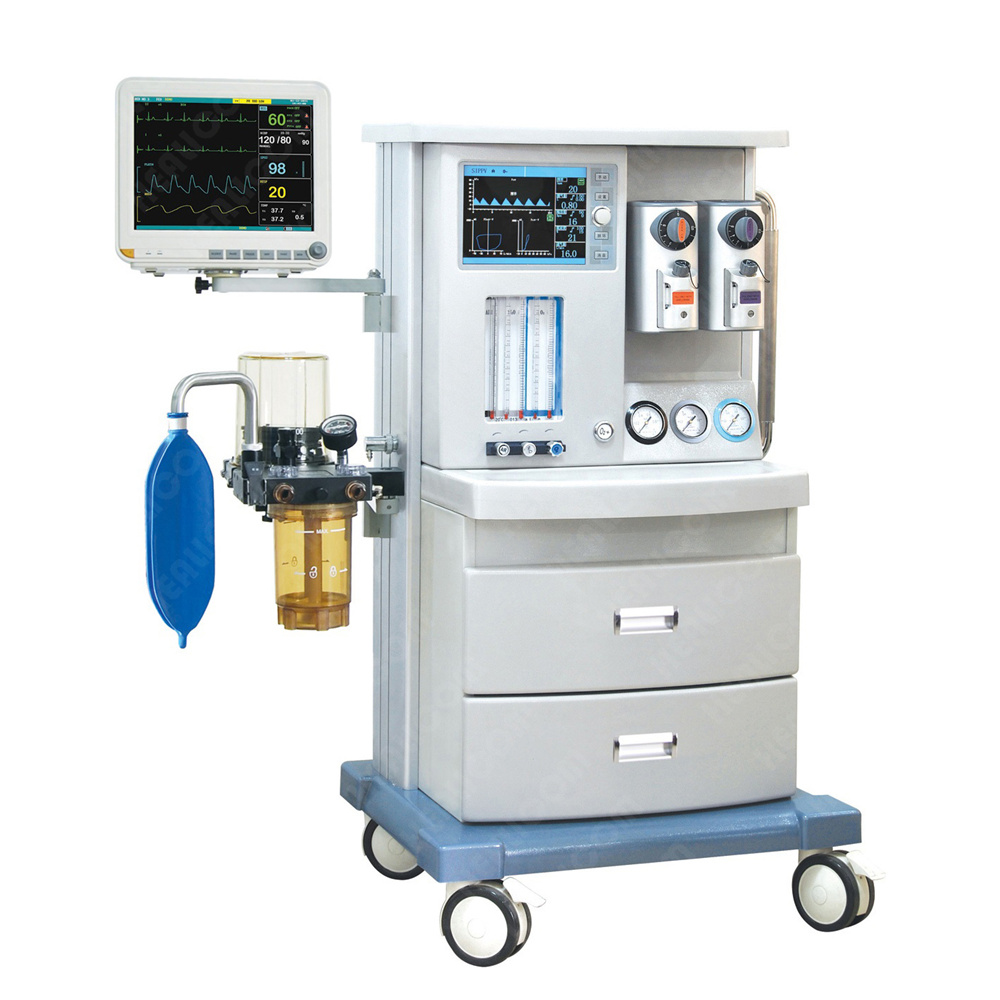 A workflow review can help a procurement team compare an anesthesia machine configuration.
Specify the Gas Monitoring System and Alarm Workflow
A gas monitoring system should be evaluated as a workflow, not merely a screen specification. Ask what inspired and expired gases are monitored in the quoted configuration, where values and waveforms appear, how sampling lines are managed, how alarm limits are configured, and what happens during a sampling-line obstruction or disconnection. Confirm which alarms are generated by the anesthesia machine, which come from separate monitors, and how users distinguish them in a busy room.
Pre-use checkout guidance commonly emphasizes gas supply, required monitors and alarms, oxygen-monitor calibration, breathing-system pressure and leak testing, circuit gas flow, and ventilator readiness. Use those activities as demonstration scenarios. Can users follow local checks without unnecessary navigation? Can biomedical engineering access the information needed for troubleshooting? The answers are more relevant than a generic feature comparison.
Plan Installation, Integration, and Acceptance Before Purchase
A quotation is easier to compare when every bidder answers the same installation questions. Confirm room dimensions, mounting or cart needs, gas terminal compatibility, scavenging interfaces, electrical requirements, battery behavior, network or data-export expectations, and the division of responsibilities among supplier, facilities, biomedical engineering, and clinical users.
Build acceptance criteria before issuing the order. The criteria might cover delivered configuration, serial-number records, accessory list, incoming inspection, functional tests, alarm verification, training evidence, service contacts, and documentation handover. An anesthesia machine should be accepted against the approved configuration and local procedure, not against a demonstration memory.
Make Anesthesia Machine Maintenance Part of the Business Case
Initial price is only one input. Anesthesia machine maintenance affects availability, planned downtime, budgeting, and the confidence of the people who depend on the unit. Ask for the preventive-maintenance schedule, calibration expectations, service-manual availability, software-update process, recommended spare parts, response channels, warranty scope, and the party responsible for labor and travel.
For each anesthesia machine, compare the expected service tasks with the hospital’s biomedical capacity. If work will be contracted, specify response expectations and access to qualified support. Also ask how the supplier communicates recalls, field actions, obsolescence notices, and replacement-part availability. A lower purchase price may not mean a lower lifecycle burden when training, consumables, service coverage, and downtime are considered.
Use a Cross-Functional Decision Matrix
Score each anesthesia machine proposal against the same weighted requirements rather than allowing one strong demonstration to decide the project. A simple matrix can include:
| Decision area | Questions to score |
|---|---|
| Clinical fit | Does the configuration support the planned cases and user workflow? |
| Gas and ventilation | Are gas inputs, ventilation functions, vaporizers, and circuit options explicitly documented? |
| Monitoring | Does the gas monitoring system support local alarm and checkout practices? |
| Implementation | Are room interfaces, training, acceptance tests, and responsibilities clear? |
| Lifecycle support | Is anesthesia machine maintenance practical for the hospital’s service model? |
Weight the matrix with the people who will use and support the anesthesia machine. A purchasing team may value cost predictability, while anesthesia professionals may prioritize clarity during setup and biomedical engineering may focus on service access. Making those trade-offs visible early reduces later rework.
Questions to Send With an Anesthesia Machine Inquiry
- Provide the proposed anesthesia machine configuration, included accessories, and excluded items.
- State compatibility requirements for gases, vaporizers, breathing circuits, scavenging, power, and site interfaces.
- Describe the gas monitoring system, alarm behavior, and required consumables.
- Provide installation, commissioning, user-training, and acceptance-test responsibilities.
- Provide the anesthesia machine maintenance schedule, warranty terms, service options, and parts process.
- Identify documents that must be reviewed for the target market and proposed configuration.
The right anesthesia machine is the one whose configuration, documentation, support plan, and daily workflow can be verified by the hospital team. Start with requirements, compare like-for-like proposals, observe real checkout tasks, and keep unresolved points in the purchase record before committing to a final configuration.

 Hot News

