EN


What Should Hospitals Check Before Purchasing ECG Equipment?
Buying an ECG Machine is not simply a matter of comparing screen size, a printed specification sheet, and an initial quotation. For a hospital procurement team, the useful question is whether the equipment will support the intended clinical workflow, connect appropriately to local systems, and remain serviceable after acceptance. An ECG Machine used for routine outpatient screening may need a different configuration from one supporting a busy emergency department, a ward, or a mobile outreach program. The ECG Machine specification should name those environments rather than rely on a general-purpose description.
As a practical hospital procurement approach, start with the work that staff must complete rather than a list of features. Clinical users, biomedical engineering, IT, infection-control staff, and purchasing should each be able to identify what must be checked before an ECG Machine is selected. The checklist below does not replace local clinical, legal, or regulatory review; it helps make those reviews more specific.
1. Define the clinical use before specifying an ECG Machine
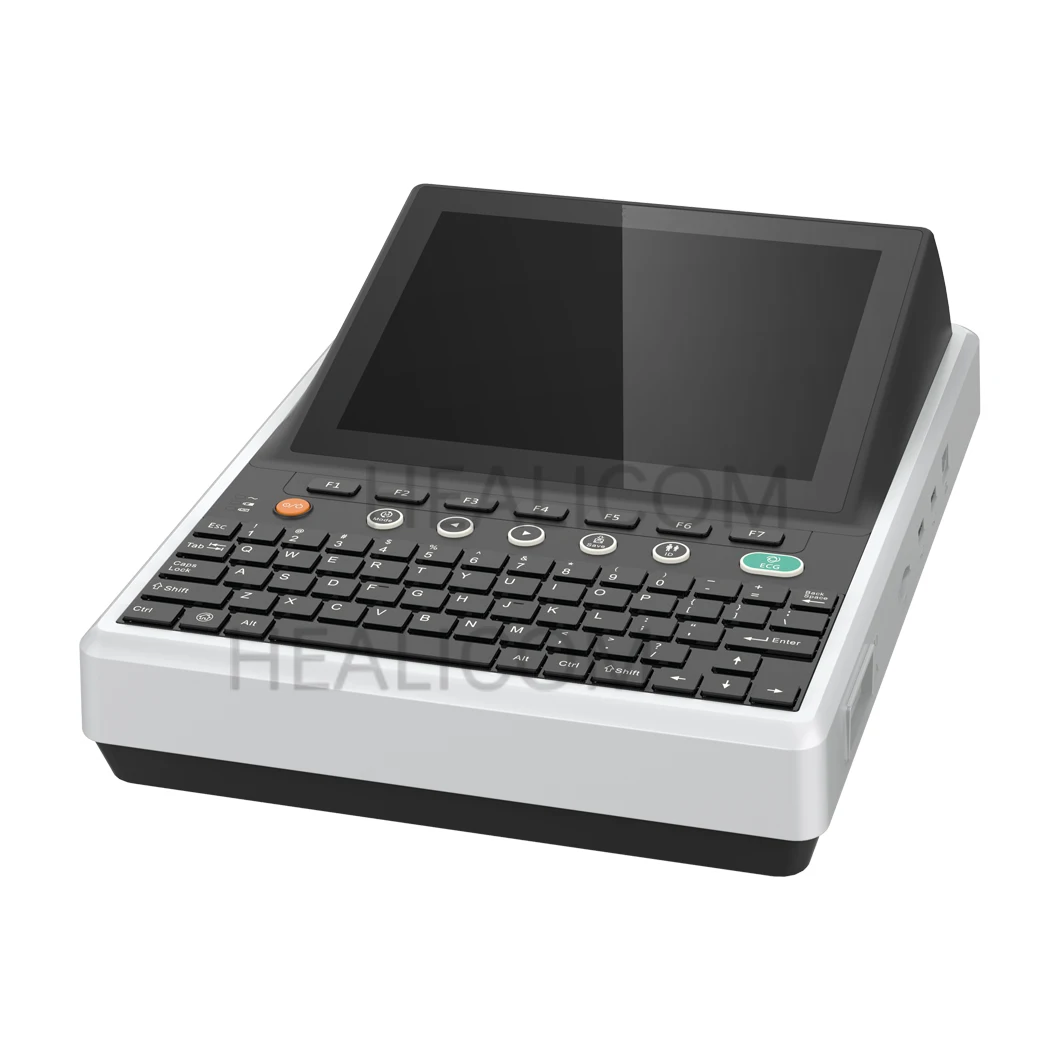
Document where the ECG Machine will be used, who will operate it, how many studies are expected, and how reports will move into the patient record. A portable electrocardiograph may be appropriate when clinicians need to move between bedsides, satellite clinics, or temporary care areas. However, portability alone does not confirm that a device fits the local workflow. Ask whether battery operation, trolley mounting, storage, cleaning, and transport protection are all relevant to the department. These answers form the operational requirements for the ECG Machine.
Next, define the required acquisition mode. Routine resting diagnostic work often involves 12-lead acquisition, but the required ECG recording channels, sampling settings, display behavior, and report format should be written into the hospital’s own specification. Do not assume that a higher number on a brochure automatically solves a clinical requirement. More accurately, the important issue is whether the chosen configuration can capture, review, print, store, and transfer the studies needed in the target workflow.
2. Turn performance claims into acceptance-test questions
Ask the supplier to identify the applicable device documentation, including the market-specific conformity evidence relevant to the planned purchase. IEC 60601-2-25 is commonly referenced for the basic safety and essential performance of electrocardiographs, but the hospital should confirm which standard edition, registration route, and local requirements actually apply. A compliant-looking ECG Machine should still be evaluated against the hospital’s tender, local electrical environment, and acceptance process.
Build a witnessed ECG Machine acceptance protocol before delivery. It can require the supplier and biomedical engineering team to demonstrate a complete acquisition, a readable on-screen review, a printed report if printing is required, and the expected export or archive path. If automated interpretation is offered, define it as a feature to validate within hospital governance, not as a substitute for qualified clinical review. This changes the conversation from “does the ECG Machine have the feature?” to “how will we verify it in our setting?”
3. Inspect cables, electrodes, and accessories as a system
Accessories determine whether an ECG Machine is ready for routine clinical use. The same ECG Machine configuration should be inspected at pre-award review and final acceptance. Include an ECG cable inspection in the pre-award sample review and the final acceptance test. Check connector fit, lead labeling, strain relief, cable length, reusable versus single-patient-use options, cleaning instructions, replacement lead times, and the availability of compatible electrodes. Ask which accessories are included in the base supply and which are consumables or options.
Lead integrity deserves a documented test. The team should confirm that each lead is recognized, that a damaged or disconnected lead produces the expected indication, and that the cable arrangement works safely around beds, trolleys, and patient positioning. A supplier’s generic compatibility statement is not enough. The selected ECG Machine and accessories should be checked as the configuration that will actually be delivered.
4. Verify records, connectivity, and cybersecurity responsibilities
For many hospitals, an ECG Machine becomes useful only when its records can be identified, reviewed, retained, and retrieved reliably. The ECG Machine data path needs defined ownership before installation. Specify the identifiers to be captured, the required report formats, whether the device must connect to an ECG management system or electronic medical record, and who owns interface testing. Ask for interface documentation early, including supported protocols, export behavior, user roles, audit information, software version control, and the process for updates.
Also clarify cybersecurity and network responsibilities. A portable electrocardiograph that uses wireless transfer may require local network approval, access controls, and a plan for interruptions. The hospital should determine whether data remain on the ECG Machine after export, how staff remove patient information during decommissioning, and what support the vendor can provide for patching or troubleshooting. These checks are conditions for deployment, not claims that every model will meet every policy.
5. Evaluate service, training, and total ownership requirements
When comparing an ECG machine supplier, request a written scope for installation, commissioning, operator training, biomedical training, warranty, preventive maintenance, repair turnaround, remote support, spare parts, and software support. The lowest initial quote may not be the lowest operational burden once cables, paper, electrodes, batteries, training time, and service coverage are considered. Put these items in the same evaluation table as the ECG Machine price.
Training should reflect real users. An ECG Machine may be technically capable, yet still cause delays if staff cannot quickly identify leads, select the right patient, repeat a poor tracing, or recognize when a recording should be escalated for review. Request a training plan for each relevant role and ask how competency, handover, and refresher training will be handled after installation.
6. Use a cross-functional procurement checklist
| Check area | Questions to document |
|---|---|
| Clinical workflow | Where will the ECG Machine operate, and which ECG recording channels and report outputs are required? |
| Patient connections | Has ECG cable inspection covered lead integrity, connectors, electrodes, cleaning, and replacement supply? |
| Technical acceptance | Can the ECG Machine complete acquisition, review, print or export, and error indication under witnessed test conditions? |
| Data and IT | Are identifiers, interfaces, security roles, update responsibilities, and data-retention steps defined? |
| Supplier support | Has the ECG machine supplier documented installation, training, warranty, maintenance, parts, and escalation routes? |
Final perspective
A sound ECG Machine purchase connects departmental needs to a verifiable delivered configuration. For each ECG Machine under consideration, start with the clinical task, turn requirements into acceptance tests, inspect accessories and data pathways, and compare service commitments alongside the initial price. If the target department, installation environment, and local compliance conditions differ, the final decision should differ too. A structured checklist makes it easier for the hospital, its biomedical team, and the ECG machine supplier to confirm what will be delivered before the purchase order is released.
 Hot News