 EN


What Standards Should Buyers Review Before Purchasing an AED?
Buying an AED is not simply a catalog comparison. It is a readiness decision that joins device documentation, site workflow, service planning, and local emergency-response rules. For a workplace, clinic, school, or public-access program, the useful question is not which AED device has the longest feature list. The useful question is whether the proposed AED can be documented, placed, maintained, and used within the conditions that apply at the destination.
This checklist is a procurement framework, not clinical, engineering, or legal advice. A qualified clinical lead, biomedical or facilities representative, emergency-response coordinator, and local compliance adviser should validate the final decision. That review matters because an automated external defibrillator is part of a wider cardiac emergency response system, not a stand-alone purchase.
Start with the intended use and destination market
Document where each AED will be deployed, who may use it, which population it is intended to support, and what happens after an incident. A unit for a controlled clinical area may need a different workflow review from an AED placed in a reception area, factory, school, transport site, or community venue. Confirm whether adult and pediatric use is relevant, whether a responder needs multilingual prompts, and whether the site has environmental, storage, or accessibility constraints.
Then identify the destination market before evaluating claims. In the United States, an automated external defibrillator system is listed within the cardiovascular-device regulations at 21 CFR 870.5310. That is a useful example of why buyers should confirm the applicable regulatory pathway, but it is not a substitute for checking the rules where the equipment will actually be placed. A distributor statement, a certificate, or a generic product leaflet does not settle every local requirement for an AED.
Review the regulatory evidence, not just a badge
Ask the supplier for a document pack tied to the exact model, accessories, and intended market. The pack should make it possible to reconcile the product identity across its label, instructions for use, declaration or registration evidence where relevant, and commercial quotation. Record model numbers, software or firmware identification where supplied, accessory compatibility, and the legal manufacturer or responsible-party details required for that market.
- Ask which regulations, market-access route, and standards are claimed for the specific AED device.
- Check the scope, dates, issuing body, and model references on every certificate or declaration.
- Request the current instructions for use, including warnings, contraindications, operating conditions, and storage limits.
- Ask whether labels, manuals, and emergency instructions are available in the languages required at the site.
- Have a qualified regulatory or quality stakeholder confirm that the evidence fits the intended use rather than a different configuration.
For U.S.-bound equipment, FDA device-labeling material points buyers toward 21 CFR Part 801 as a core labeling framework. Elsewhere, the governing framework can differ. More accurately, the standard-review task is to prove that the labeling and documents supplied for this AED match the market and the exact configuration being purchased.
Read labeling and instructions as operating documents
Labels and instructions are not paperwork to file after delivery. They shape how an AED is identified, inspected, carried to the incident, and returned to service. During a sample review, verify that the device label, outer case, pads, battery, quick-reference material, and service instructions use consistent product identifiers. Confirm the expiry-date format and whether it is understandable for the team that will inspect the unit.
Set up a table that maps each label or instruction requirement to an owner. For example, an emergency coordinator may own the location sign and rescue kit, a facilities or biomedical team may own inspection logs, and procurement may own document retention and replacement ordering. Many purchasing conversations overlook these ownership details, which can create rework when the AED arrives.
Test the service and consumable plan before purchase
An AED should be evaluated as a maintained asset. Request the manufacturer’s recommended inspection intervals, self-test information, fault-indicator interpretation, cleaning directions, battery replacement process, pad replacement process, software-service policy, warranty terms, and escalation contacts. Do not assume that a readiness indicator removes the need for assigned oversight; use the instructions for use to define the site’s actual responsibilities.
Manufacturer guidance for one AED model, for example, can call for checking status indication, electrode and battery expiry, pre-connected electrodes, and availability of supporting supplies. Those items are useful prompts, not a universal schedule. Your written plan for each AED should follow its own current instructions and the conditions imposed by the site.
| Service-record question | What to verify before placing the order |
|---|---|
| Readiness status | Who checks it, how often, and how a failed status is escalated. |
| Electrodes and battery | Part numbers, compatibility, shelf-life handling, replacement lead time, and budget owner. |
| Accessories | Whether the response kit contents are specified, stored together, and replenished after use. |
| Service history | What commissioning, inspection, repair, and replacement records the supplier can support. |
| End of service | How the site will manage recalls, field actions, loan units, and retirement documentation. |
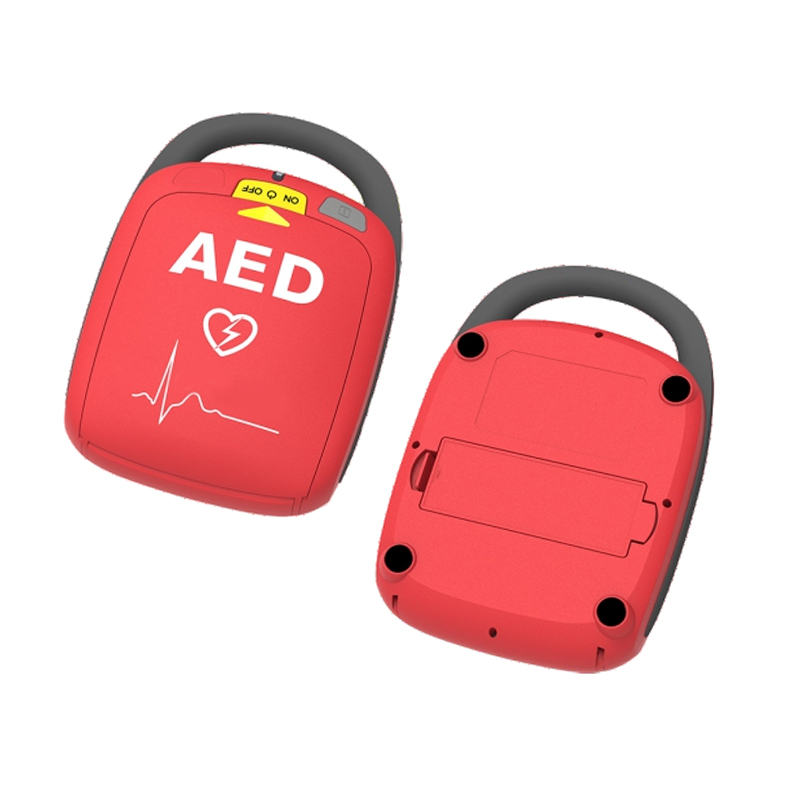 AED readiness depends on documented checks as well as device selection.
Validate local program and emergency-response obligations
Local rules may address placement, signage, training, medical direction, registration, maintenance, incident reporting, or EMS notification. A U.S. public-access defibrillation fact sheet, for instance, notes that EMS activation requirements vary by state. That variability is precisely why an AED buyer should not use a generic online checklist as the final authority.
Bring local stakeholders into the review before issuing the purchase order. Ask the emergency-response lead how the AED fits the site’s call-for-help process, who performs CPR training coordination, and how an event is documented. Ask facilities whether the cabinet location, power needs if any, environmental limits, visibility, and access route are workable. Ask legal or compliance personnel which local rules and insurance conditions need confirmation.
Use a cross-functional acceptance review
Make the purchase conditional on an acceptance checklist. At receipt, compare the delivered automated external defibrillator, battery, pads, and accessories with the approved quotation and document pack. Confirm serial numbers, dates, labeling, instructions, readiness state, cabinet or carry-case requirements, and required records. Procurement speed should not compress the acceptance review; this is the point where mismatches are easiest to resolve.
Finally, schedule the first post-installation review. Confirm that the AED is visible, accessible, logged, and assigned to named owners; that responders know the site escalation process; and that replacement dates have been entered into the maintenance system. This practical handoff converts emergency medical equipment from a delivered box into a managed part of cardiac emergency response.
A concise buyer checklist
- Define the intended site, users, population, and response workflow for the AED.
- Validate market-specific regulatory evidence and configuration-specific documentation.
- Review labels, instructions, warnings, and language needs with qualified stakeholders.
- Confirm pads, batteries, accessories, service support, and recordkeeping responsibilities.
- Check local placement, training, reporting, registration, and emergency-response requirements.
- Complete a documented receiving and commissioning review before the AED enters service.
A disciplined standards review does not choose the device for the buyer. It gives the buyer a transparent basis for comparing an AED device, validating the evidence, and assigning the work that keeps an AED ready for its intended environment.

 Hot News

